Spacecraft and launch vehicle engineering teams at startups are small, and the analysis load on flight hardware isn't. Every bracket, bolted joint, pressure vessel and deployment mechanism needs a positive margin of safety traced back to a limit load. Every one of those margins gets questioned: at PDR and CDR, by the launch provider's interface review, and by the customer's mission assurance team.
Most of that work starts in spreadsheets and Python notebooks. The established next step is a Mathcad seat for each engineer. For a team building new flight hardware, there's now a better fit.
The calcs behind flight hardware
- Margins of safety on primary and secondary structure, MS = allowable / (limit load × FS) − 1, against the quasi-static load factors and random vibration environment in the launch vehicle user's guide, with the yield and ultimate factors the programme has adopted (from NASA-STD-5001 or ECSS-E-ST-32-10, for example).
- Bolted joint and lug analysis on brackets and interfaces: preload, joint separation, thread shear and bearing, repeated across dozens of parts.
- Mass, power and link budgets with contingency that shrinks at every design review.
- Thermal, orbit and trajectory analysis that belongs in Python, not in a worksheet.
The first three need readable maths with units, so an independent checker can follow them. The fourth needs code. Most teams end up with both, in separate files, with nothing joining them.
A calc platform built for teams building what's next
Mathcad has been the standard for readable engineering maths for decades, and plenty of established stress groups run on it. CalcTree is built for the way newer teams work: in the browser, shared, scripted and AI-assisted.
- Cheaper to start. A free plan, and paid plans from US$14 to US$34 per user per month (pricing). Mathcad Prime starts from about US$859 per user per year (PTC store, checked October 2026).
- More capable on one page. Readable maths with real units, Python in the same page, and AI that drafts new calcs from the ones you've already verified.
- Built to connect. An API, an Excel add-in and an LLM skill, so checked calcs run inside the software and scripts you already use (more below).
- Reviewed and versioned. Independent checking and sign-off happen on the page, with full history, instead of a file emailed between laptops.
If you're weighing up every option, free ones included, see our honest guide to Mathcad alternatives.
What flight hardware calcs need
Readable maths with real units
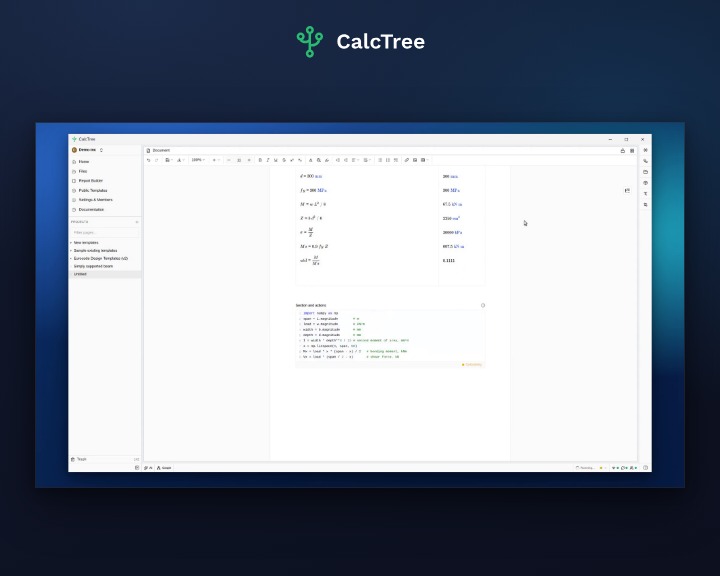
A margin of safety a checker can read line by line, with units carried through the whole calc, so a stray lbf or a psi that should have been MPa shows up as an error instead of a wrong margin.
Python on the same page
When the worksheet runs out, drop into a Python cell on the same page and keep the same variables. The thermal and orbit analysis sits next to the structural margins it feeds, not in a separate notebook.
Review that leaves a trail
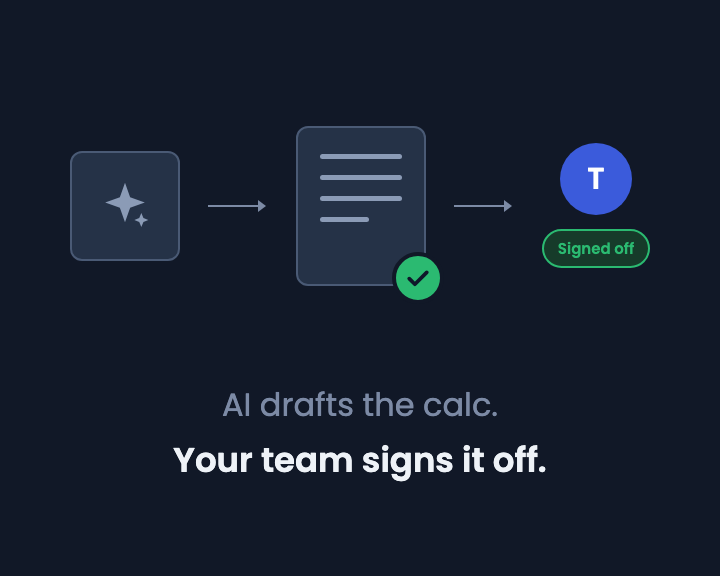
An independent checker reviews the page and signs it off where the calc lives, with version history underneath. When mission assurance asks where a margin came from, the answer is a link, not an archaeology project.
A kit of verified parts, assembled fast
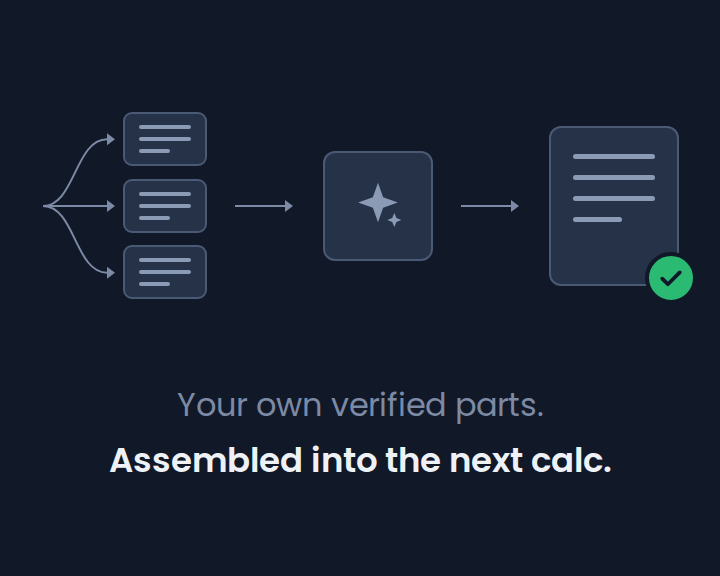
This is where a small team gets its leverage. Build the bolted joint analysis, the lug check and the margin of safety calc once, have them independently checked, and keep them as your own verified parts. CalcTree's AI then drafts new calcs from those parts, so the next bracket is assembled from checked logic rather than started from a blank page or a raw chatbot answer. An engineer still checks and signs it off.
Works with the rest of your stack
Flight hardware analysis rarely lives in one place. CalcTree plugs into the software and code your team already runs.
- API. Run a checked calc from your own code, scripts or pipelines, and get the result back with the working. See automating calcs with Python and the API.
- Excel add-in. Call a checked calc from a spreadsheet cell, so the logic lives in one reviewed place and the workbook just passes inputs. See the Excel add-in.
- LLM skill. Claude, ChatGPT, Gemini or Cursor can find, run and build CalcTree pages. The AI does the reasoning and CalcTree does the maths, with real units. See the CalcTree LLM skill. An MCP server is coming soon.
In practice that means a trajectory script or a loads post-processor can call the reviewed margin of safety calc directly, and the stress summary in Excel reads the same numbers the checker signed off.
Moving over
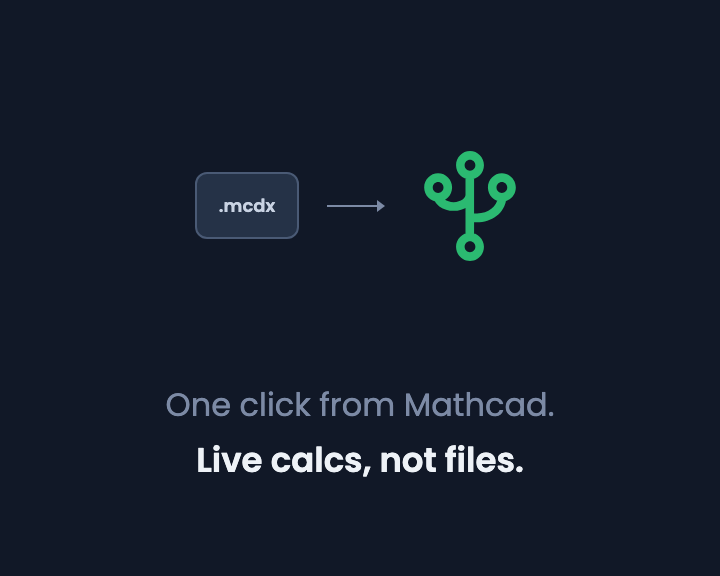
The free plan includes Python, the API and the Excel add-in. If you already have Mathcad files, you can convert them into CalcTree rather than retyping them.
Two honest limits: CalcTree runs in a desktop browser, and it needs a connection today. Offline use is coming, but it isn't here yet.
Start with one calc
Pick the analysis your team rebuilds most often, usually a bolted joint or a margin of safety check, and build it once properly. Request a calc and we'll build it for you, or send us a Mathcad or SMath file and we'll convert it. Book a call with our team.