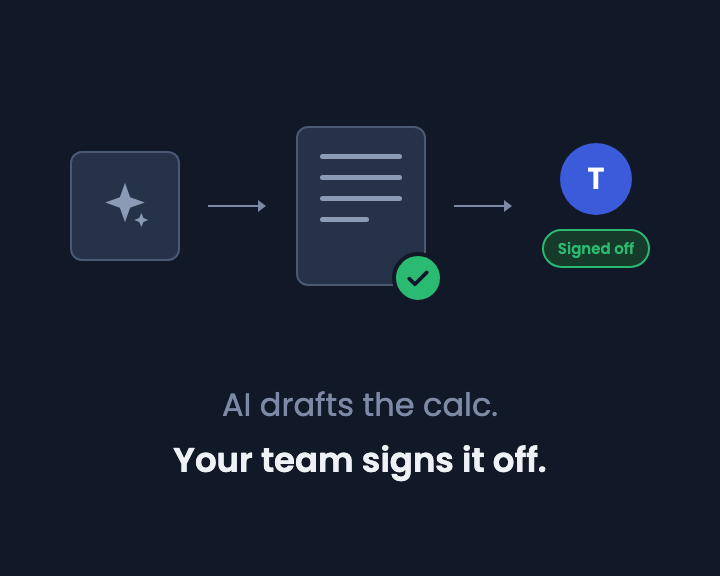
A graduate engineer is asked to add a piping check to a seepage calc for a weir. A few years ago that meant an afternoon: find the method, set up the inputs, write the equations, format it so a checker could follow it. Now they describe what they want, and an AI drafts the check in the time it takes to read the prompt back.
That is a real change, and it is the easy part. The calc still isn't issuable. It becomes issuable when a named engineer has checked it, put their name to it, and anyone can see who that was and which version they looked at.
Drafting got fast. Checking didn't.
For most of engineering's history, producing a calc and checking it took roughly comparable effort. The checker was busy, but so was the author, and work moved at the pace of both.
AI breaks that balance. Drafting can now happen in minutes, and checking still takes as long as it takes a person to understand the work. So the queue moves. The step everything waits on is no longer the drafting. It is the review.
That makes checking the thing that decides whether AI is actually useful to a firm. An office that drafts calcs faster than it can check them hasn't sped up. It has built a backlog of unchecked work.
Why AI output needs a person more, not less
AI output looks right. That is the problem with it. When we tested AI-generated structural calculations against the codes, the failures weren't obvious ones. The structure was sound, the equations familiar, the numbers plausible, and the errors sat at the margins, where only a careful check finds them.
A rough spreadsheet used to announce its own mistakes. A polished AI draft doesn't. That makes the human check more essential, not less. Someone qualified has to stand behind the result, and that responsibility can't be handed to a model.
Here's how we see it: AI drafts, people approve
Our position is simple. AI is good at drafting, and it should do lots of it. People approve. In CalcTree the two are kept separate on purpose.
AI drafts on the page
CalcTree AI works inside the calculation page, not in a separate chat window you copy from. Ask it for a check and it proposes blocks; click Insert and they land on the page as ordinary content: inputs, equations and Python you can read and change. Nothing reaches the page until the engineer adds it.
A named engineer reviews
Once the page is ready, the author adds a reviewer from the workspace. The page locks with a banner, "This page is locked waiting for review.", and the reviewer's card shows Version 1 · calc pinned. The reviewer is checking a fixed version, not a moving target.
The reviewer comments on the lines that matter, the author replies in the thread, and the reviewer approves or requests changes. The sign-off is a person's decision, made in the app, with their name on it.
AI never approves
A reviewer in CalcTree is always a person in your workspace. AI can help you draft, and it can help you look for problems, but it does not sign anything off. If the page is edited after approval, the Reviews panel says so, and a new review is needed to cover the change.
For the full review flow, see Page reviews: sign-off that sits on the page.
What it looks like on a real calc
The video uses a flow net calc for seepage under a concrete weir with a sheet pile cutoff. CalcTree AI adds a Lane's weighted creep check, and the author inserts it. Then they add Tim as reviewer, and the page locks at Version 1.
Tim's comment is the kind no model should be answering for you: "Is medium sand confirmed by the borehole logs? Lane's ratio depends on it." The AI wrote the check. It can't know what the borehole logs say about this site.
The author replies: "Yes, BH1 and BH2 both log medium dense sand to 10 m." Tim approves, and his card reads "Signed off", with the date and time.
That exchange is the whole idea. The AI did the drafting. The engineer supplied the site knowledge. The reviewer asked the question that matters and put their name to the answer. All of it sits on the page, against the version that was checked.
Where this is heading
We think most calcs will soon start as an AI draft. That isn't a threat to engineering judgement. It moves judgement to where it was always most valuable: deciding whether a result is right for this site, this structure and this code.
The firms that do well with AI won't be the ones that draft the most. They'll be the ones that check well, and can show it. That means making review fast, keeping the record of it on the work itself, and never letting a sign-off quietly cover something that changed after it was given.
Try it
Page reviews are rolling out now. To try the workflow on a real calc, open a copy of the flow net page in your own workspace, ask CalcTree AI to add a check, and send it to a colleague for review. There's more on the calc itself on the flow net calculator page.
If you'd like to talk through how AI drafting and review would fit your team, book a call.
%20(1).jpg)
.jpg)
.png)