If you've used Mathcad for any length of time, the upgrade has probably been forced on you. IT needs software on a supported OS, your version no longer qualifies, and the only way forward is Prime. So you open a fifteen-year-old worksheet, and Prime throws a wall of errors at you.
You're not imagining it. The jump from Mathcad 15 to Prime is one of the most complained-about transitions in engineering software, and it's worth understanding why before you decide what to do.
What Prime actually changed
Prime was a ground-up rewrite. PTC rebuilt Mathcad on a modern codebase instead of maintaining the old one. Fair enough as an engineering decision. The problem is what got lost on the way.
The big one is file compatibility. Worksheets from Mathcad 15 and earlier don't open cleanly in Prime. There's a converter, but for anything beyond a basic sheet it spits out a list of errors you then fix by hand. Engineers with libraries of hundreds of calculations have described the migration as a job that took weeks. One firm handed it to an intern for a whole summer.
Then there are the regressions. Even many releases in, Prime still can't do things Mathcad 15 did fine. Plotting is the usual gripe: barely any control over axis labels, titles, or gridlines, so people dump data into Excel just to get a presentable graph. Add slower calculations, clumsier subscripts and arrays, and a pile of small workflow niceties that quietly disappeared.
Why it gets under people's skin
It's not that Prime is different. It's that the upgrade felt like a downgrade for work you'd already done.
A calculation isn't disposable. Engineers keep worksheets for years, reuse them across projects, and rely on opening old work to defend a design or reuse a method. When an upgrade puts that archive at risk, it stings more than a normal software annoyance. Plenty of engineers say the same thing: they'd be stuck without their old files, and they resent being made to feel that way by software they pay for.
The subscription switch doesn't help. A lot of people went from owning a perpetual licence to renting a yearly one. Paying more, every year, for software that does less of what you relied on, is what tips annoyance into actually looking elsewhere.
So what are your options
A few honest ones.
Stay on Mathcad 15 as long as IT and your OS let you. Loads of people do exactly this to dodge the migration. It buys time, but it's not a fix, because support and compatibility erode eventually.
Commit to Prime and budget the migration properly. If your organisation is locked into the Mathcad world, this is the path of least resistance. Just go in clear-eyed about what converting old worksheets actually takes.
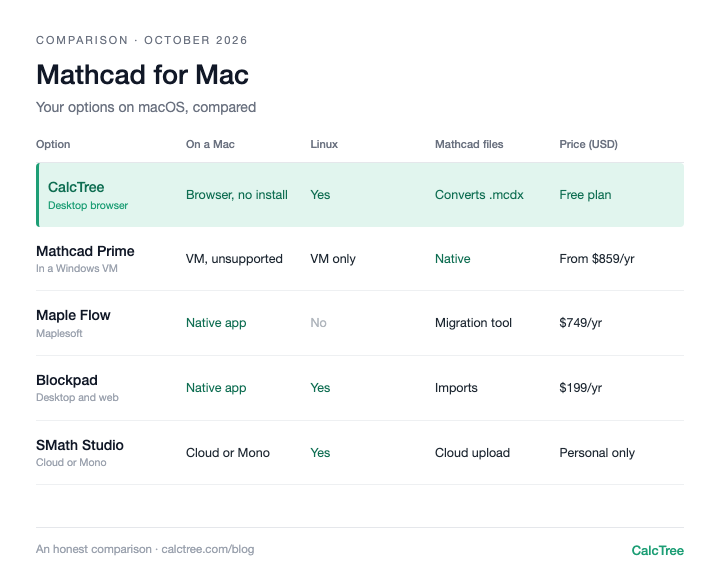
Or treat the forced upgrade as your cue to rethink the tool entirely. Here's the logic: if you're going to spend weeks reworking calculations anyway, why rework them into Prime? You could put that same effort into something built for how engineers actually work now. Cloud-based, collaborative, calculations you can share, trace, and never get locked out of.
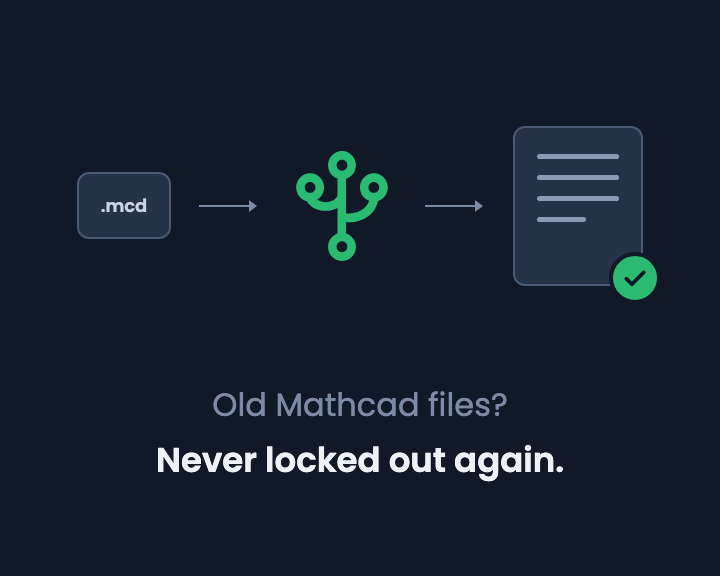
That's CalcTree. It's built on the idea that your work should be portable, reviewable, and never held hostage by a file format. Calculations live in the cloud, are shareable and traceable, and stay open no matter what version anything is on. If you're about to burn weeks on a Prime migration, that effort is far better spent moving somewhere that won't put you through this again. We've got a guide that walks through bringing your Mathcad files across, and our free Mathcad alternatives review.
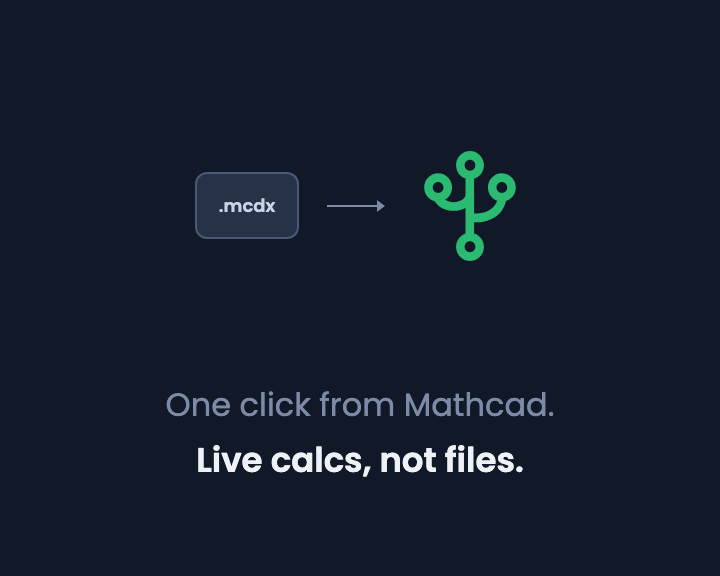
Moving off Mathcad 15? Re-save your .xmcd worksheets as .mcdx in Mathcad Prime, then import them into CalcTree as live calcs. Here is how the converter works, or send us a Mathcad file and we'll convert it for you.
The frustration is real, and it's not a you problem. A tool shouldn't make you fight to keep what already worked. You've got better options than you think.