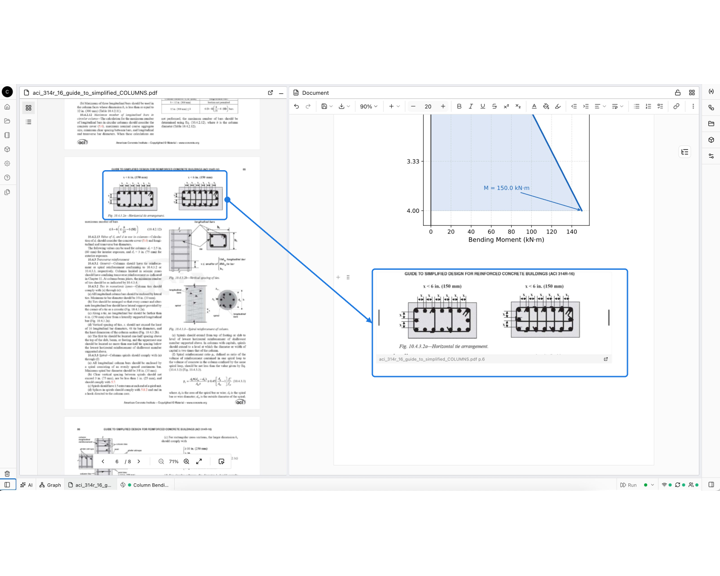
For a lot of engineering work, the calculation package is the deliverable. The maths matters, but what actually gets signed, issued, and archived is a clean, presentable document: the inputs, the results, the code references, and the statement that the design complies. Producing that document is mostly manual. Working calculations get tidied and formatted into something issue-ready, any summary or compliance statement that quotes the results is filled in by hand, and the whole presentation is redone the next time an input changes.
That manual step is where errors enter and time disappears. It's also completely avoidable when the report is connected to the calculations underneath it.
Generated from the calculations, not copied by hand
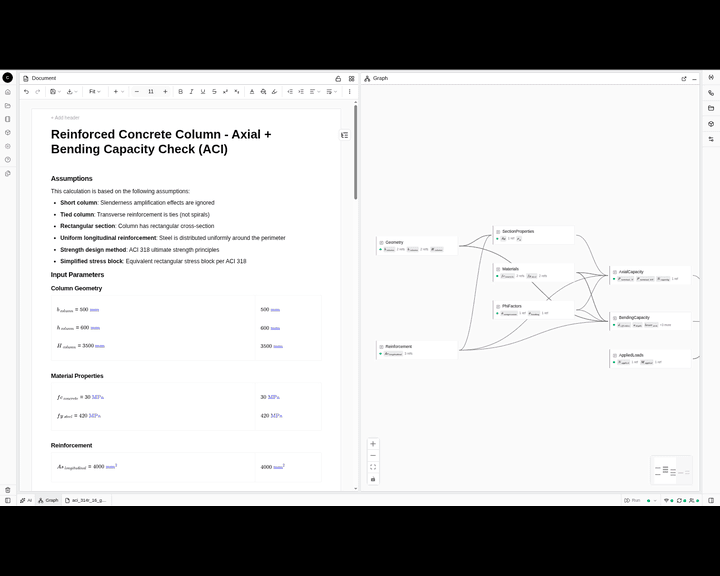
In CalcTree the report is generated from the calculations rather than copied out of them by hand. The figures in the report are the figures in the calc, so the document doesn't quietly drift out of sync with the work behind it the way a hand-assembled report can. When an input changes, you re-run the calculation and regenerate the report from it: a step you control and review, not a rebuild from scratch. You decide when a version is ready to issue. This builds on the same live-linked approach we use across connected calculations, applied to the deliverable, with you in the loop at each stage.
Code-referenced and traceable
A compliance report has to do more than state results; it has to show the basis for them. Because the report is built on connected logic, each result can carry its code reference and trace back to the inputs that produced it. A reviewer reading the report can follow any figure back to the clause it satisfies and the values it came from. The report stops being a static claim of compliance and becomes an auditable record of it.
Clean enough to issue
None of this is useful if the output looks like a spreadsheet dump. The reporting layer produces clean, structured, print-ready documents, so the same connected logic that keeps the numbers right also produces something you can actually issue. The quality of the deliverable and the integrity of the numbers stop being a trade-off.
Why this is the part that compounds
Connecting calculations is valuable. Capturing the whole path from inputs to issued report, as something you can re-run rather than rebuild, is where the time actually comes back. The report that used to take a day to rebuild after a late change can be refreshed and reviewed in a fraction of that. The workflow that produced it is reusable on the next project. And the firm's reporting standard stops depending on whoever happened to format the last one.
What's shipped
Live-linked calculations and reports, with a single source of truth and print-ready output, are available today. Wiring a specific compliance report to your own reporting template is work we do with teams. The principle holds either way: when the report is generated from traceable logic that you review before issuing, taking the manual rebuild out of reporting protects accuracy rather than risking it.
If you'd like to see one of your own reports assembled and kept live this way, book a call with our team.
.jpg)
.jpg)