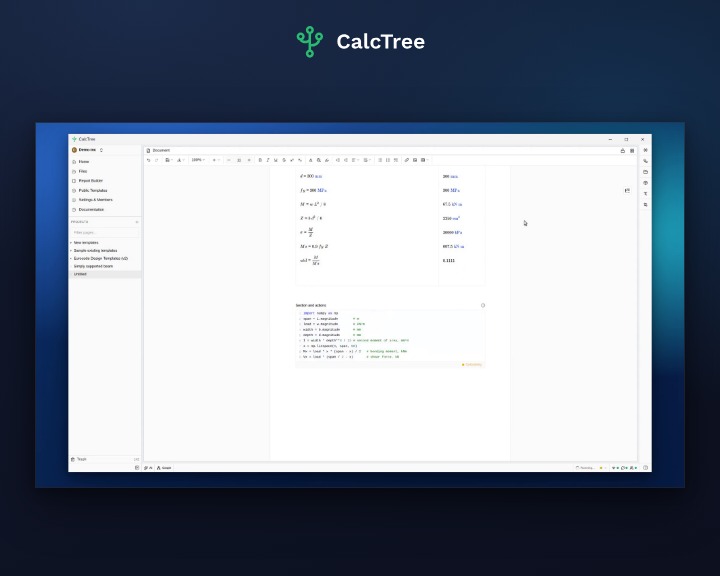
I'm a climber, and I build a calculation platform. Somehow I'd never put the two together until Tiziano Minotto at FunctionBay posted a multibody simulation of a GRIGRI catching an 80 kg climber. It clicked, so I built the climber's version: a CalcTree page with a small Python simulation inside, free to duplicate.
Big falls feel smoother
When I started climbing, it surprised me that a big whipper high on a route felt smoother than a short fall near the ground. It's scarier, but the catch is softer. The maths backs up the feeling.
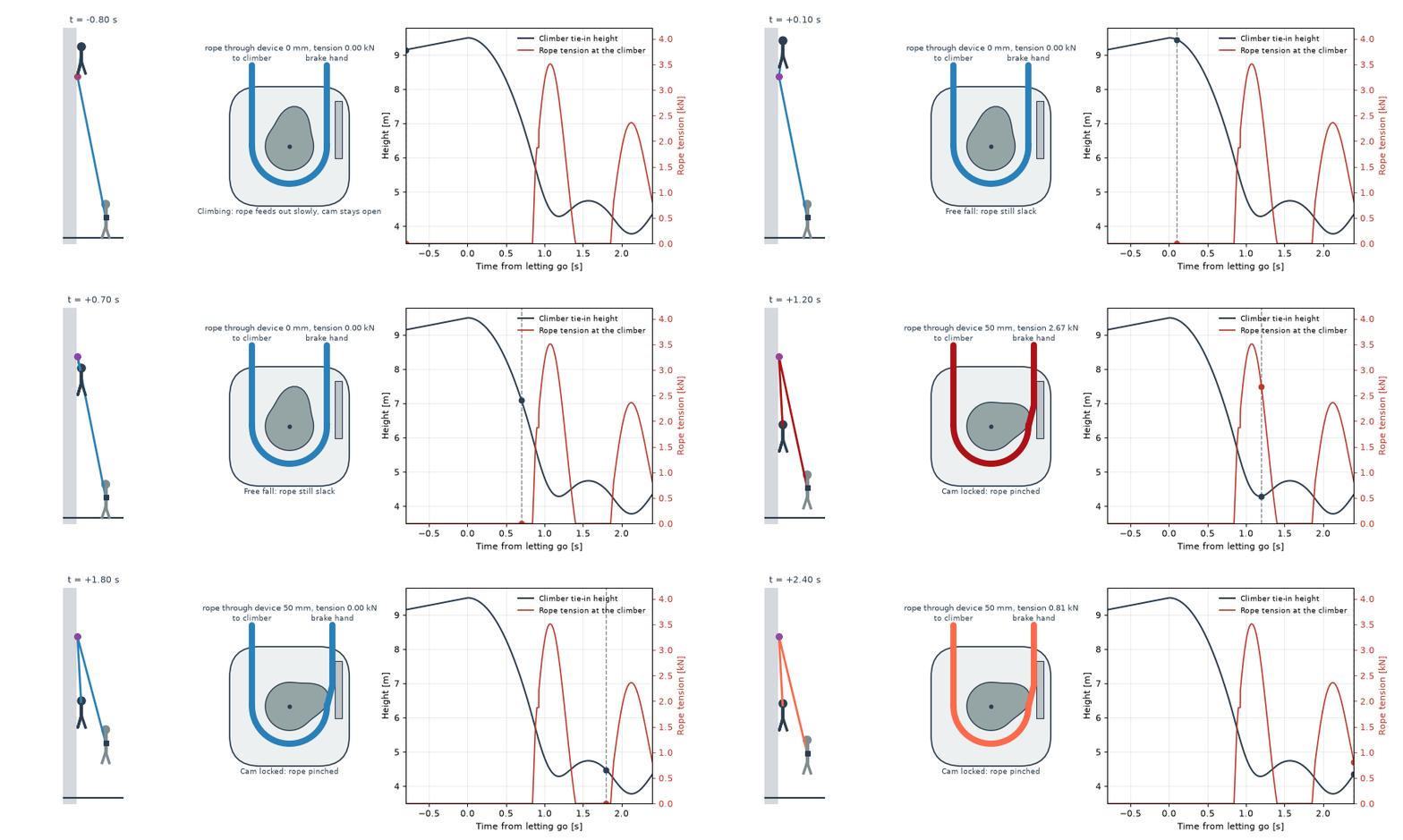
From the page: a 1.2 m fall just above a bolt at 4 m and a 6.5 m whipper 20 m up hit you with about the same peak force, 3.2 kN. The difference is how long the rope takes to stop you. Down low there's only about 4 m of rope to stretch, so it's over in 0.17 s, a jolt. Up high there's about 22 m, so the same force builds over 0.36 s, a long smooth catch.
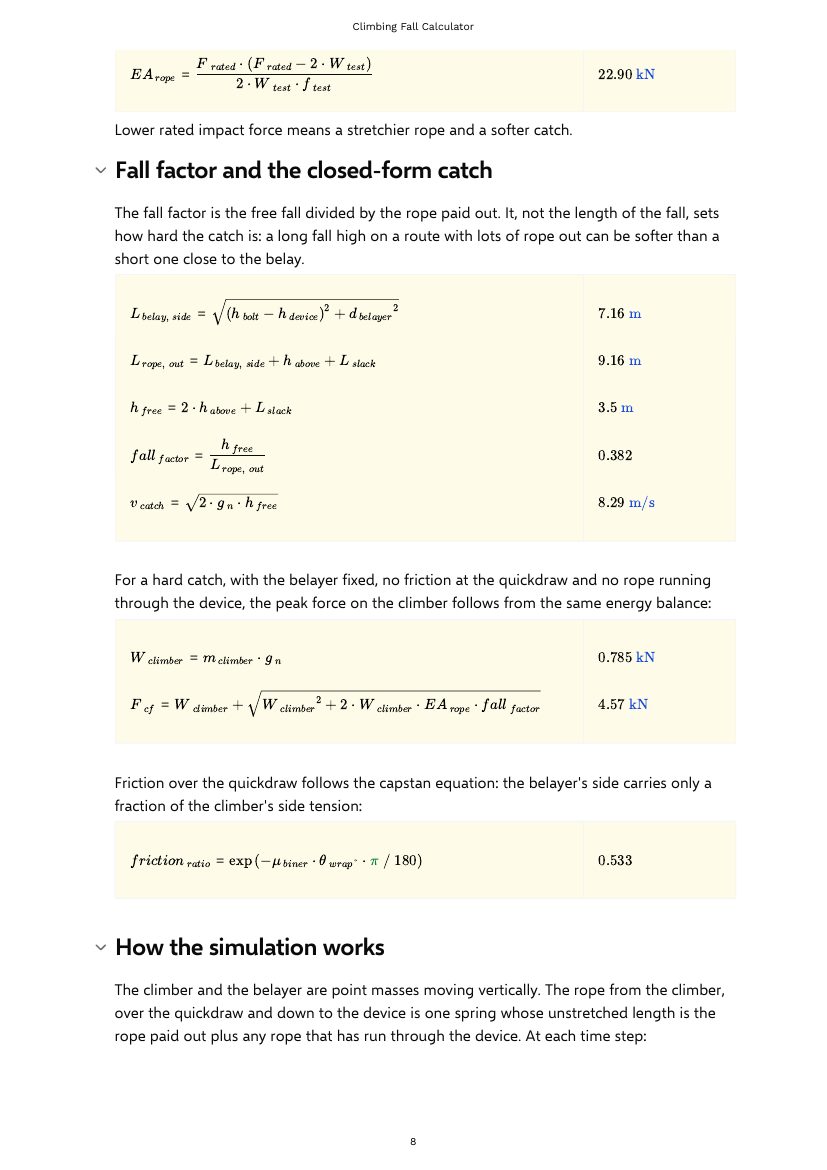
What sets the peak force is the fall factor: fall height divided by rope out.
The report
Every CalcTree page exports to a PDF report, with the inputs, the working, the charts and the checks laid out as a calc package. Here's this one, exported straight from the page:
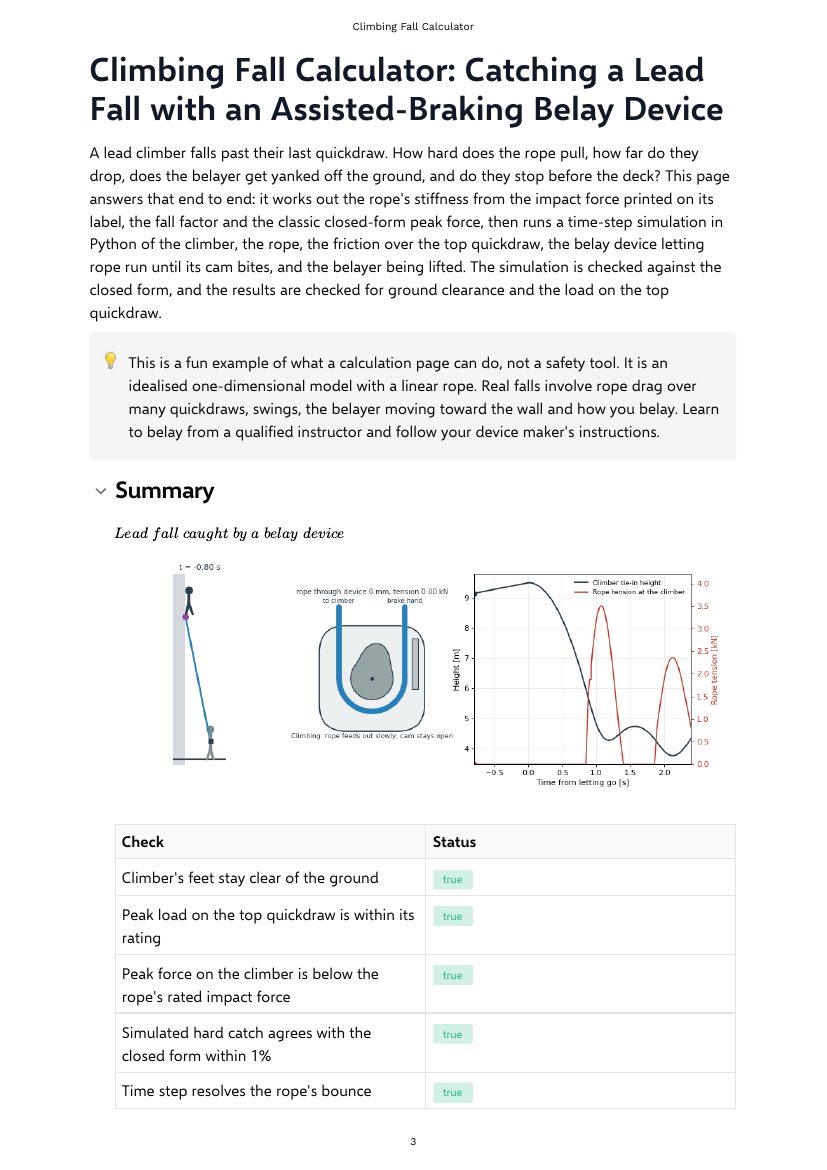
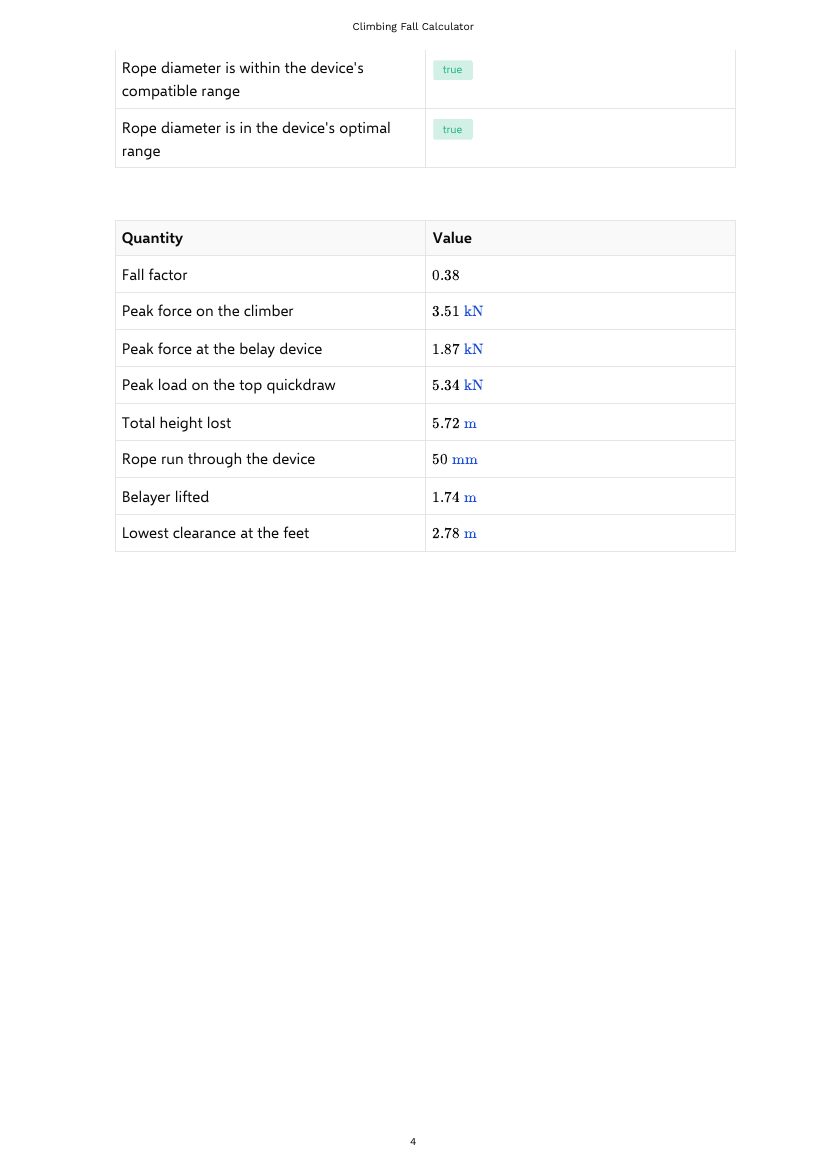
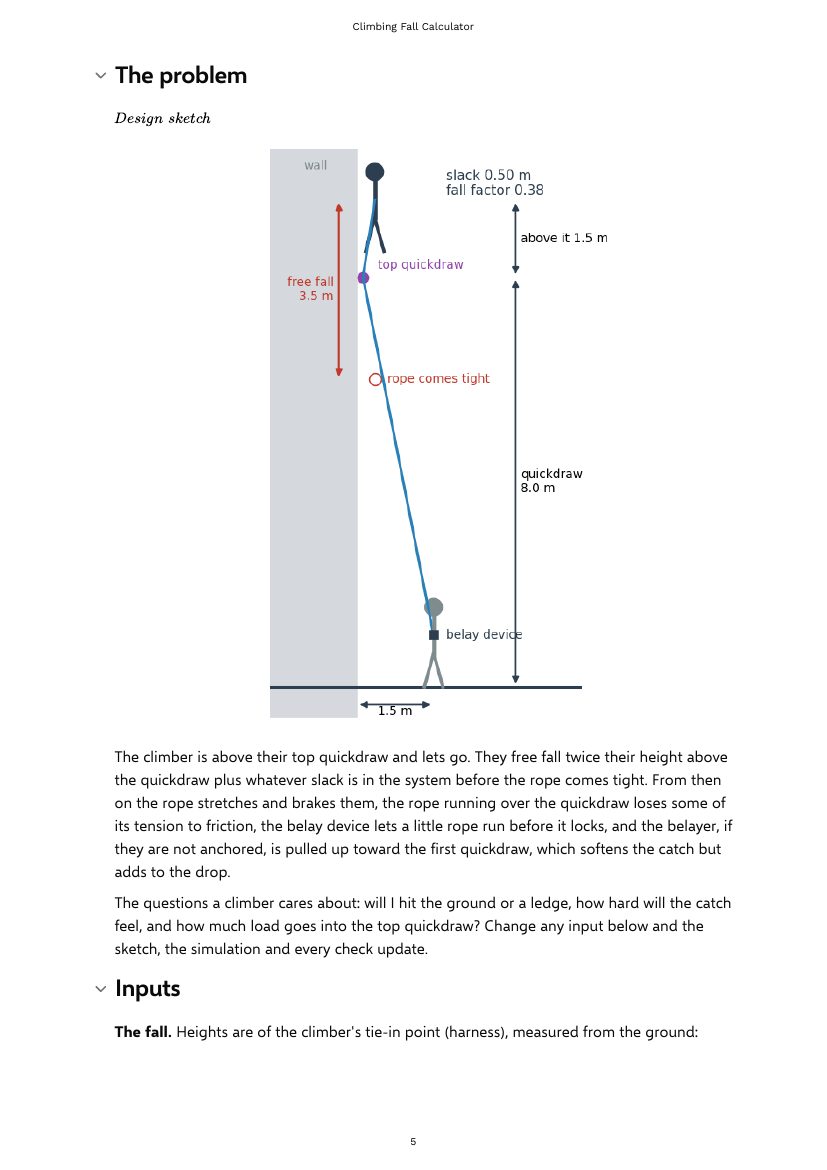
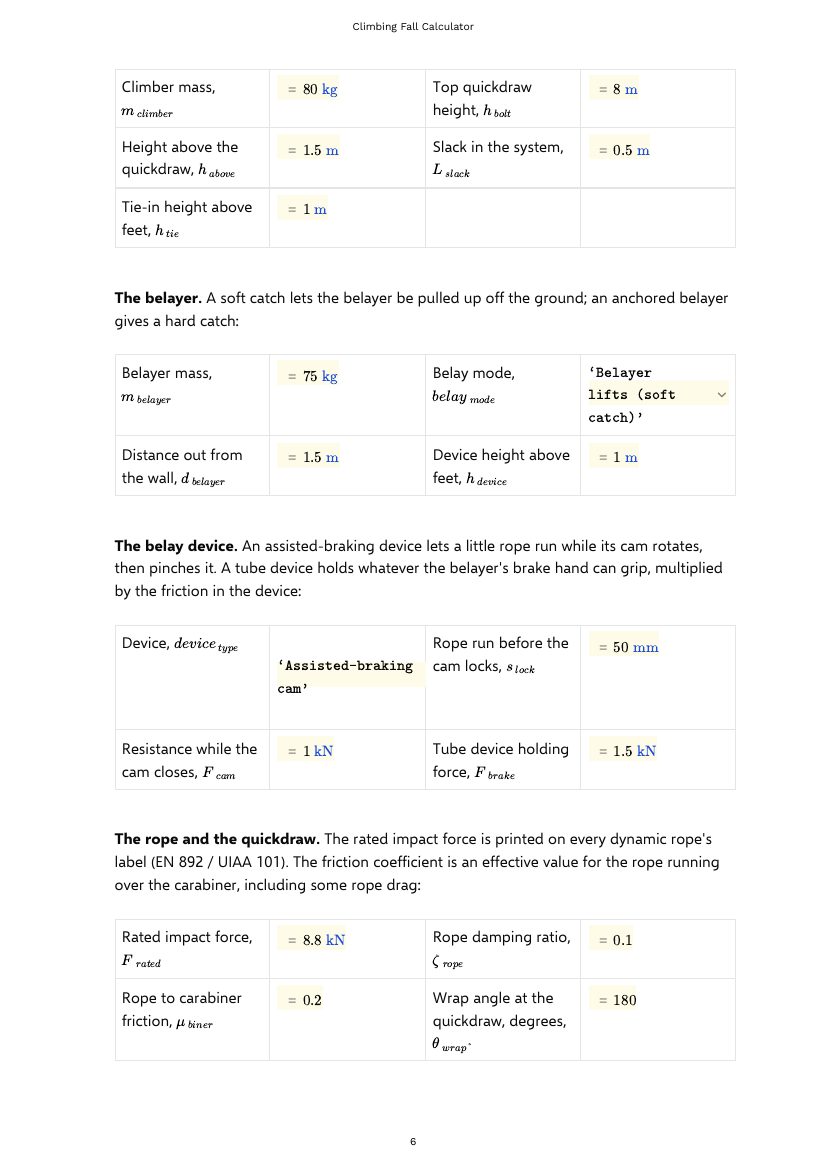
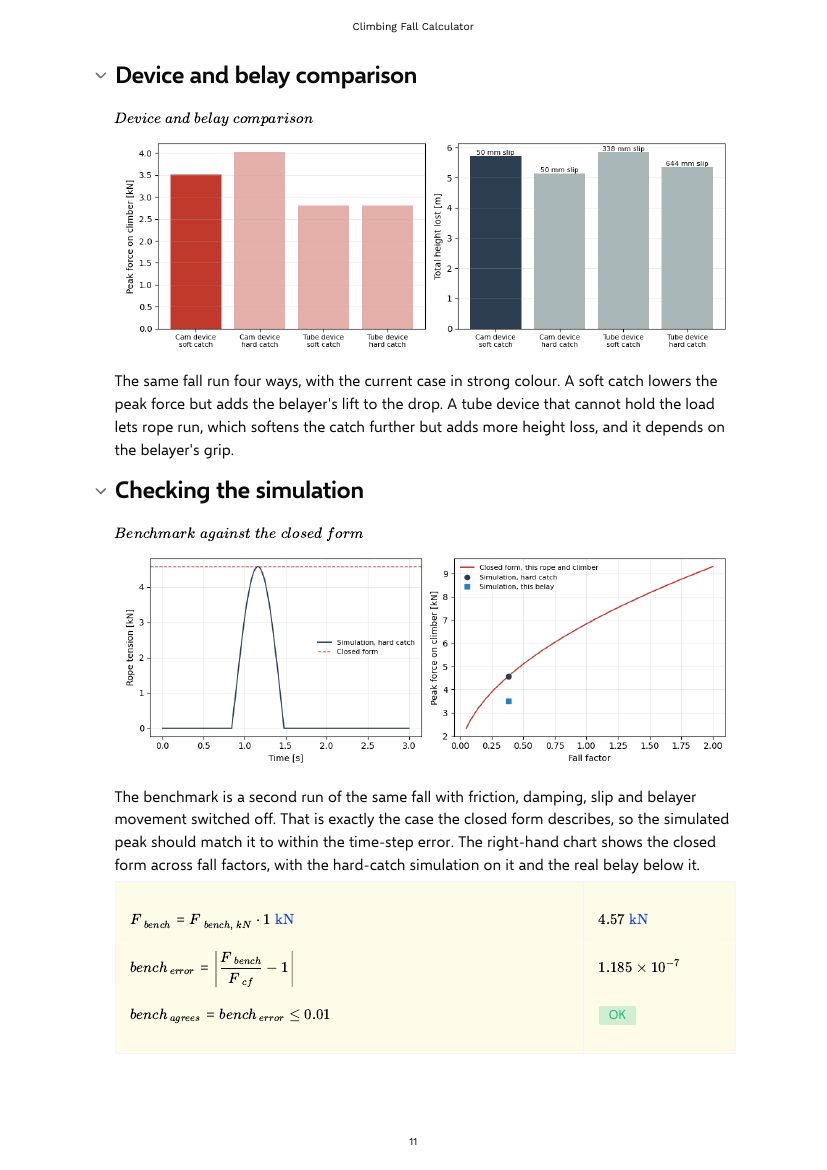

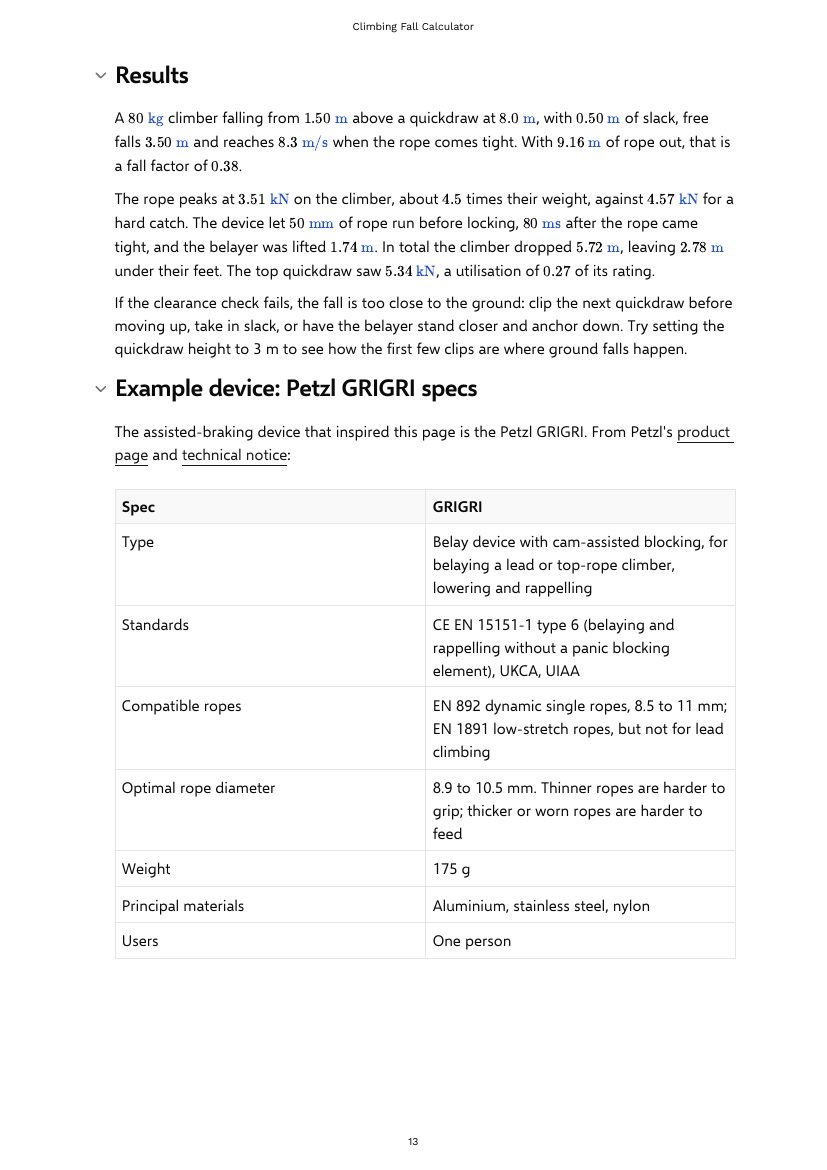
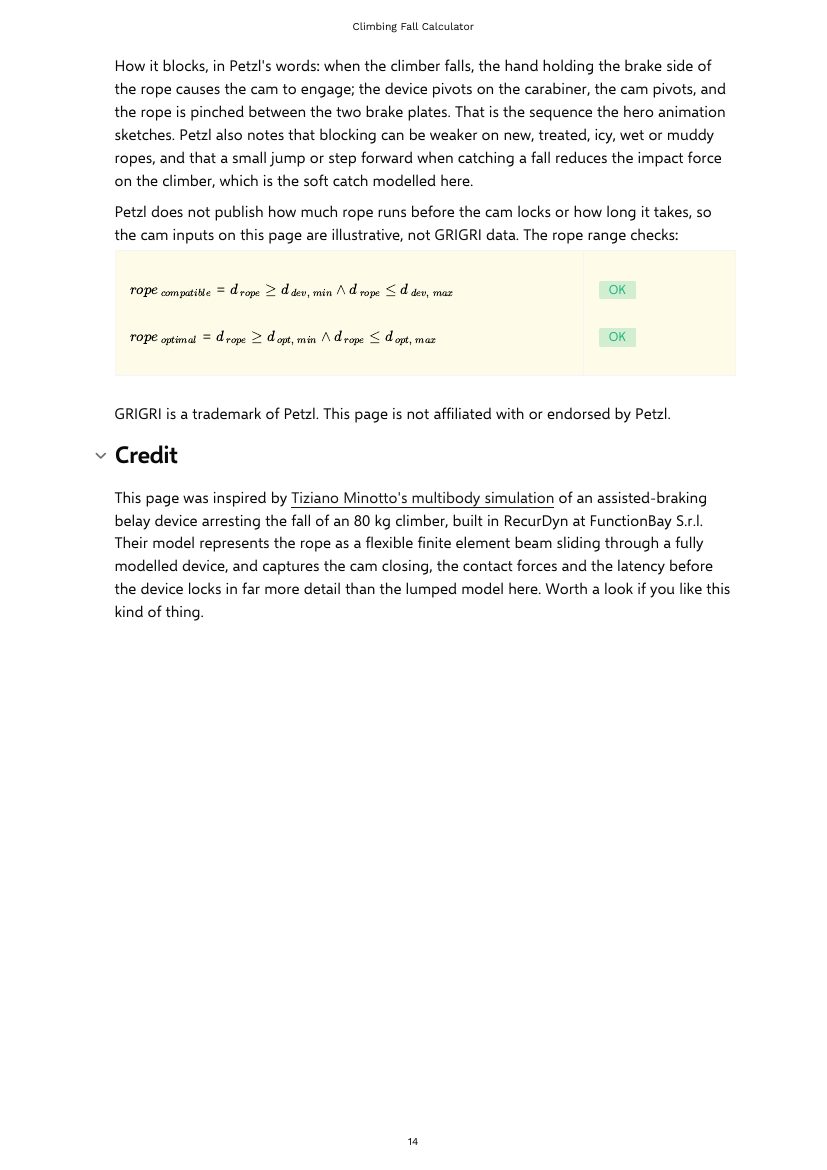
Scroll sideways through all 13 pages, or download the PDF.
How it works
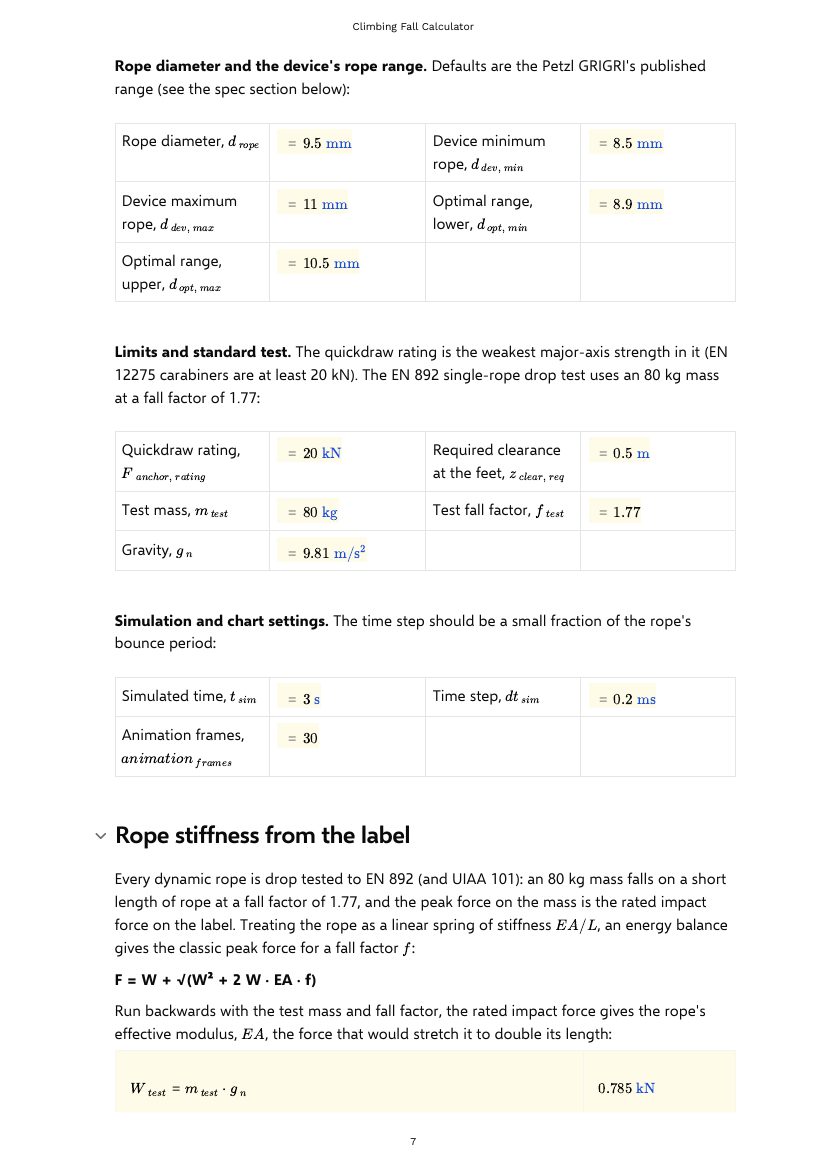
- Rope stiffness comes from the impact force on the rope's label, using the EN 892 drop test (80 kg, fall factor 1.77).
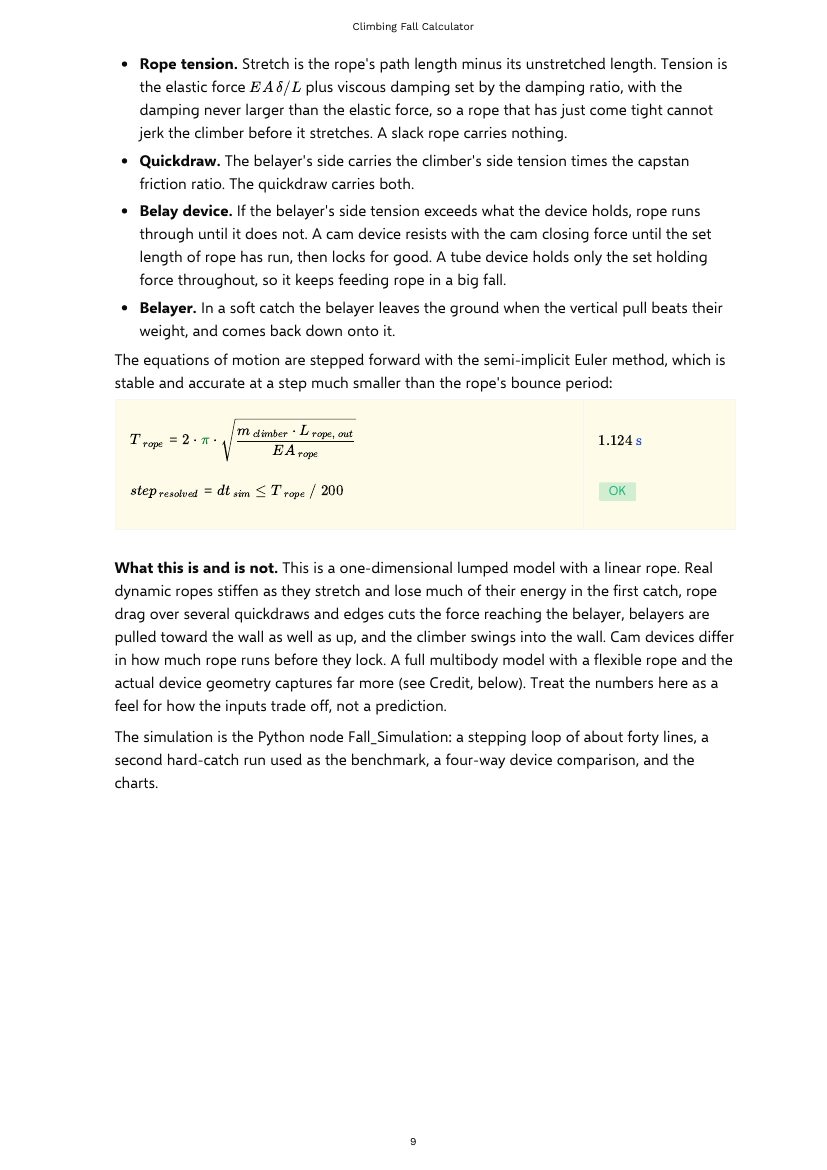
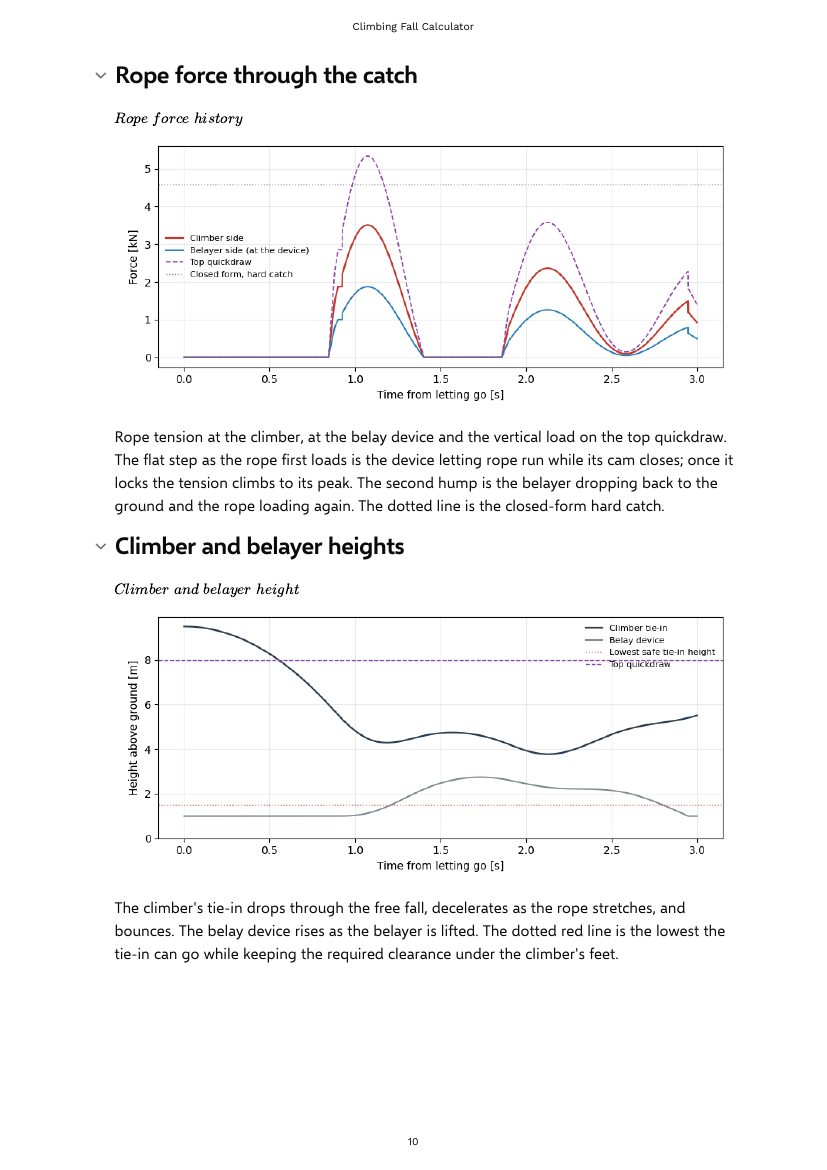
- The simulation steps through the fall in Python: rope stretch, friction over the top quickdraw, the device's cam letting a little rope run before it locks, and the belayer being lifted.
- The check: a second run with friction, slip and belayer movement off matches the classic closed-form fall force to six figures.
The page reports peak force on the climber, belayer and top quickdraw, total drop, belayer lift and ground clearance.
GRIGRI specs
The page includes Petzl's published GRIGRI specs (EN 15151-1 type 6, 8.5 to 11 mm ropes, 175 g) and checks your rope diameter against them. GRIGRI is a trademark of Petzl; this post and the page are not affiliated with or endorsed by Petzl.
What it isn't
It's a one-dimensional model with a linear rope, built for fun, not for safety decisions. Real falls involve rope drag, swings and how you belay. Learn from someone qualified and follow your device's instructions.
Try it
Duplicate the climbing fall calculator and put in your own numbers. Thanks to Tiziano Minotto and FunctionBay for the inspiration.