
Calculate time to ignition of a solid under radiant heat, for thermally thick and thin limits. Try the free calculator.

This template is not available yet. You can sign up and create it yourself!
Or let us know if you'd like to be notified when it’s ready:
No items found.
No items found.
About this Time to Ignition, Thermally Thick and Thin Calculator
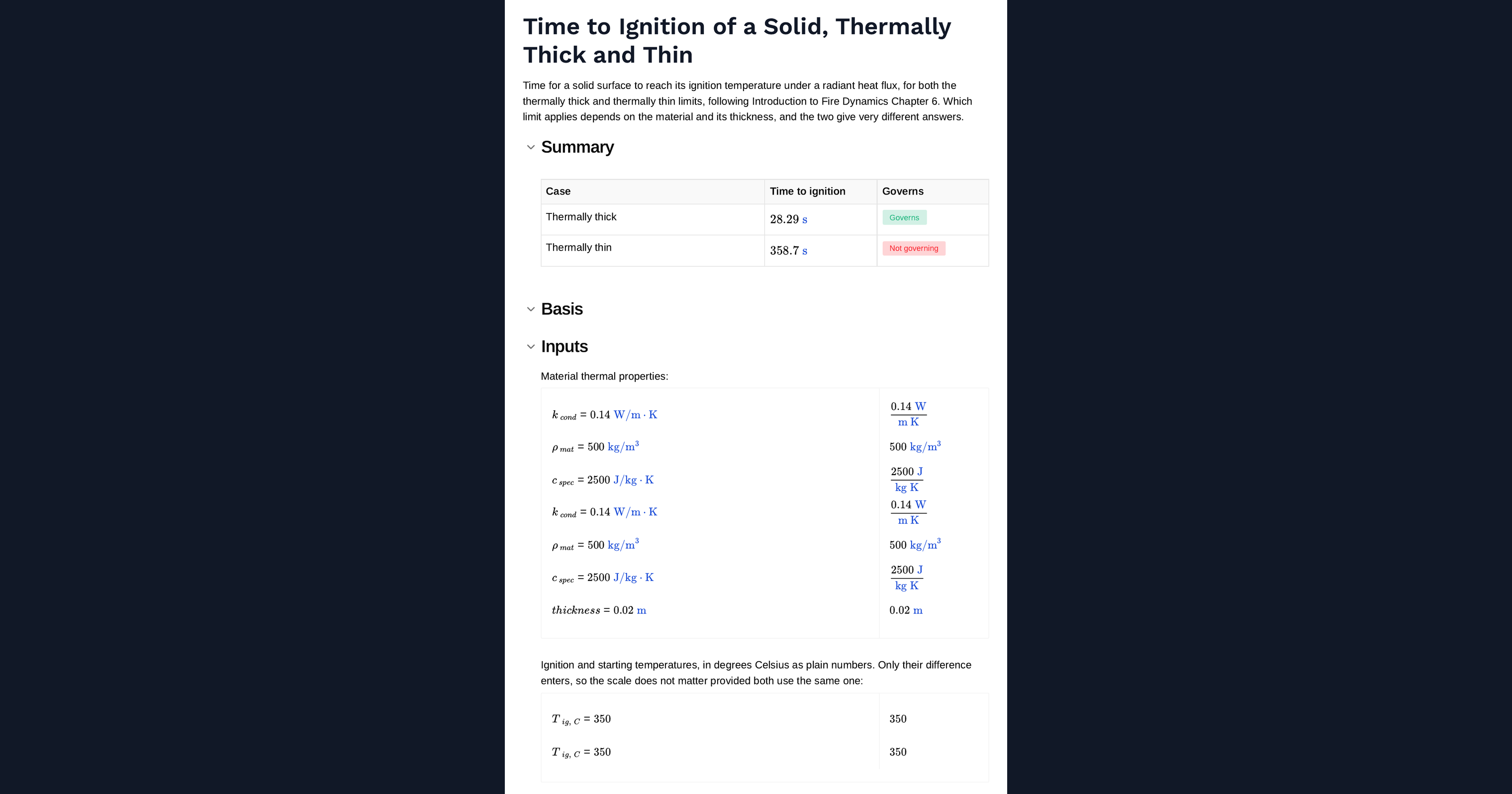
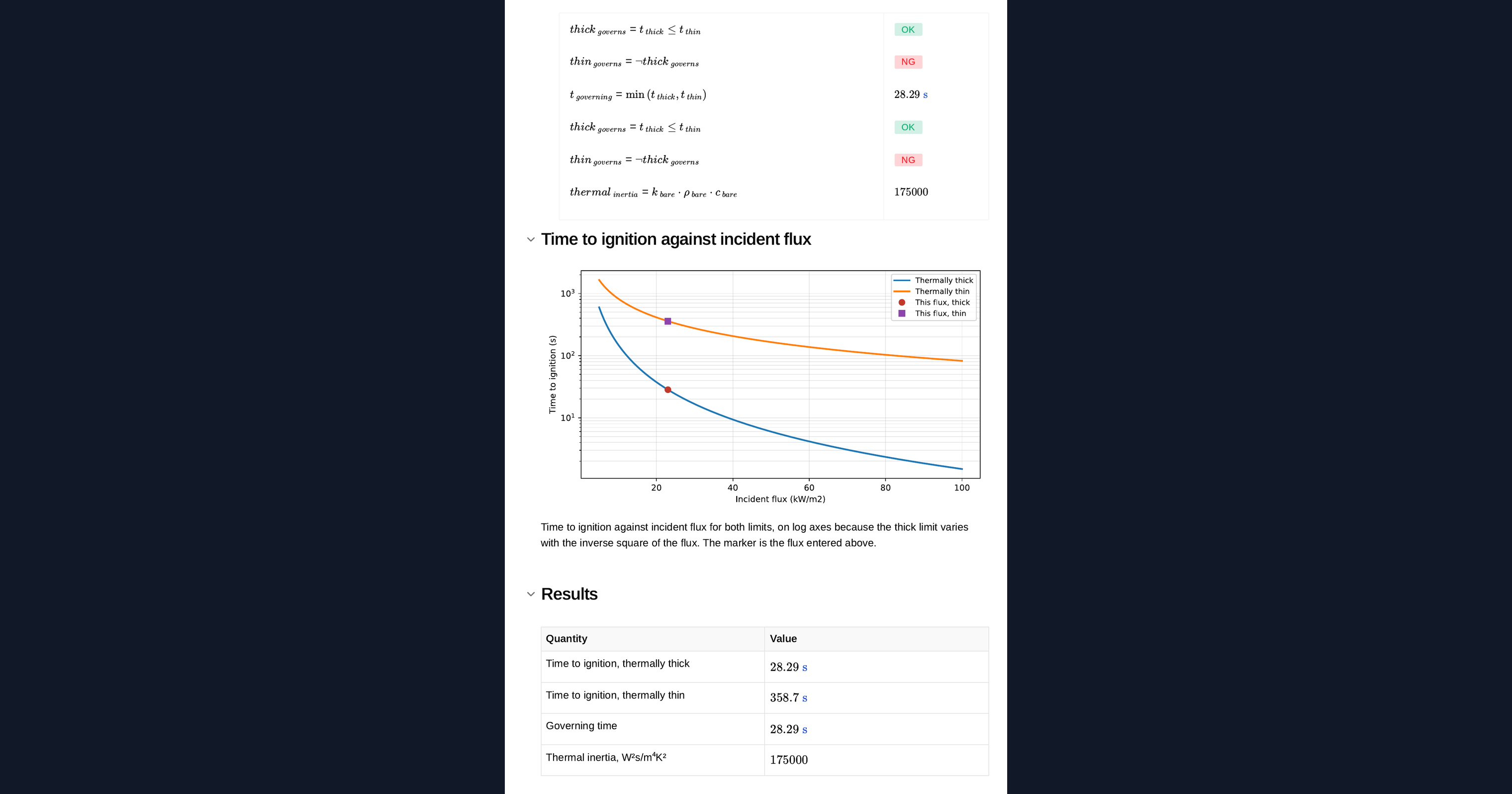
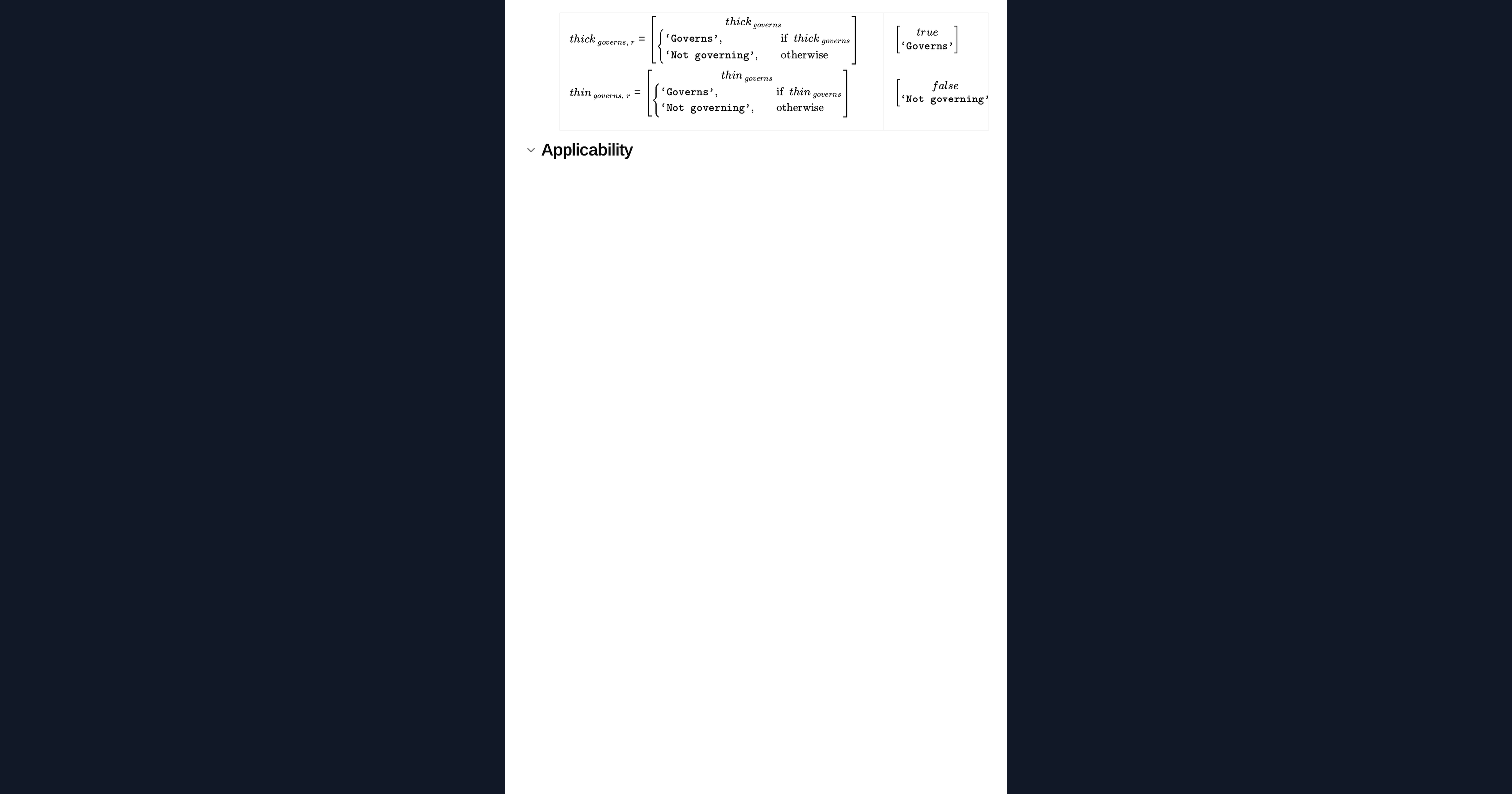
This calculator gives the time for a solid surface to reach its ignition temperature under a radiant heat flux, for both the thermally thick and thermally thin limits, following Introduction to Fire Dynamics Chapter 6. Which limit applies depends on the material and its thickness, and the two give very different answers. Both are reported so the governing case is visible, with a chart across a range of incident flux.
- Fire engineer. Enter the material properties and the incident flux, and read how quickly a surface would ignite under that exposure.
- Engineer assessing fire spread. Compare materials on their thermal inertia to see which ignites first under the same exposure.
- Risk assessor. Judge whether a nearby item would ignite within the time a fire is expected to remain small.
Every expression is shown with its origin and units are carried through the calculation. It is an engineering-grade calculator you can audit, adapt and save to a project page in CalcTree.
More info on Time to Ignition, Thermally Thick and Thin
Inputs
The thermal conductivity, density and specific heat of the material, its thickness, the ignition and starting temperatures, and the incident radiant flux. Only the temperature difference enters, so either temperature scale can be used provided both are the same.
The thermally thick limit
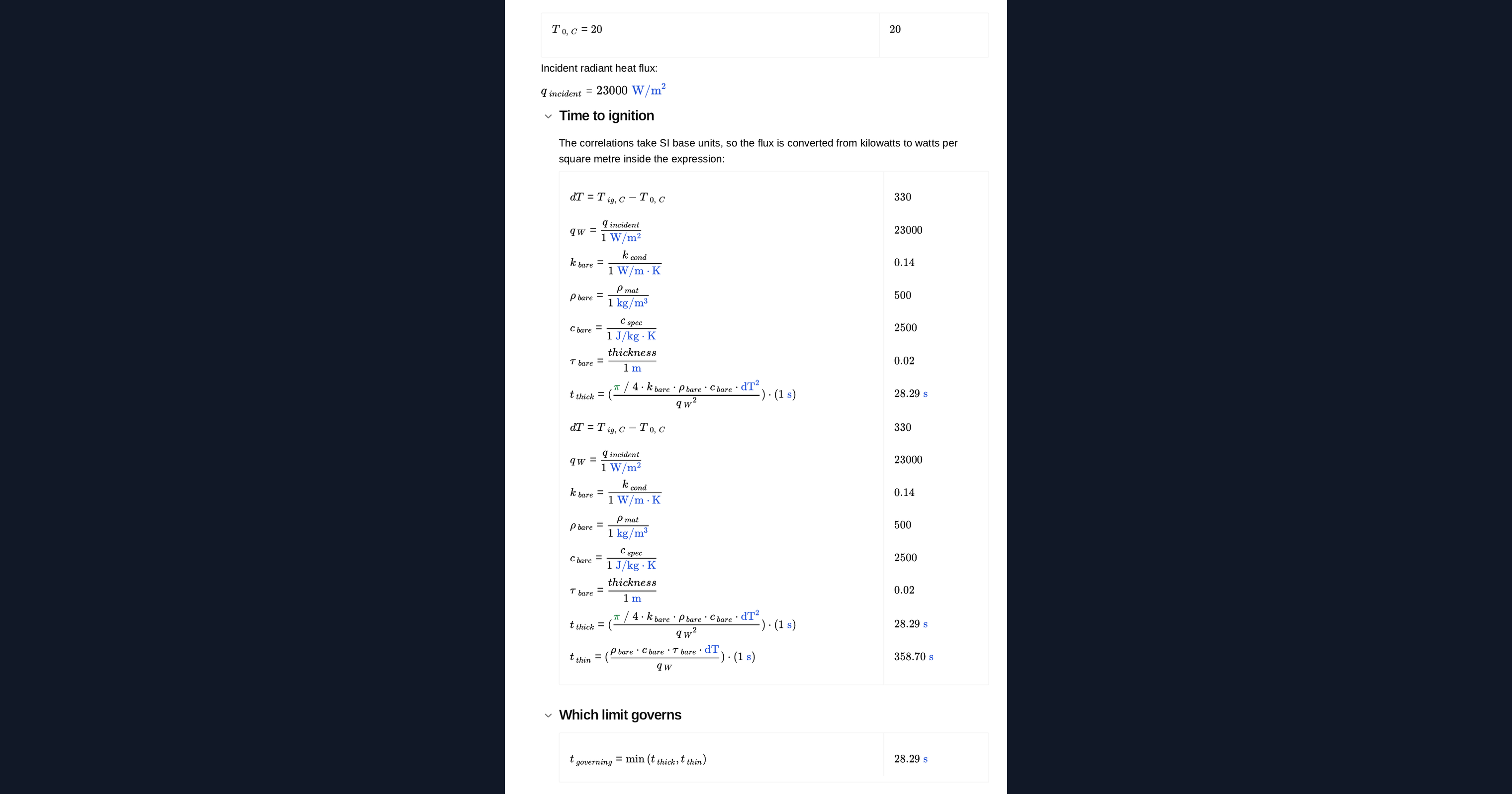
Here the heated layer stays well inside the material and the back face never warms, so thickness does not appear. What matters is the thermal inertia, the product of conductivity, density and specific heat. The flux enters squared, so doubling it quarters the time.
The thermally thin limit
Here the material heats uniformly through its thickness, so the whole mass rises in temperature together and thickness appears directly. The flux enters to the first power only, making this limit less sensitive to it.
Which limit governs
For a real material neither limit is exactly right, and the shorter of the two is the conservative answer for a design check. The transition depends on the thermal penetration depth relative to the thickness rather than on thickness alone.
Common Calculation Errors to Avoid
- Treating ignition temperature as a material constant. It depends on whether ignition is piloted or spontaneous, and quoted values vary widely for the same material.
- Trusting the result at low flux. Losses by convection and re-radiation are neglected, so both expressions become increasingly optimistic as the flux approaches the critical value for ignition.
- Applying it to a charring material. Char builds an insulating layer that lengthens the time considerably, and the expressions assume an inert solid.
- Using it for a thermoplastic that melts. Material that melts and flows away behaves differently from a solid heating in place.
- Choosing the limit by thickness alone. The transition depends on how far heat penetrates in the time available, not on a fixed thickness.
- Spending effort on the material properties. The incident flux is normally the least certain input and enters squared in the thick limit, so it deserves more attention than the properties do.
Engineering templates
Common calculators
Design guides



FAQs
What is the difference between thermally thick and thin?
Thick means the heated layer stays inside the material and the back face never warms, so thickness does not matter. Thin means the whole thickness heats uniformly, so it does. Most real materials sit between the two.
Which answer should I use?
The shorter of the two is the conservative choice for a design check. Neither is exact for a material of intermediate thickness, and the two bracket the real behaviour rather than describing it.
Does the temperature scale matter?
No, provided both temperatures use the same one. Only the difference between the ignition and starting temperatures enters, so degrees Celsius and kelvin give the same result.
Why is the result so sensitive to the heat flux?
In the thick limit the flux enters squared, so doubling it quarters the time to ignition. That makes the assumed exposure the most important input on the page.
Can I use this near the critical flux for ignition?
Treat it with suspicion there. Surface losses are neglected, so as the flux falls toward the critical value the real time tends to infinity while these expressions still predict a finite one.
Learn about the benefits of using CalcTree on engineering projects!