
Estimate hot gas layer temperature in a naturally ventilated compartment with the MQH correlation. Try the free calculator.

This template is not available yet. You can sign up and create it yourself!
Or let us know if you'd like to be notified when it’s ready:
No items found.
No items found.
About this MQH Hot Gas Temperature Calculator
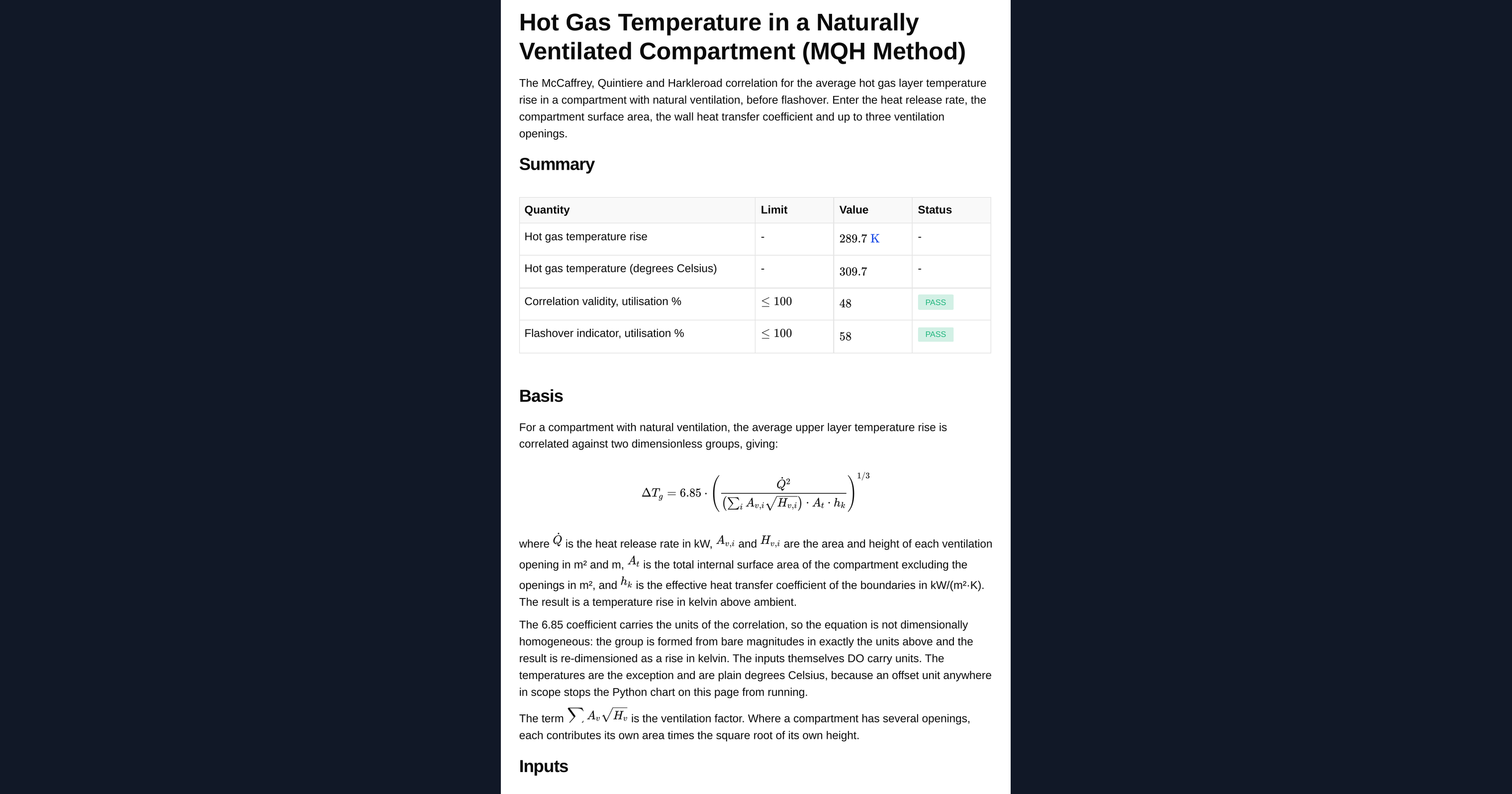
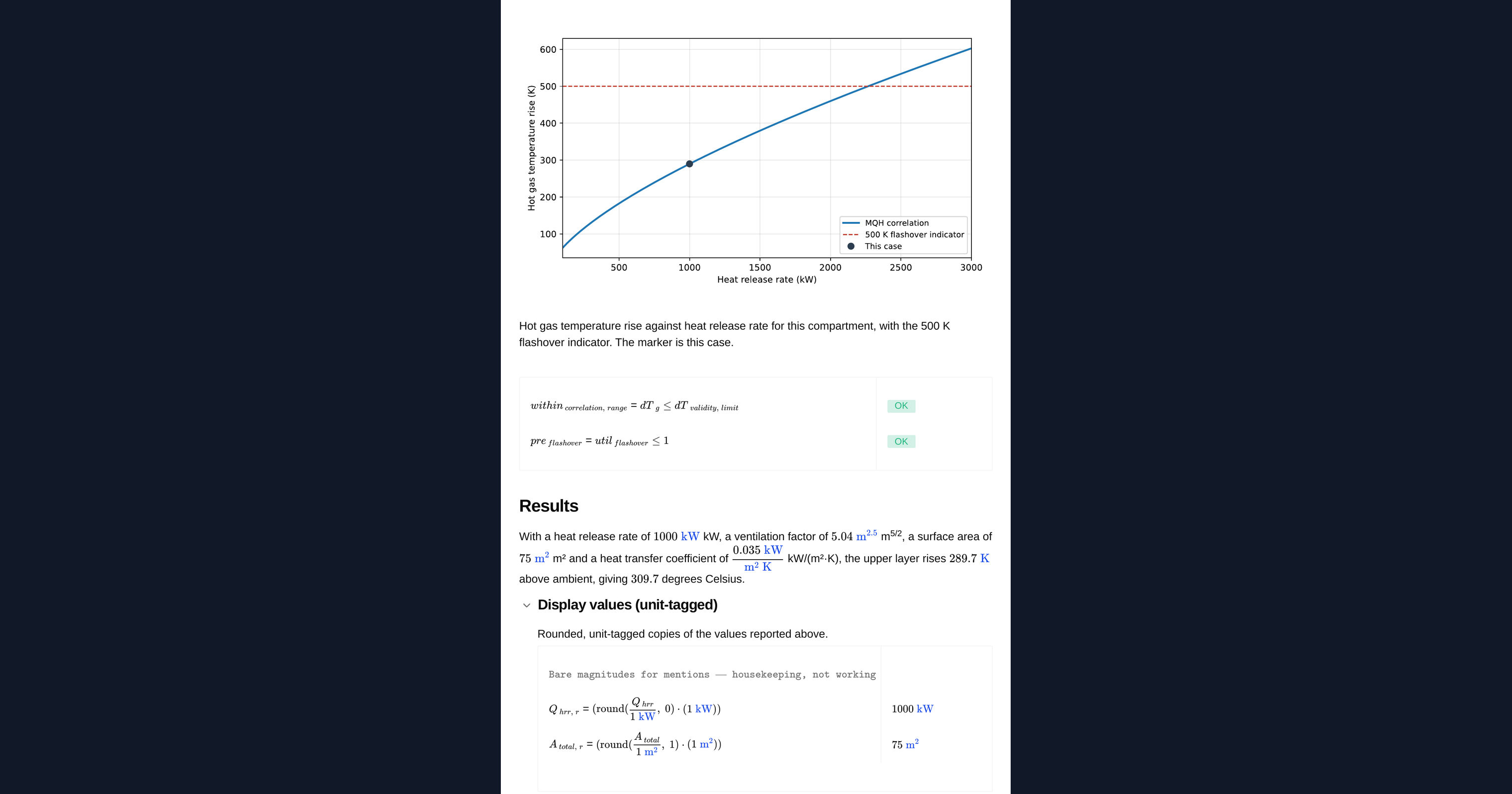
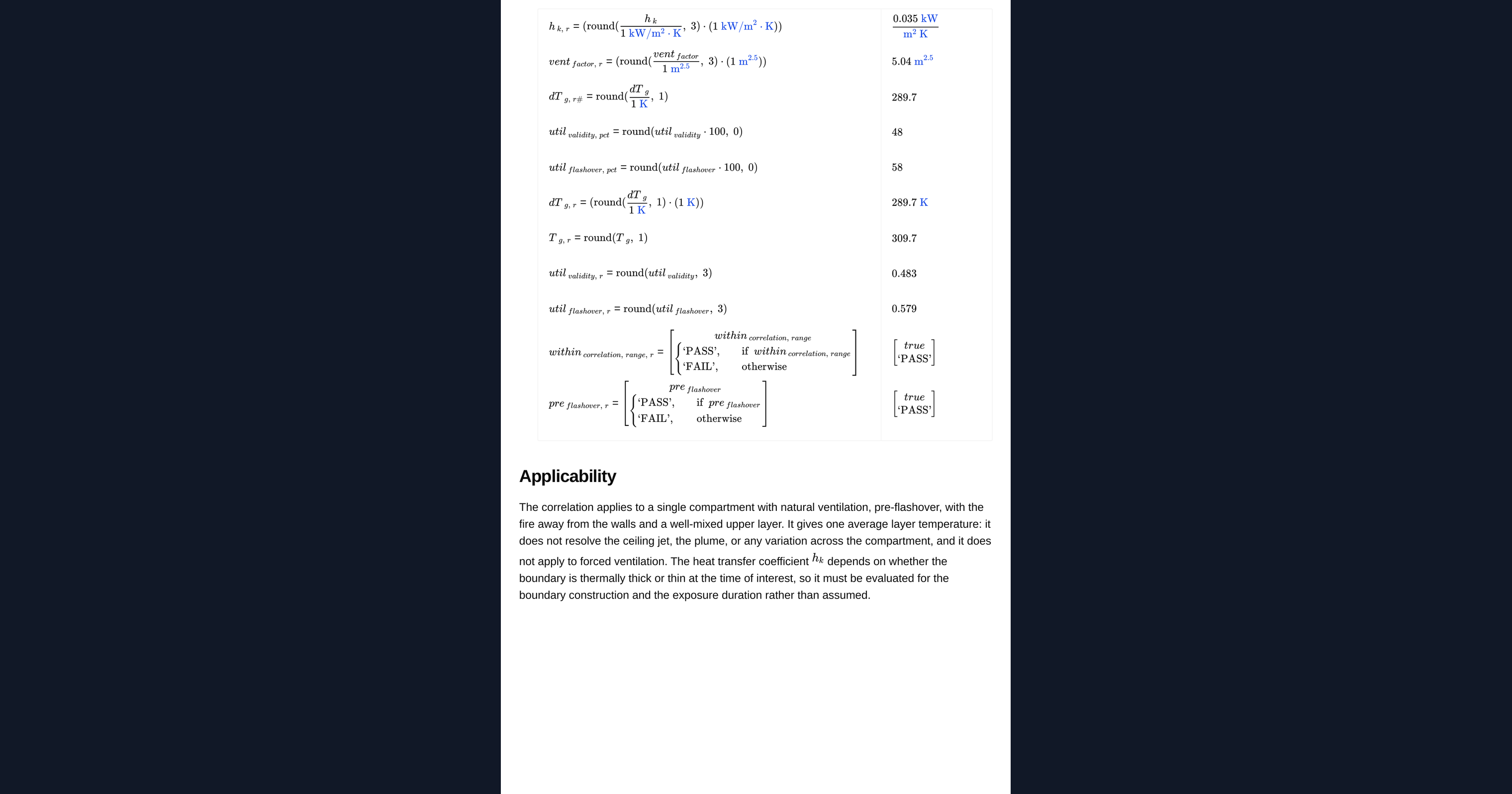
This calculator estimates the hot gas layer temperature rise in a naturally ventilated compartment using the McCaffrey, Quintiere and Harkleroad correlation. It forms the ventilation factor from the area and height of each opening, combines it with the compartment surface area and the effective heat transfer coefficient, and returns the temperature rise above ambient together with the absolute gas temperature. A chart shows the rise across a range of heat release rates with the current case marked.
- Fire safety engineer. Carry out a first order compartment fire assessment without setting up a zone model.
- Design reviewer. Sanity check a modelled hot gas temperature against a well established correlation before accepting it.
- Engineer screening options. Test how opening area and compartment size change the outcome early, before committing to detailed modelling.
The result is checked against the range the correlation was developed over and against a conventional flashover indicator, so the answer arrives with its limits attached. It is an engineering-grade calculator you can audit, adapt and save to a project page in CalcTree.
More info on MQH Hot Gas Temperature
Inputs
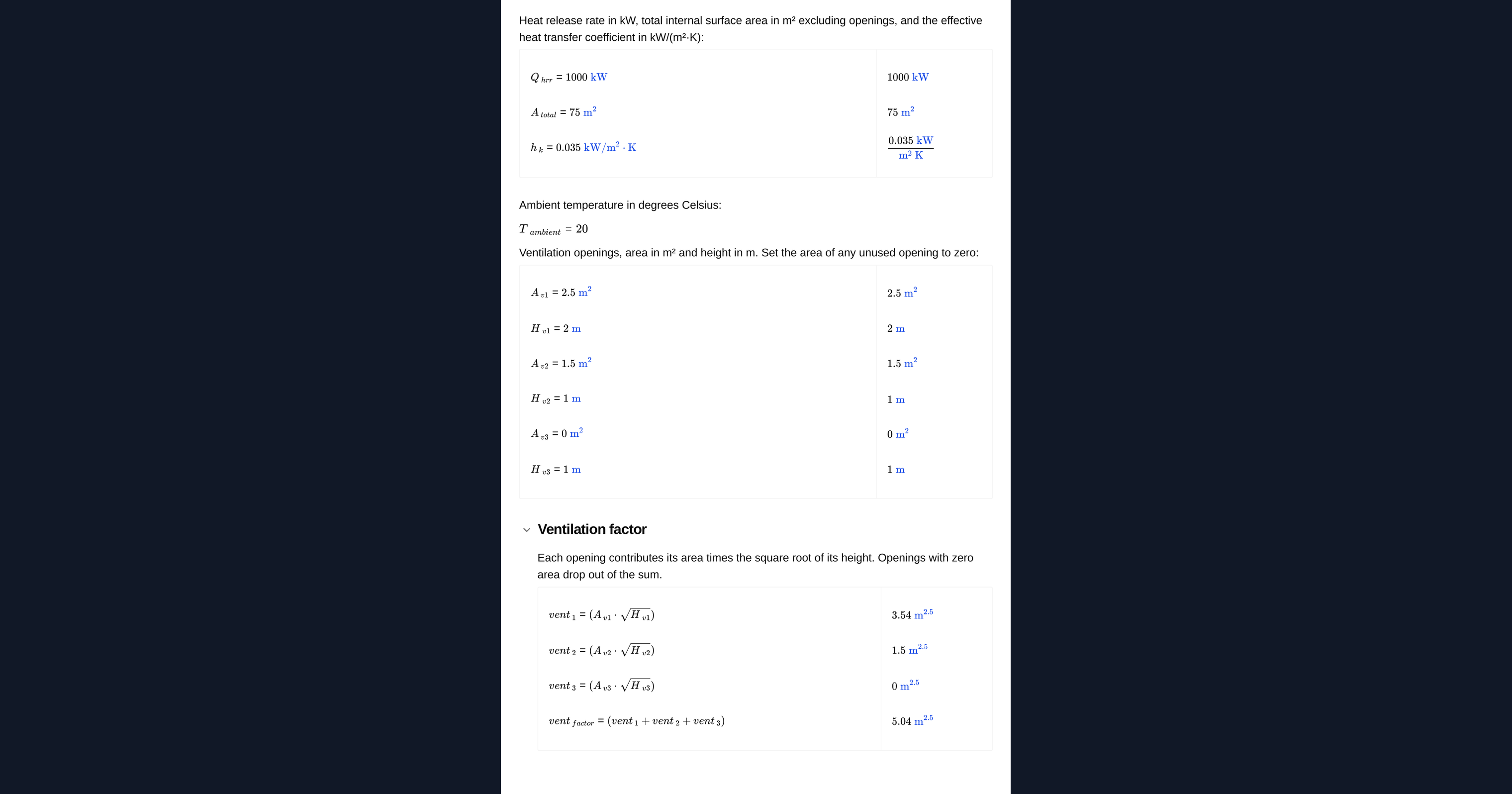
The heat release rate of the fire, the area and height of each ventilation opening, the total internal surface area of the compartment, and the effective heat transfer coefficient of the linings. Ambient temperature is entered to convert the rise into an absolute temperature.
Ventilation factor
Each opening contributes its area multiplied by the square root of its height, and the contributions are summed. This term captures how readily air can flow into the compartment and how readily hot gases can leave, and it dominates the result more than any other input.
The correlation
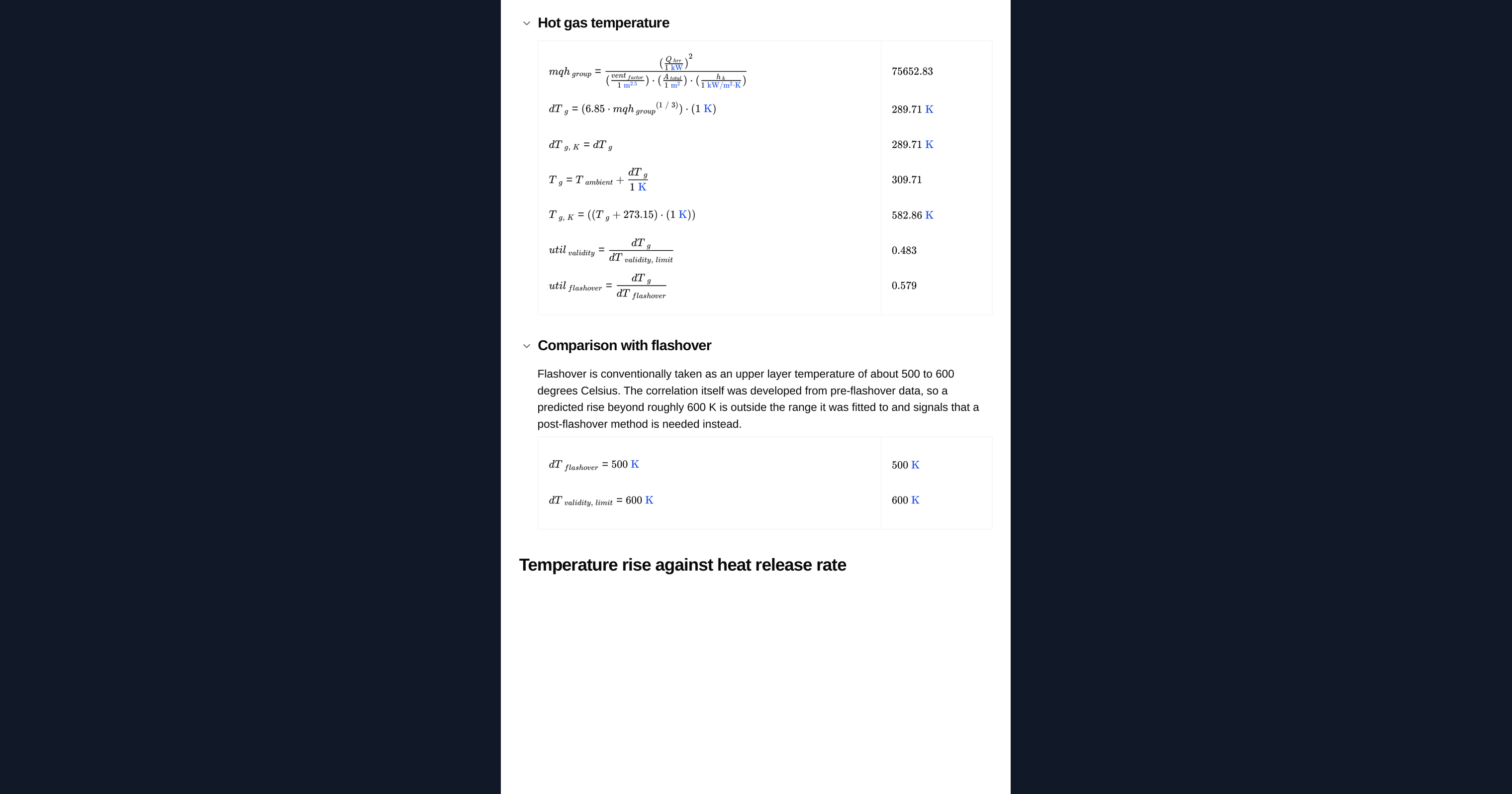
The temperature rise is proportional to the cube root of a dimensionless group formed from the heat release rate, the ventilation factor, the compartment surface area and the heat transfer coefficient. The coefficient in front carries the units of the correlation, so the group is formed from magnitudes in the stated units rather than being dimensionally homogeneous.
Validity and flashover
The correlation was fitted to pre-flashover compartment fire data. The calculator reports the rise against the upper bound of that data and against a conventional flashover indicator, so a result outside the fitted range is flagged rather than returned without comment.
Common Calculation Errors to Avoid
- Including the floor in the compartment surface area. The area term represents the surfaces that absorb heat from the gas layer, and conventions differ on what to include. Be consistent with the basis you have adopted and state it.
- Using a single opening height for openings of different sizes. Each opening contributes separately through its own height. Lumping areas together and applying one height distorts the ventilation factor.
- Taking the heat transfer coefficient as a fixed property. It depends on the lining material and on how long the fire has burned relative to the thermal penetration time, so it changes through the fire.
- Applying the correlation after flashover. It was developed from pre-flashover data. Beyond that range the prediction is an extrapolation and should not be relied on.
- Confusing the rise with the absolute temperature. The correlation returns a temperature rise above ambient. Reporting it as an absolute temperature understates the result by the ambient value.
- Ignoring the effect of a large opening. A very large opening keeps the compartment cool and may put the fire outside the regime the correlation describes.
Engineering templates
Common calculators
Design guides




FAQs
What is the ventilation factor?
The sum over all openings of the opening area multiplied by the square root of the opening height. It captures how readily air enters and gases leave the compartment, and it is the dominant term in the correlation.
When is this correlation valid?
It was developed for naturally ventilated compartments before flashover. Beyond the upper bound of the data it was fitted to, the result is an extrapolation, and the calculator flags that rather than returning a number silently.
What heat transfer coefficient should I use?
It depends on the lining material and on the burning duration relative to the thermal penetration time of that lining. Early in a fire the value differs from the steady state one, and it is worth testing the sensitivity of the result to it.
Does this predict flashover?
Not directly. It compares the temperature rise against a conventional flashover indicator. Approaching that threshold suggests conditions are heading towards flashover and a more detailed analysis is appropriate.
How does this compare with a zone model?
It gives a single hot layer temperature from an algebraic correlation, with no time dependence and no layer interface height. A zone model gives both layers and their development over time, and is the right tool once the screening stage is passed.
Learn about the benefits of using CalcTree on engineering projects!