
Check steel I and H sections to EN 1993-1-1: classification, bending, shear, buckling and combined N+M, worked step by step. Try it free.

This template is not available yet. You can sign up and create it yourself!
Or let us know if you'd like to be notified when it’s ready:


No items found.
No items found.
About this Eurocode Steel Member Design Calculator
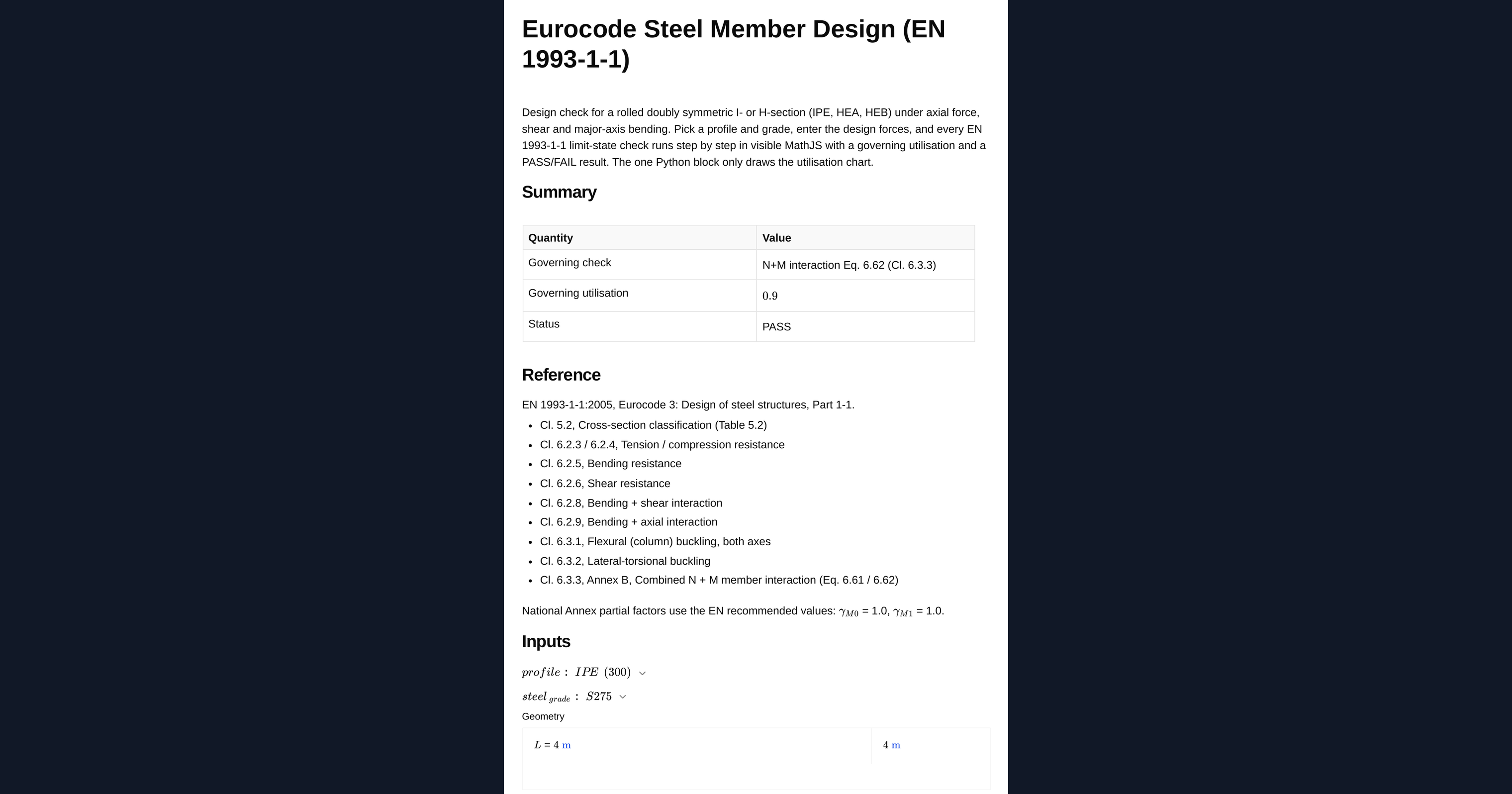
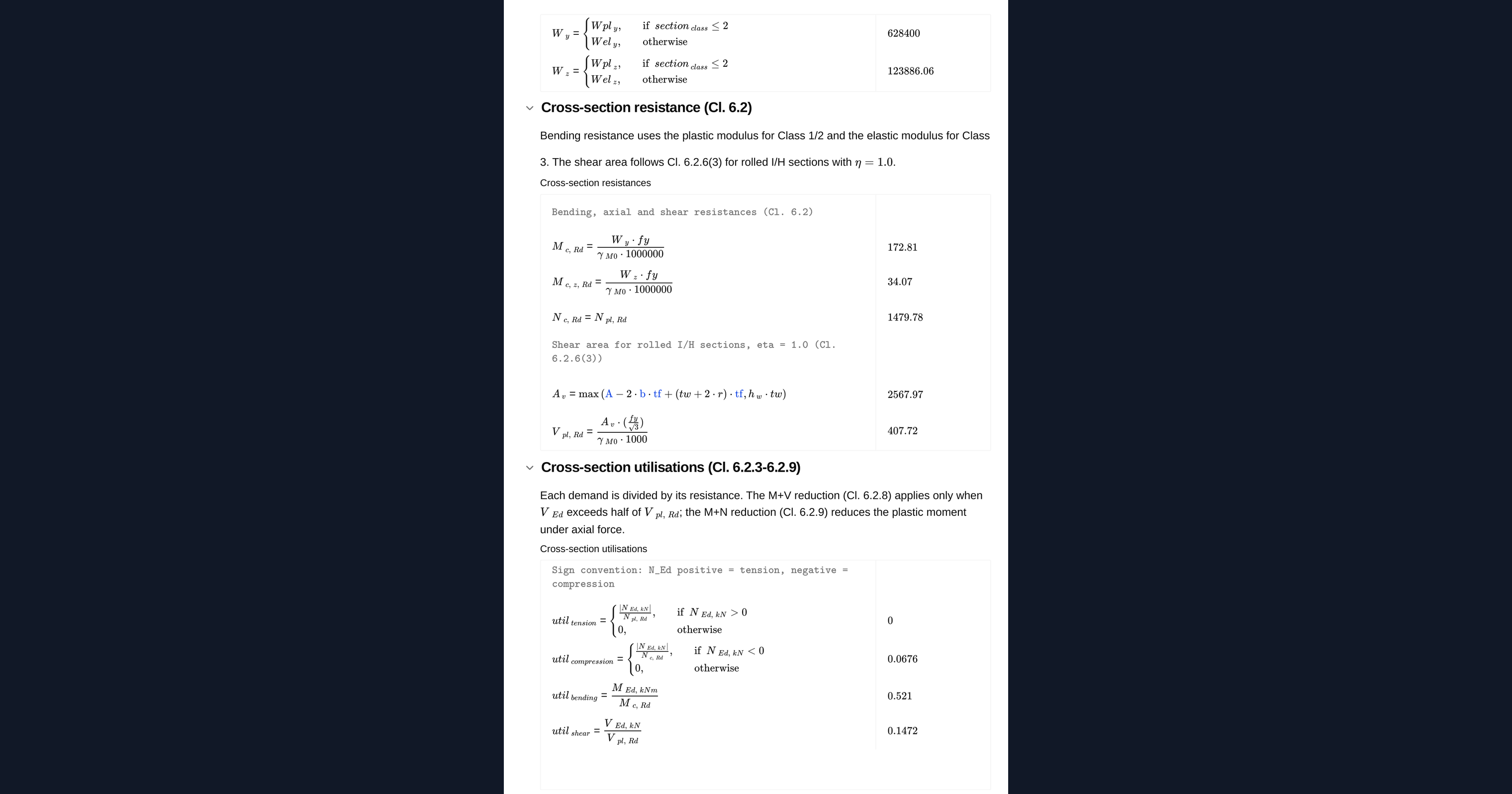
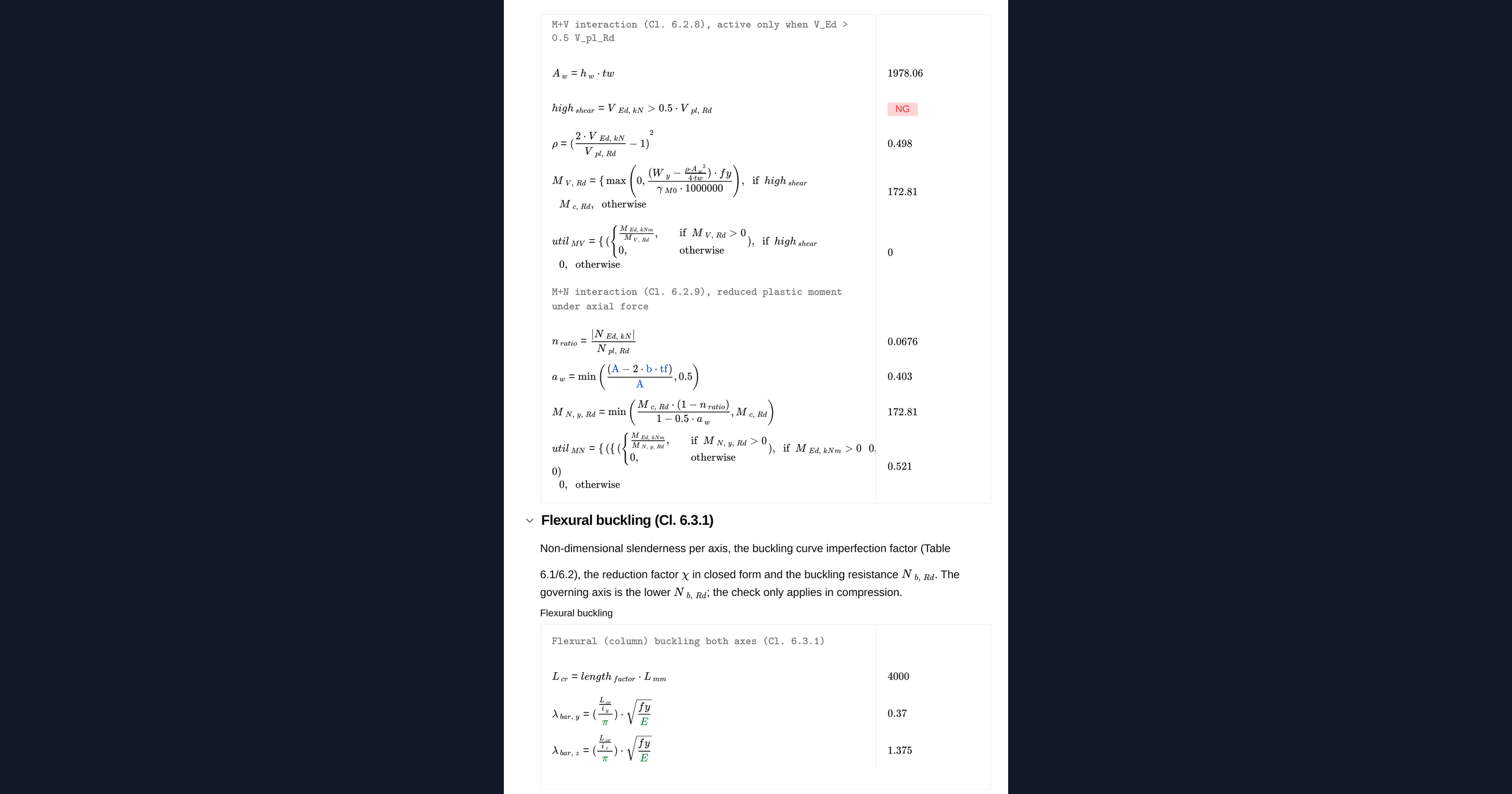
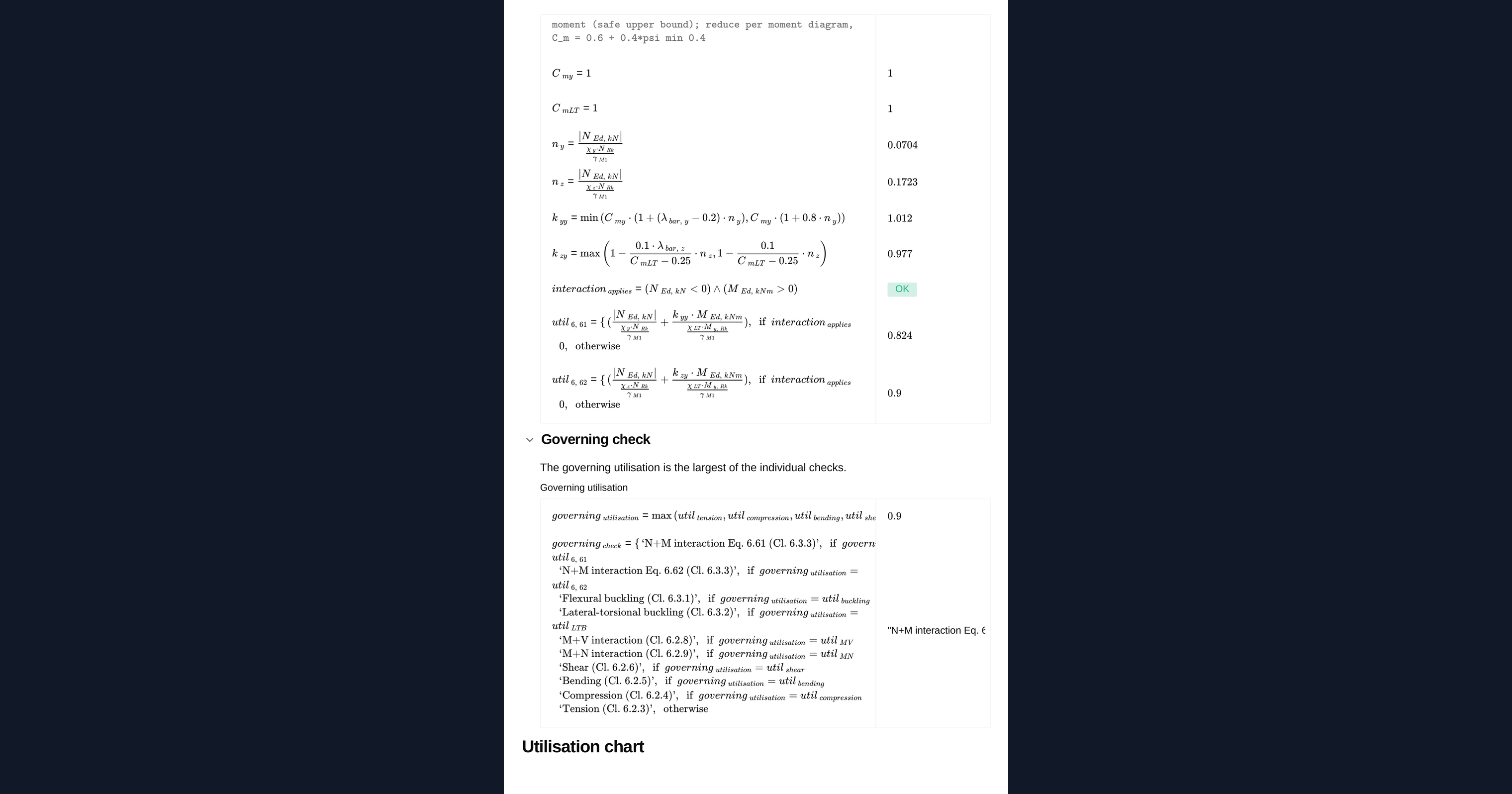
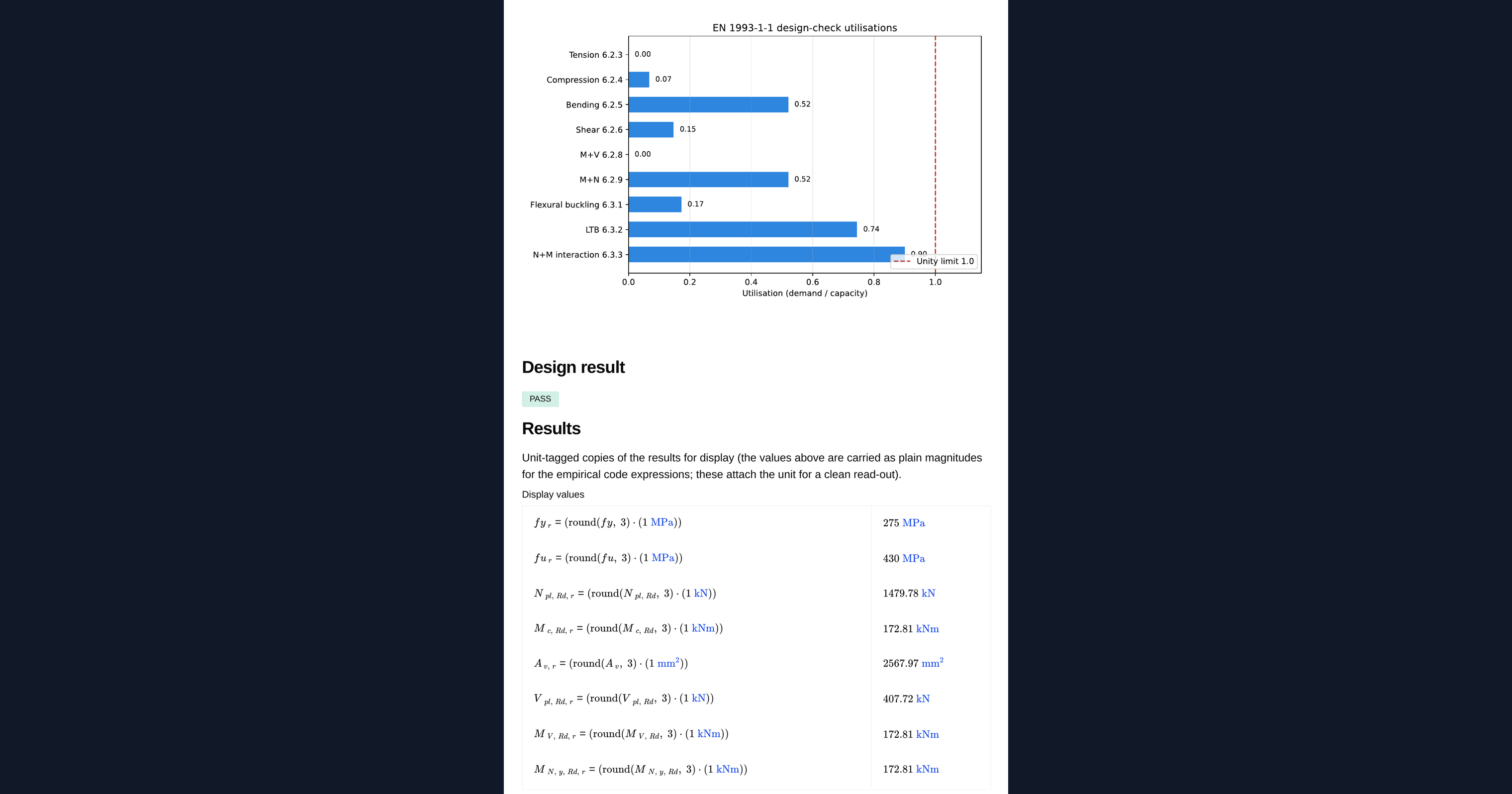
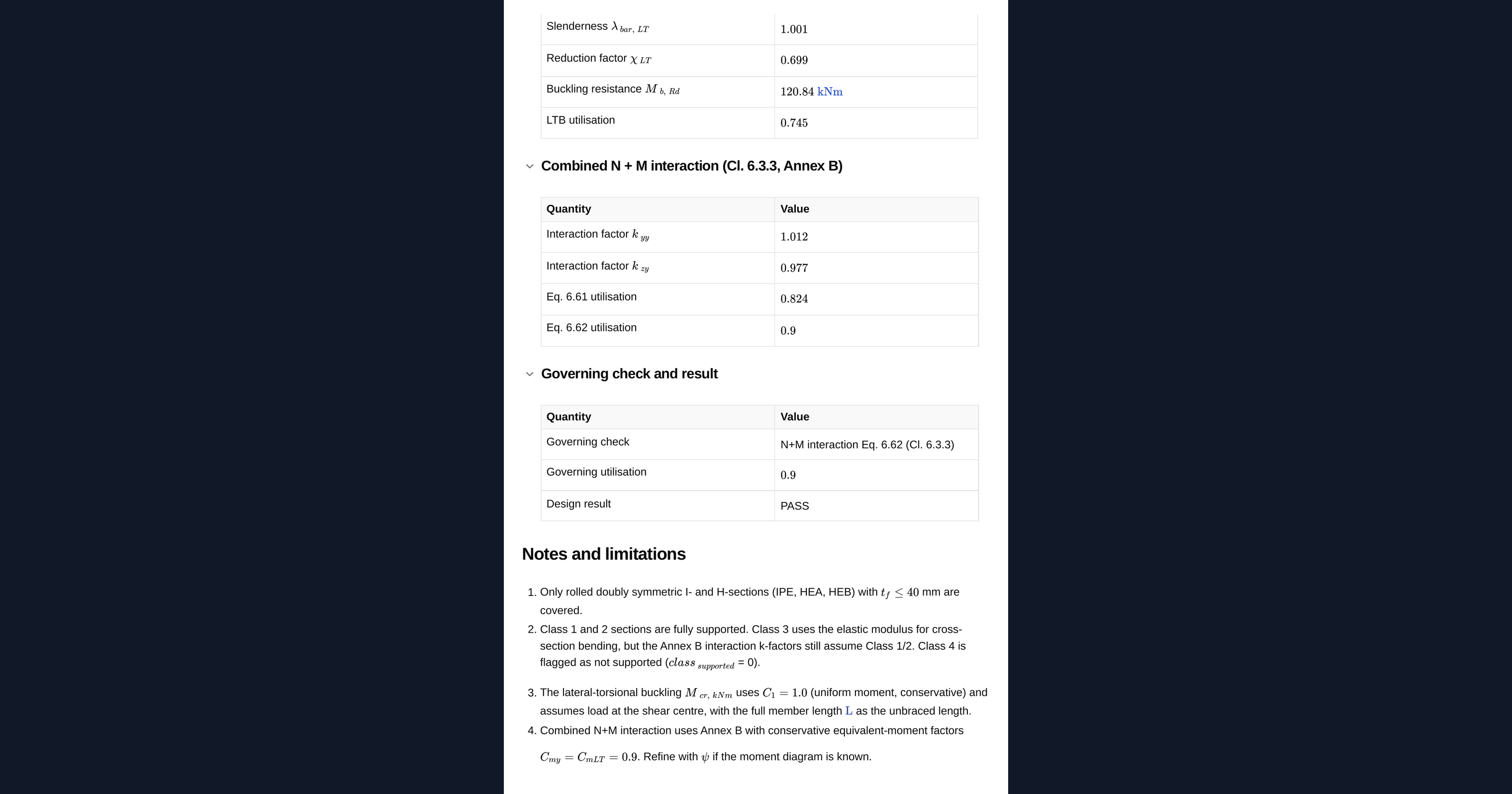
This calculation checks a rolled doubly symmetric I or H section (IPE, HEA, HEB) under axial force, shear and major-axis bending to Eurocode 3 (EN 1993-1-1). It runs cross-section classification, the section resistances, member buckling and the combined axial-plus-bending interaction, and reports a governing utilisation with a pass or fail. Every step is worked in visible maths.
- Structural steelwork engineers pick a profile and grade, enter the design actions and read the governing check straight away.
- Design reviewers and checkers trace each clause and intermediate value against EN 1993-1-1.
- Graduates and students see how classification, buckling reduction factors and the interaction factors fit together.
It is an engineering-grade calculation on CalcTree that you can duplicate, edit and fold into your own project workspace.
More info on Eurocode Steel Member Design
Inputs
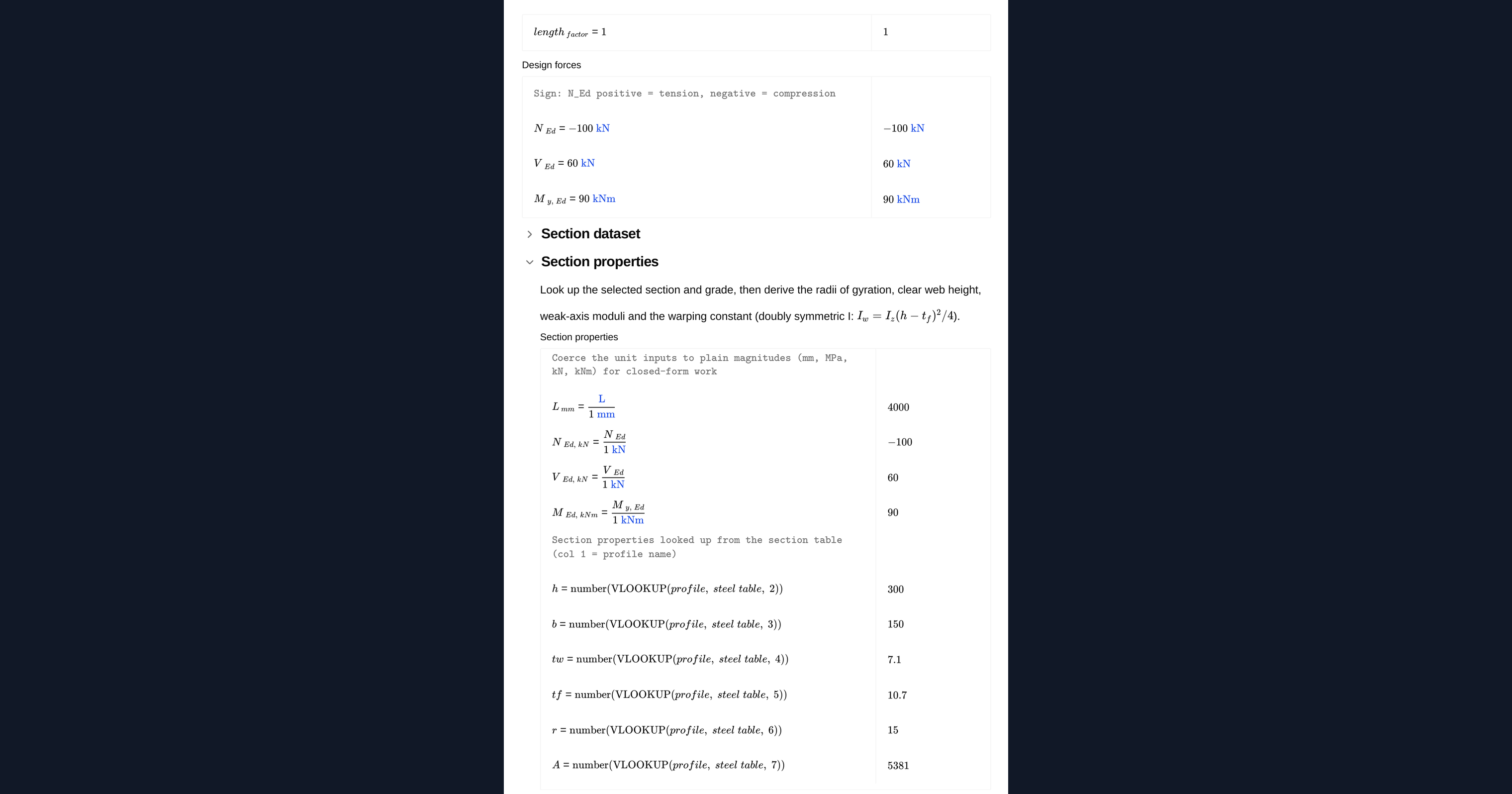
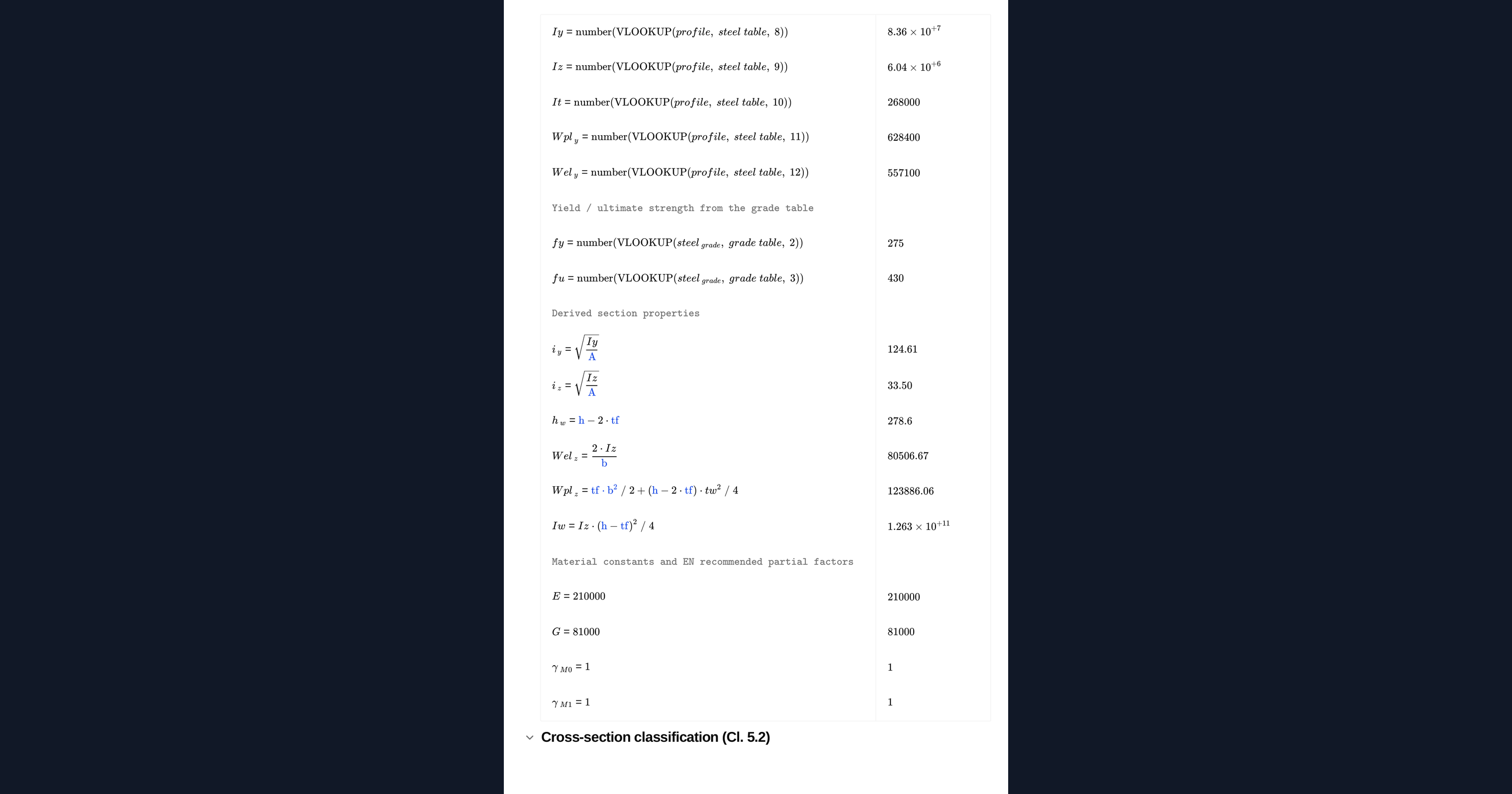
Choose the section profile and steel grade, set the member length and effective-length factor, and enter the design axial force, shear and major-axis moment. Section properties and yield and ultimate strengths are read from standard tables.
Design checks
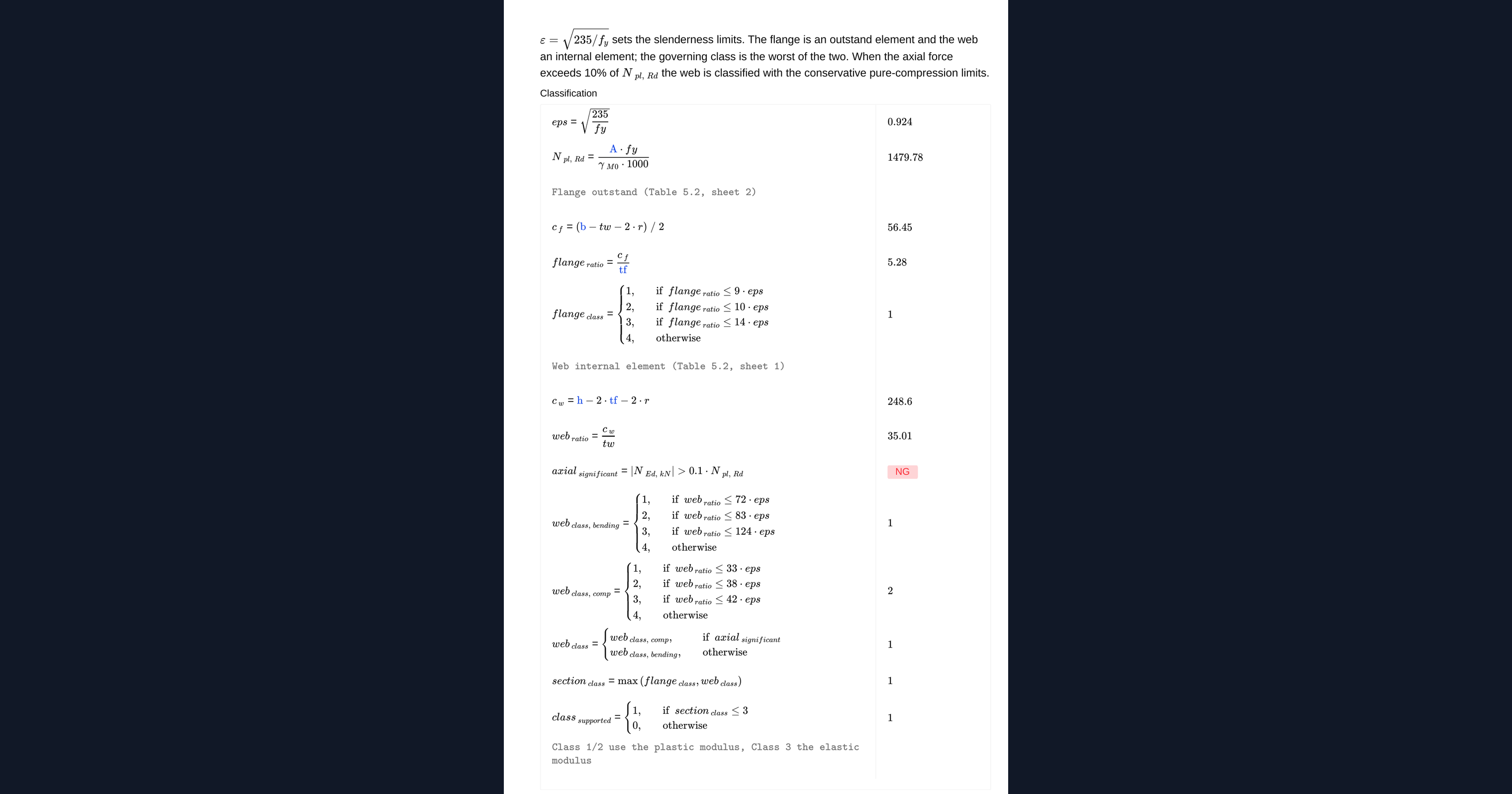
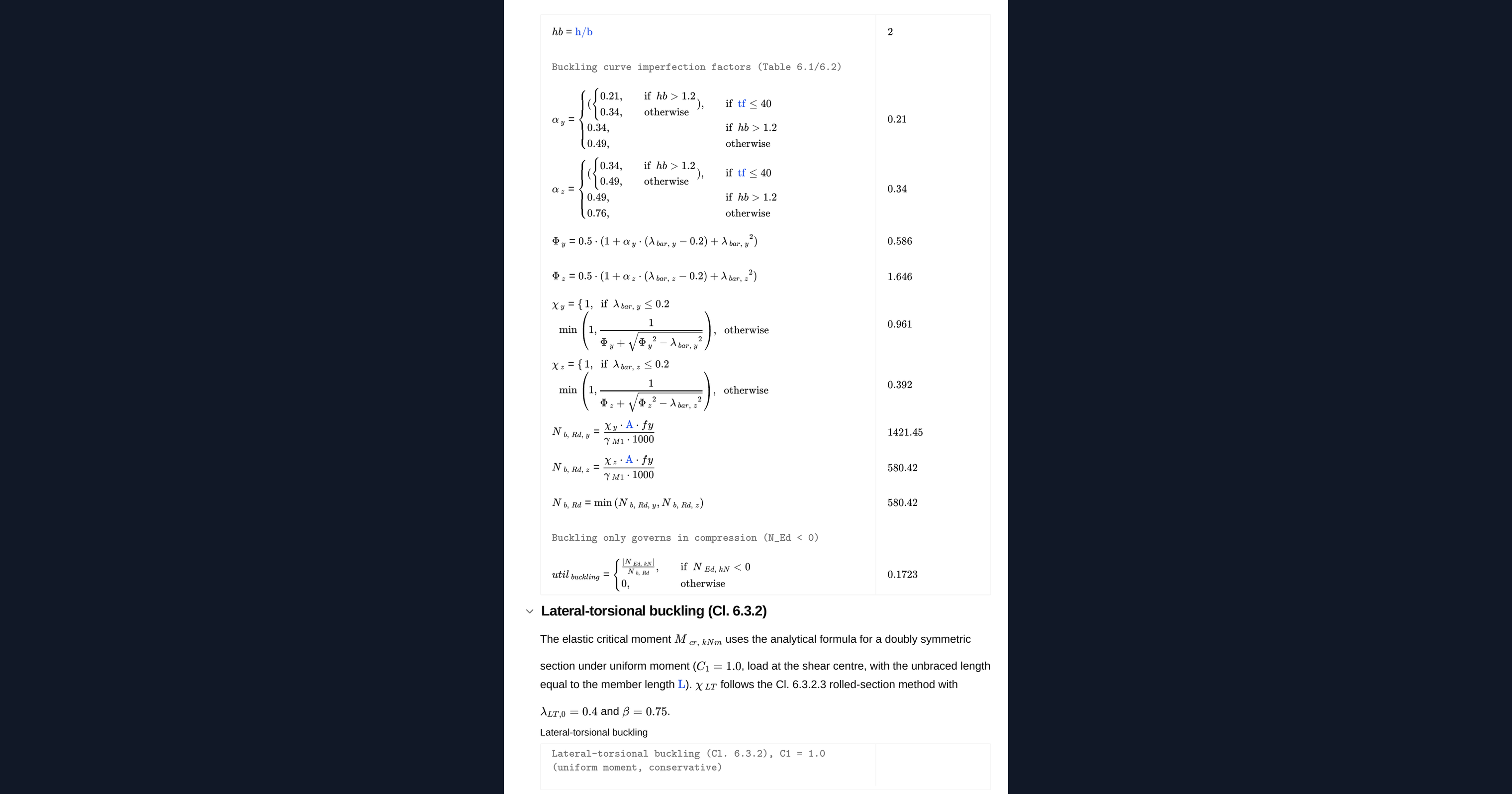
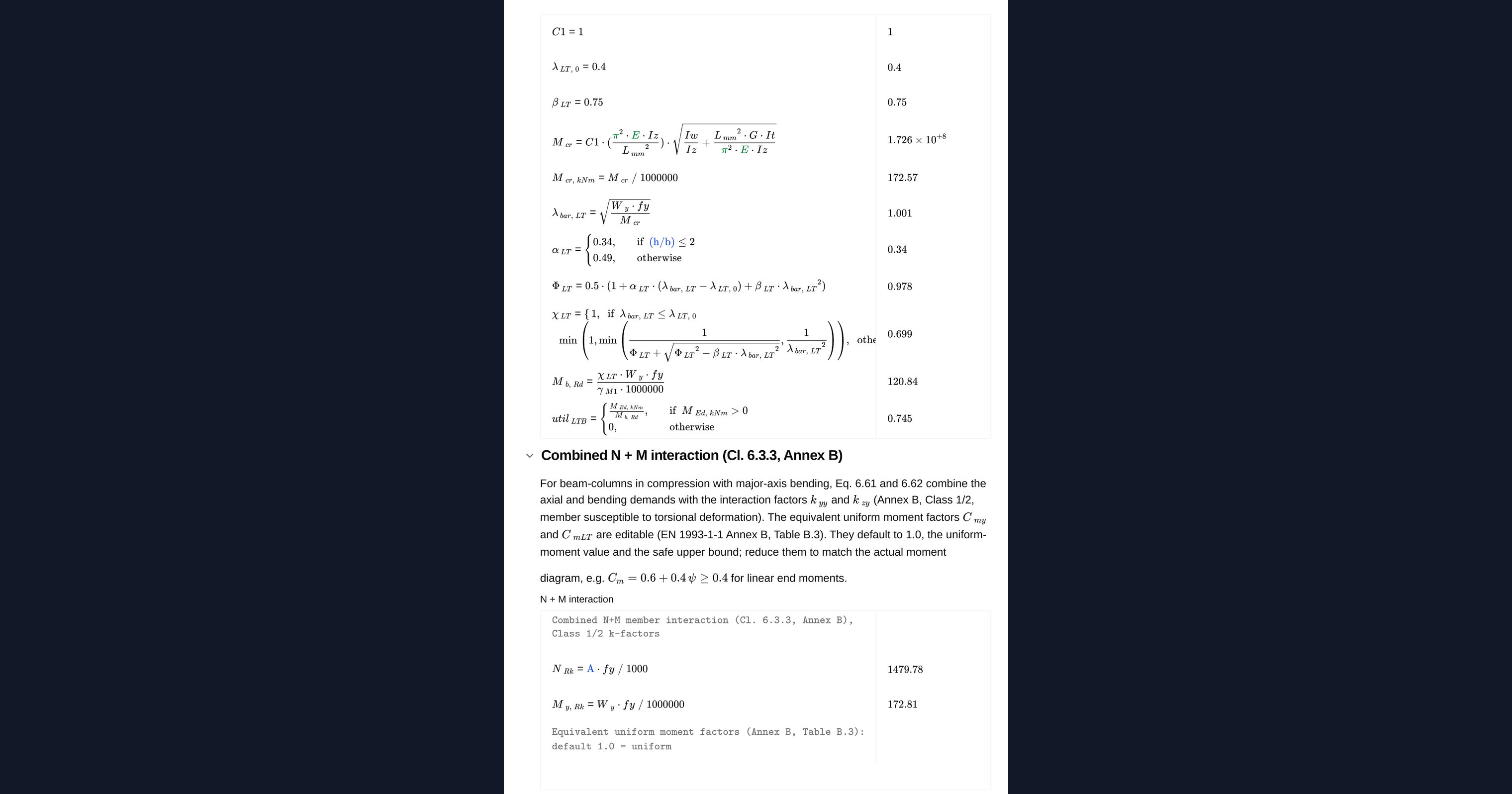
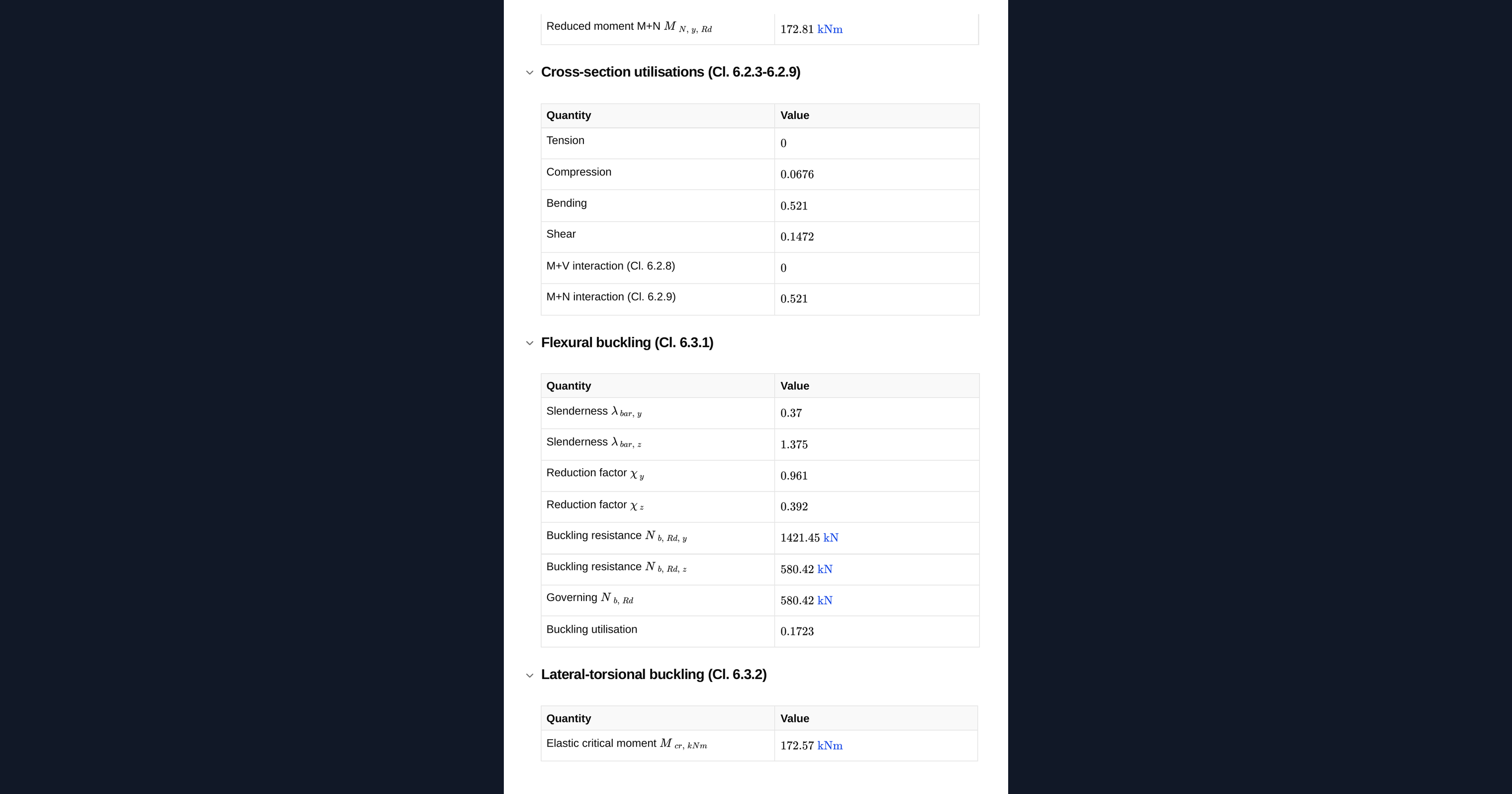
Cross-section classification sets the applicable resistances. The calculation covers tension and compression, bending, shear, the bending-plus-shear and bending-plus-axial interactions, flexural buckling about both axes, lateral-torsional buckling, and the combined axial-plus-bending member interaction.
Methods
Resistances follow EN 1993-1-1, with buckling reduction factors from the relevant buckling curves and the member interaction from Annex B. The maths is carried in MathJS, with a single chart summarising the design-check utilisations.
Common Calculation Errors to Avoid
- Wrong section class assuming a plastic section when it is Class 3 or 4 overstates the bending and compression resistance.
- Missed lateral-torsional buckling an unrestrained compression flange can buckle below the in-plane capacity.
- Wrong buckling axis or length check both axes with the correct effective length.
- Axis confusion keep major and minor axis moments and section properties consistent.
- Interaction skipped the combined axial-plus-bending check must run when both act together.
Engineering templates
Common calculators
Design guides




FAQs
What does cross-section classification decide?
Classification (Class 1 to 4) determines whether the section can reach its plastic moment, only its elastic moment, or is limited by local buckling. It sets which resistance formulae apply for bending and compression.
When does lateral-torsional buckling govern?
When the compression flange is not laterally restrained over the span, an unrestrained beam can buckle sideways below its in-plane bending capacity. The calculation reduces the bending resistance with the lateral-torsional buckling factor.
How is combined axial force and bending handled?
The member interaction from Annex B combines the axial and bending utilisations with interaction factors, checked about both axes. The governing utilisation is the largest across all checks.
Which sections are supported?
Rolled doubly symmetric I and H sections (IPE, HEA, HEB), selected from the built-in section library.
Can I change the steel grade?
Yes. The grade sets the yield and ultimate strengths, which flow through classification, the resistances and the buckling checks.
Learn about the benefits of using CalcTree on engineering projects!