
Design reinforced concrete members to Eurocode 2: slenderness, second-order moments, N-M interaction and shear, worked step by step. Try it free.

This template is not available yet. You can sign up and create it yourself!
Or let us know if you'd like to be notified when it’s ready:
No items found.
No items found.
About this EC2 Reinforced Concrete Member Design Calculator
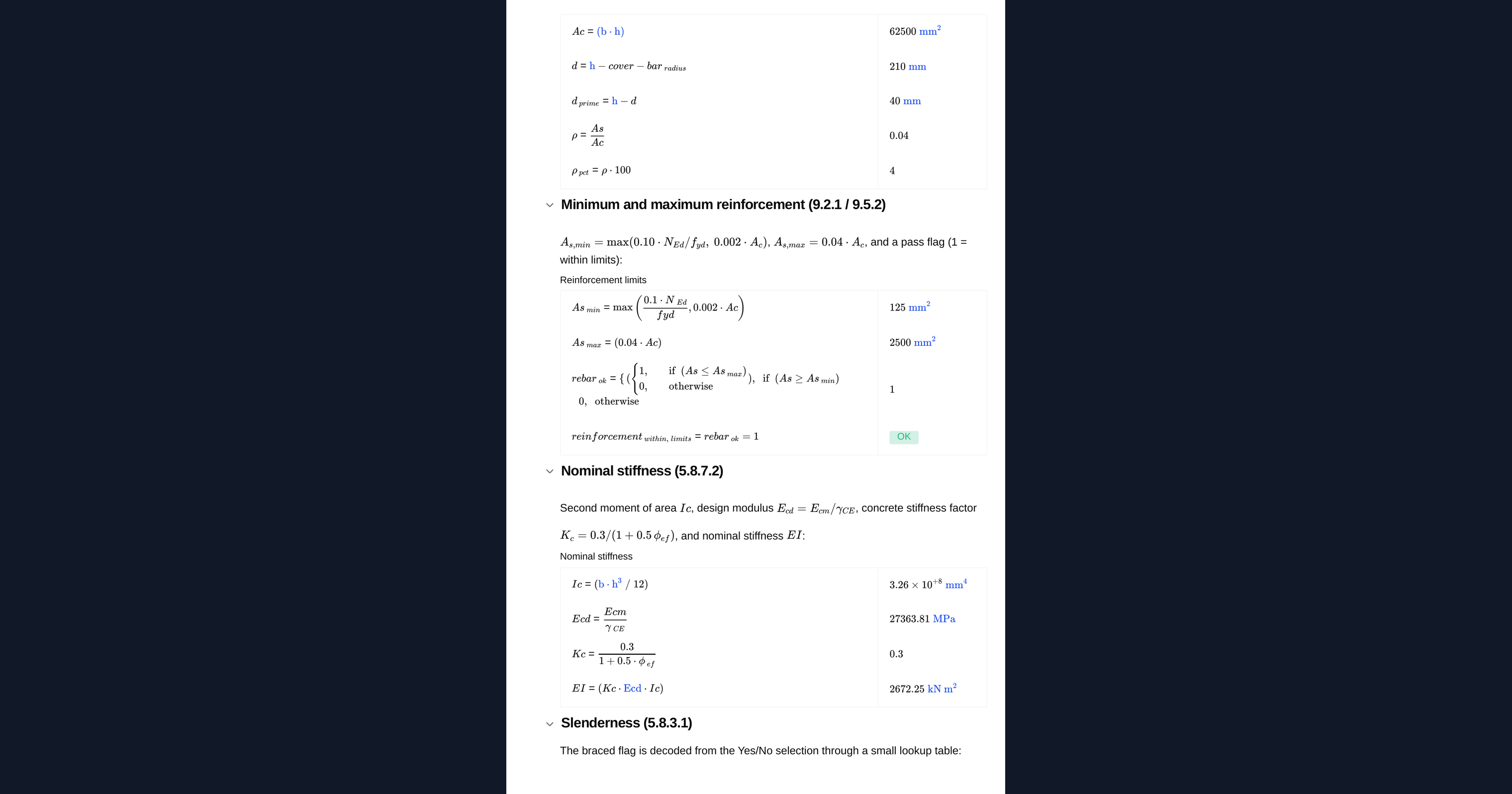
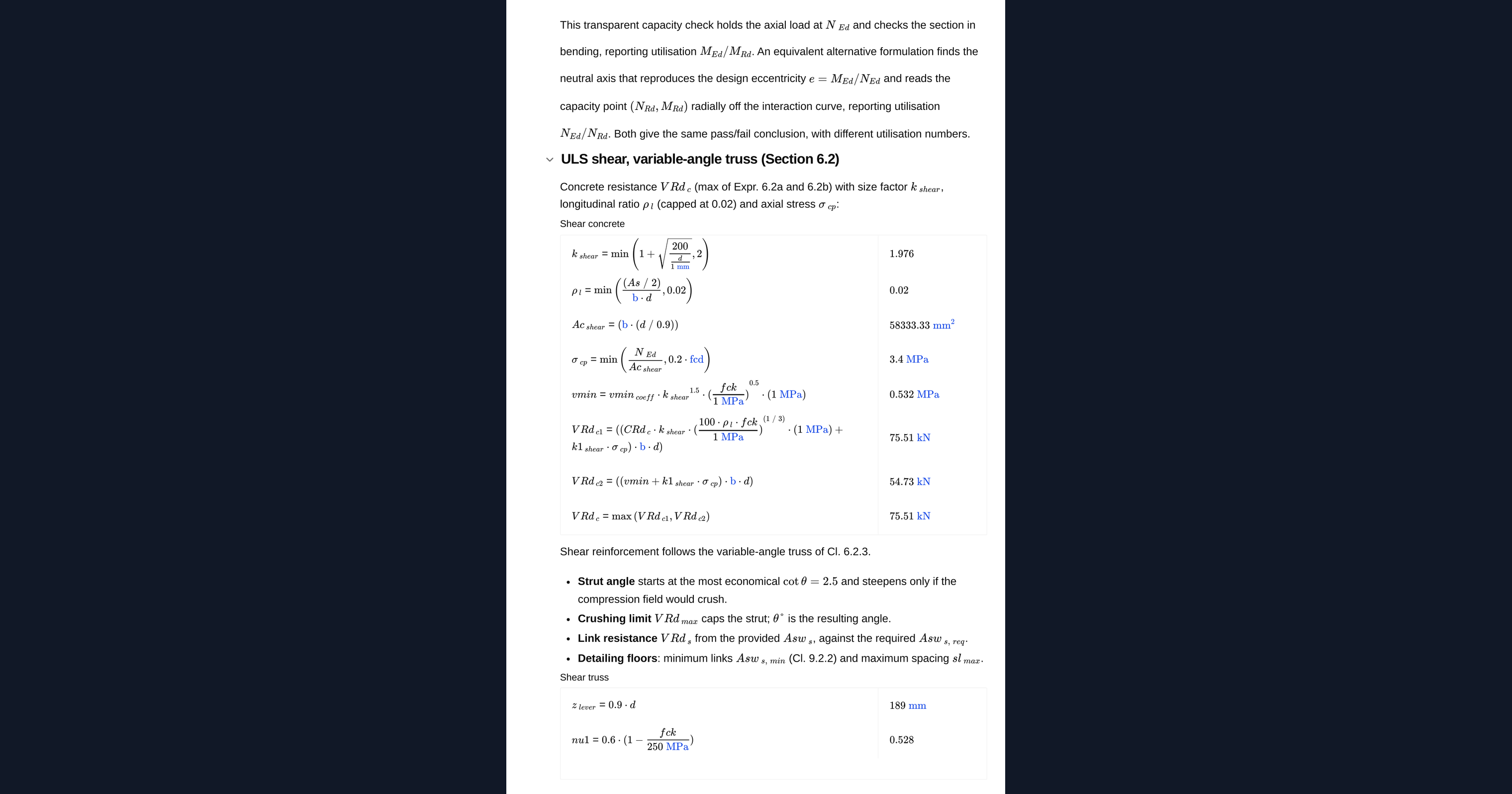
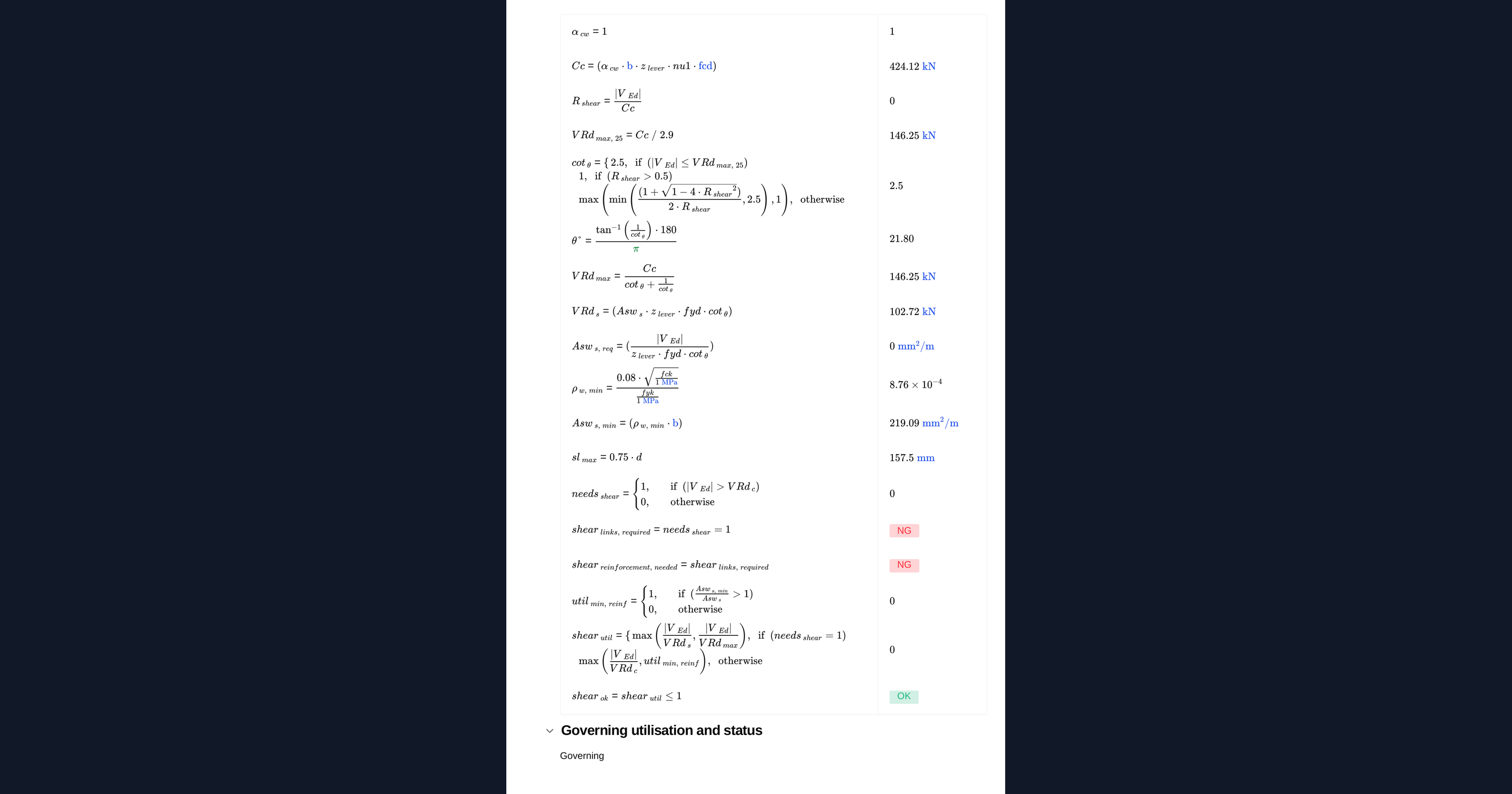
This calculation checks a rectangular reinforced concrete member under combined axial force and bending to Eurocode 2 (EN 1992-1-1), covering slenderness classification, second-order moment magnification, the axial-moment (N-M) interaction capacity, ULS shear by the variable-angle truss, and the minimum and maximum reinforcement rules. Every step is worked in visible maths, so you can follow the logic rather than trust a black box.
- Structural engineers sizing or checking columns and walls enter the section, reinforcement and design actions and read the governing utilisation straight away.
- Design reviewers and checkers trace each clause reference and intermediate value when verifying a submission.
- Graduates and students see how slenderness, creep and the end-moment ratio feed into the second-order moment.
It is an engineering-grade calculation on CalcTree that you can duplicate, edit and fold into your own project workspace.
More info on EC2 Reinforced Concrete Member Design
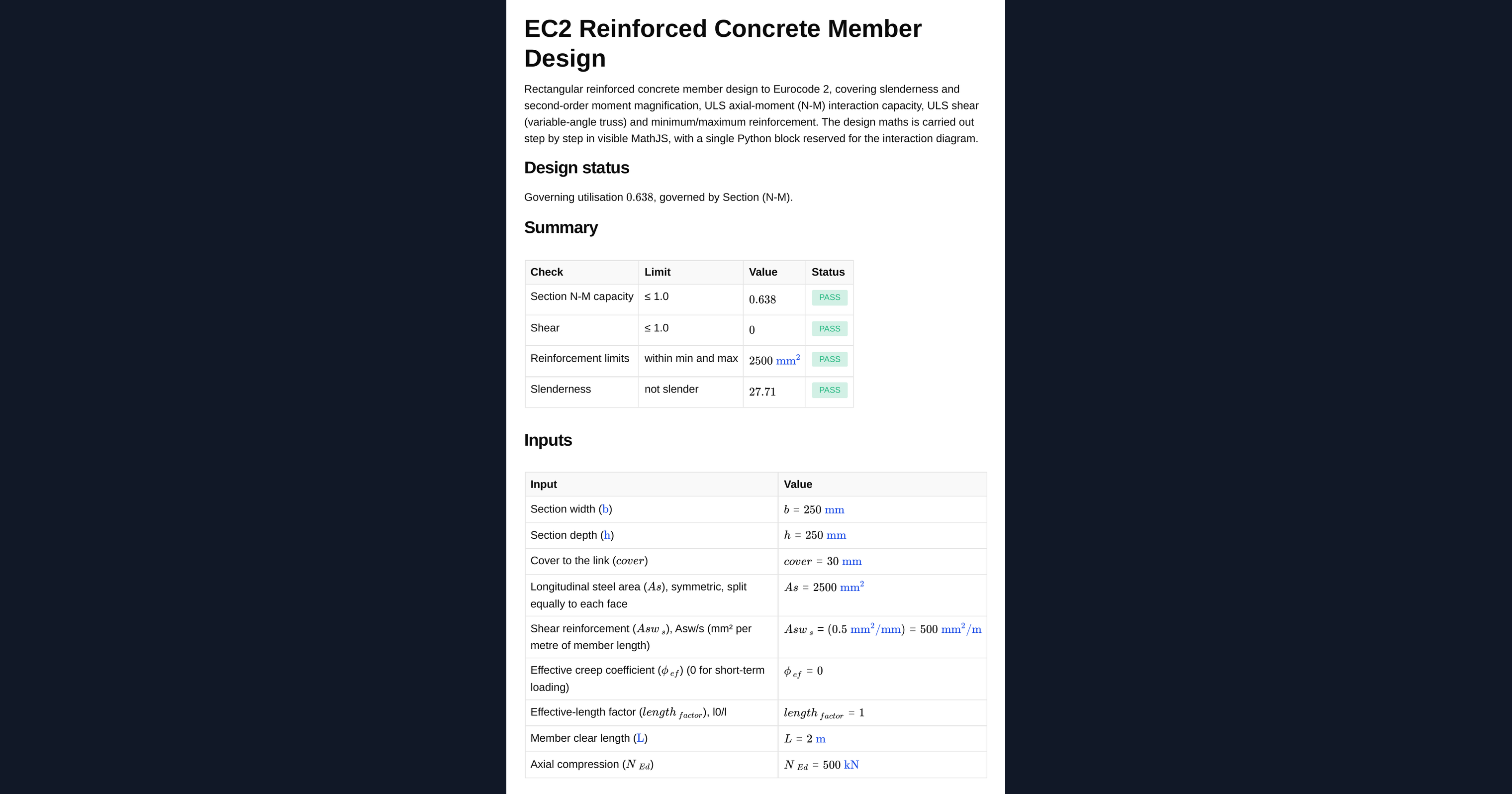
Inputs
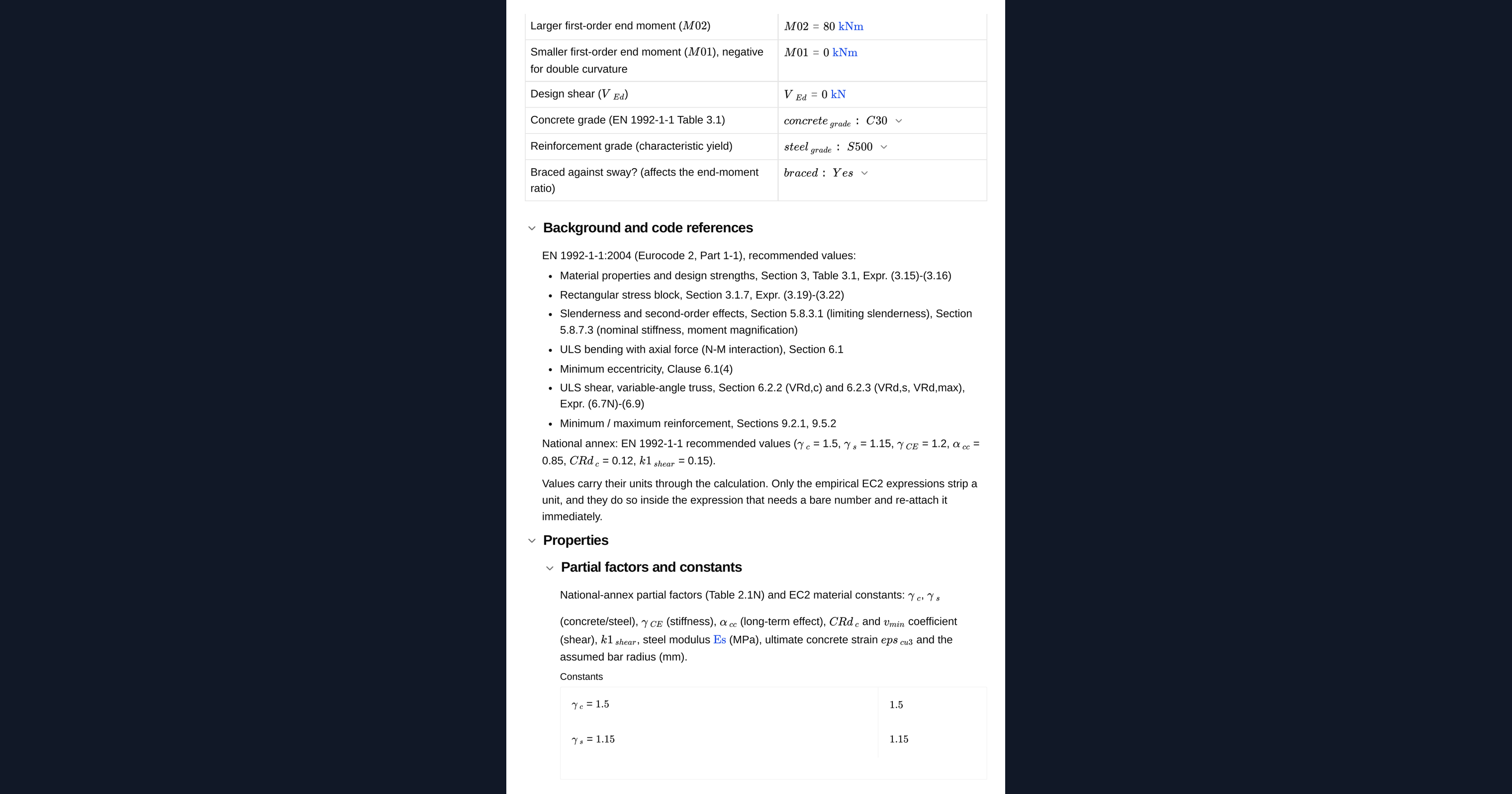
Enter the section width and depth, cover, longitudinal and shear reinforcement, effective creep coefficient, effective length, and the design axial force and end moments. Concrete and reinforcement grades are selected from standard tables, and a braced or unbraced flag sets the end-moment behaviour.
Design checks
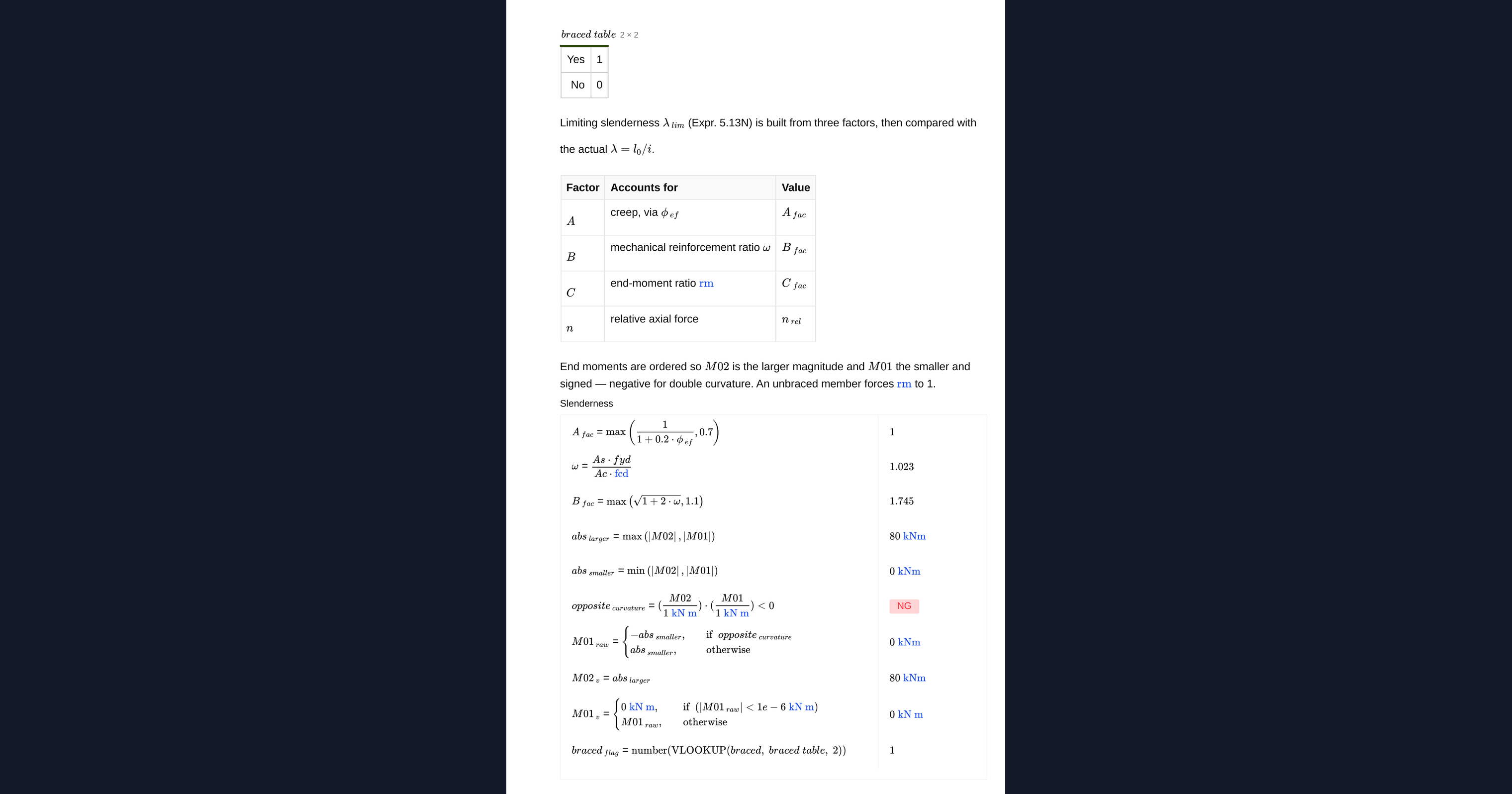
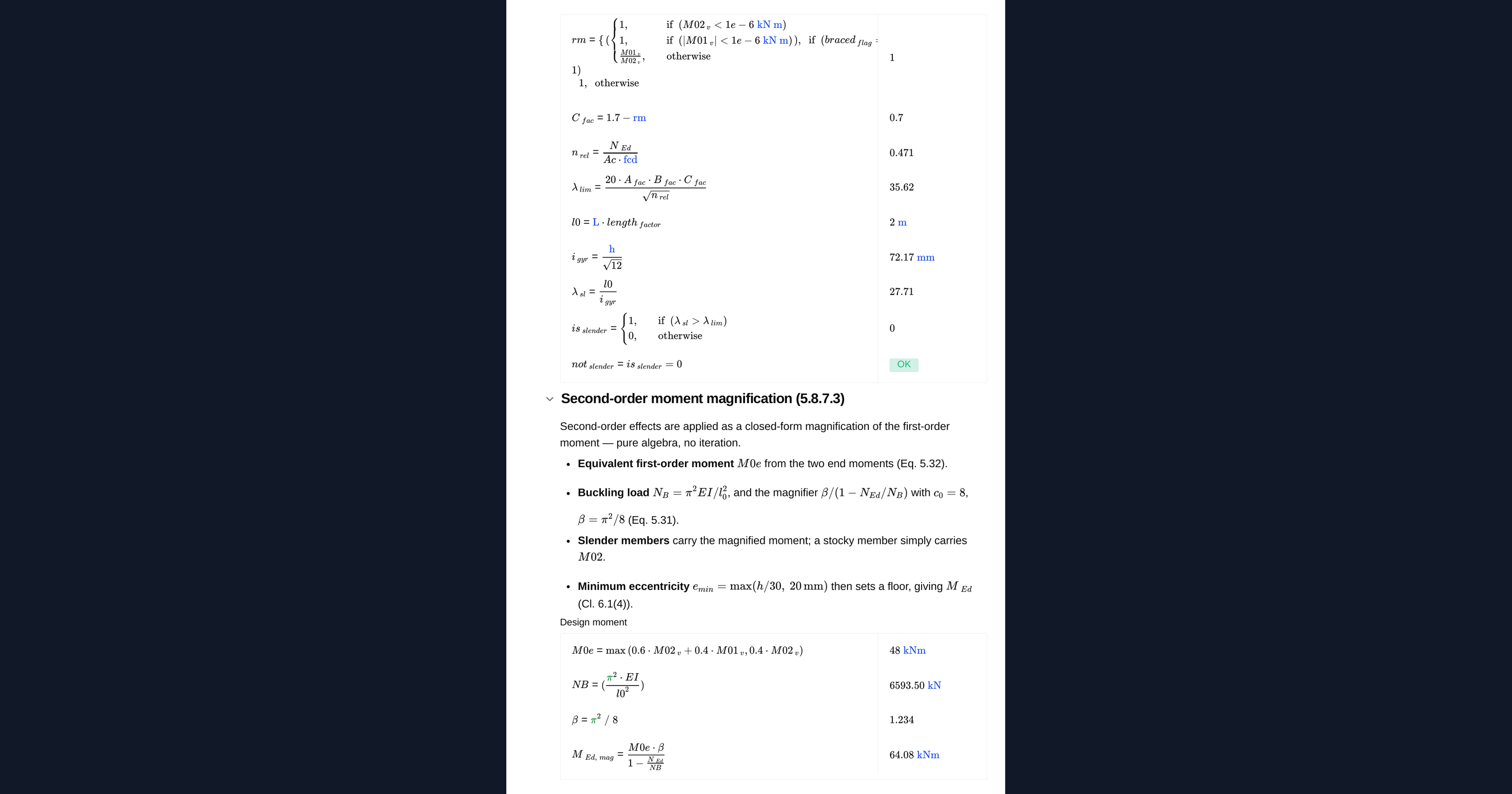
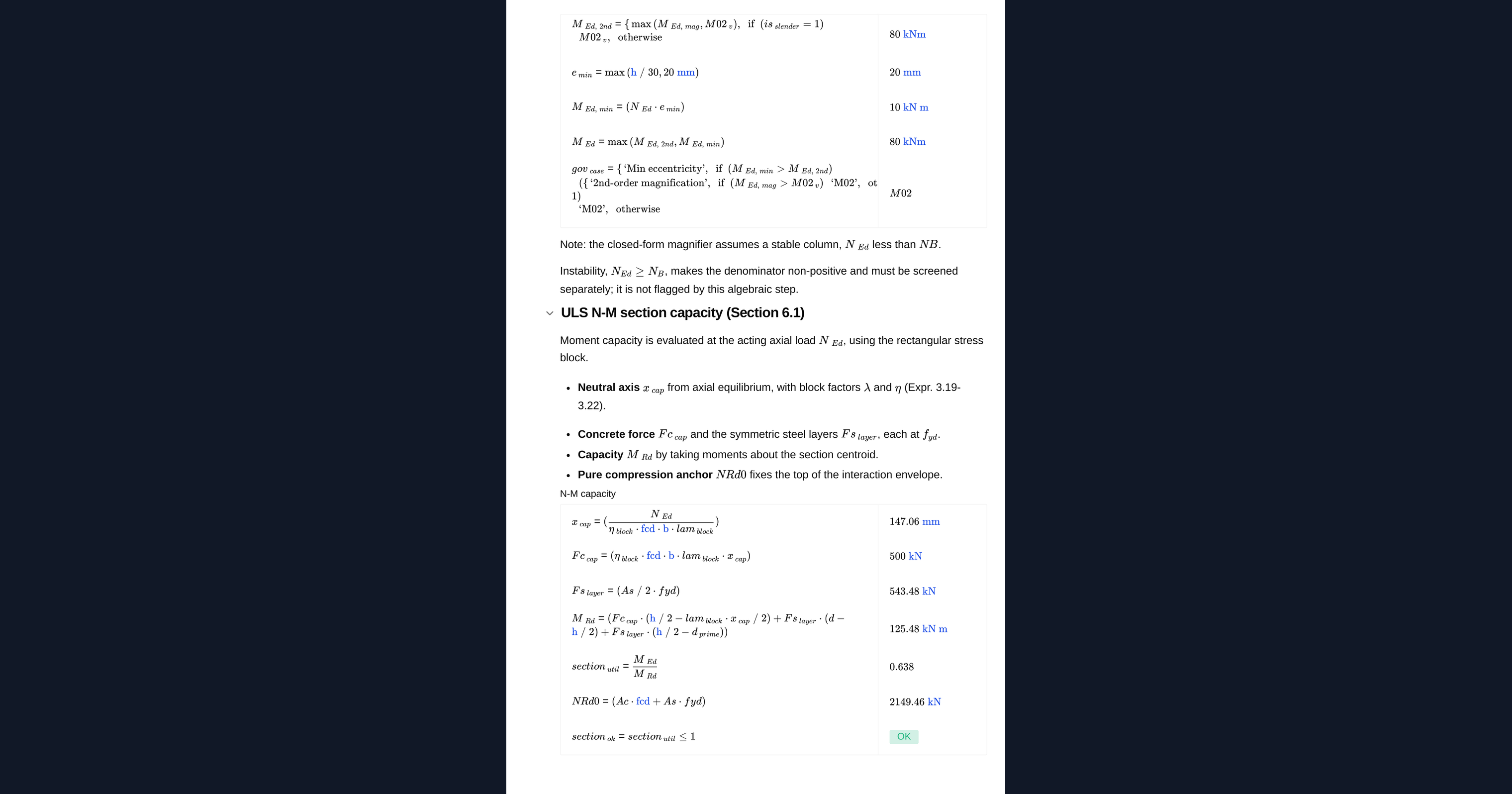
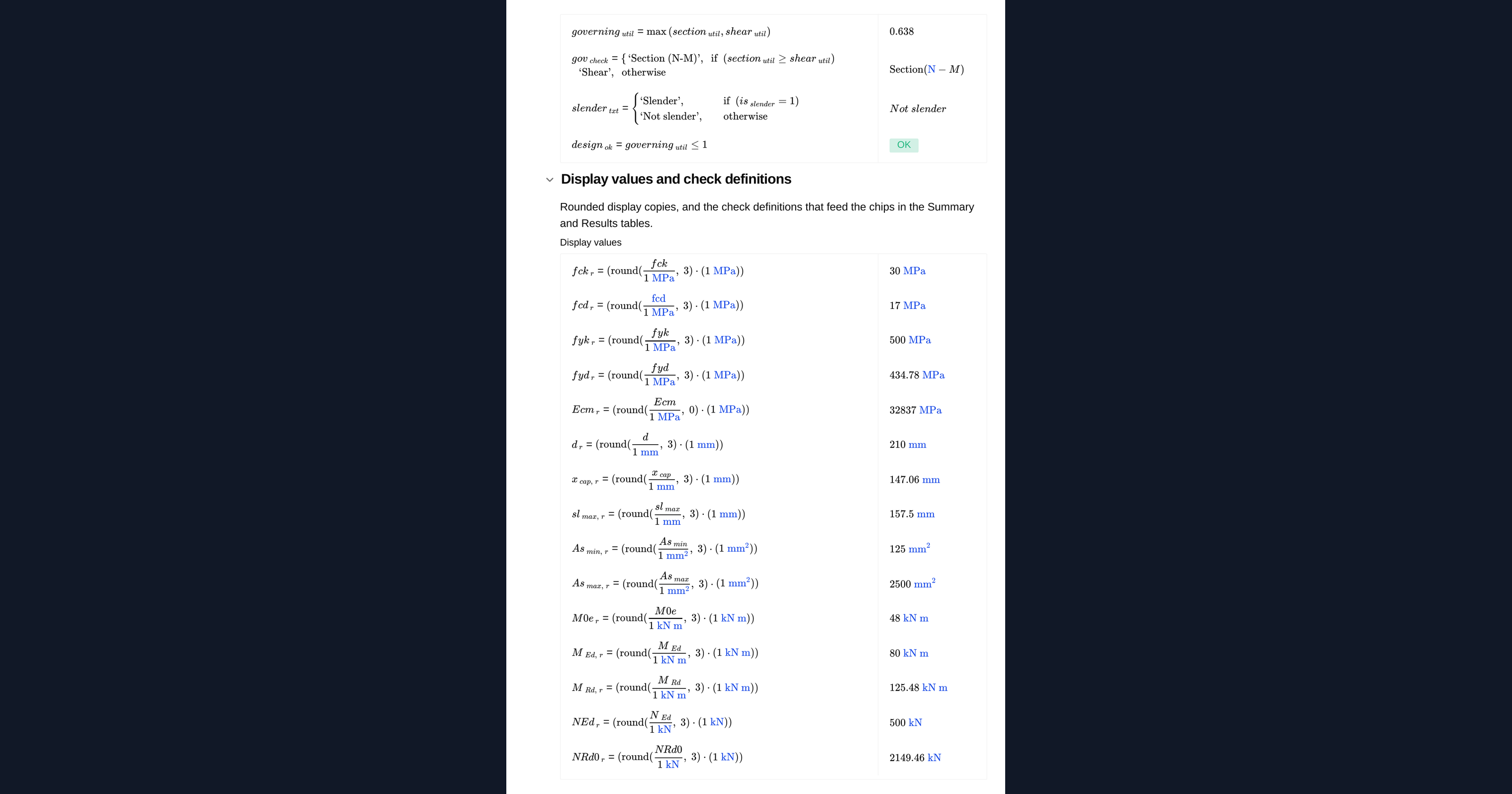
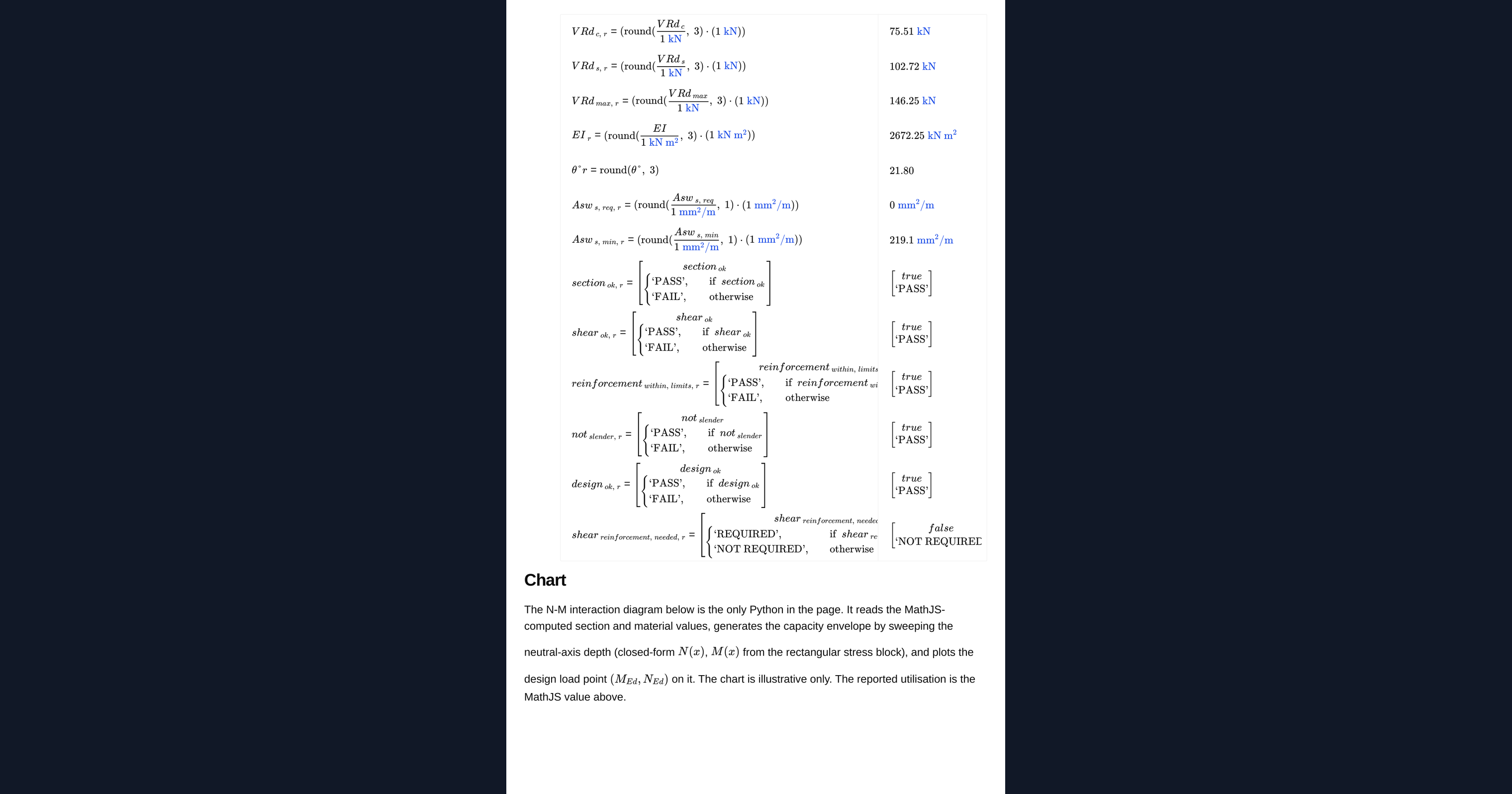
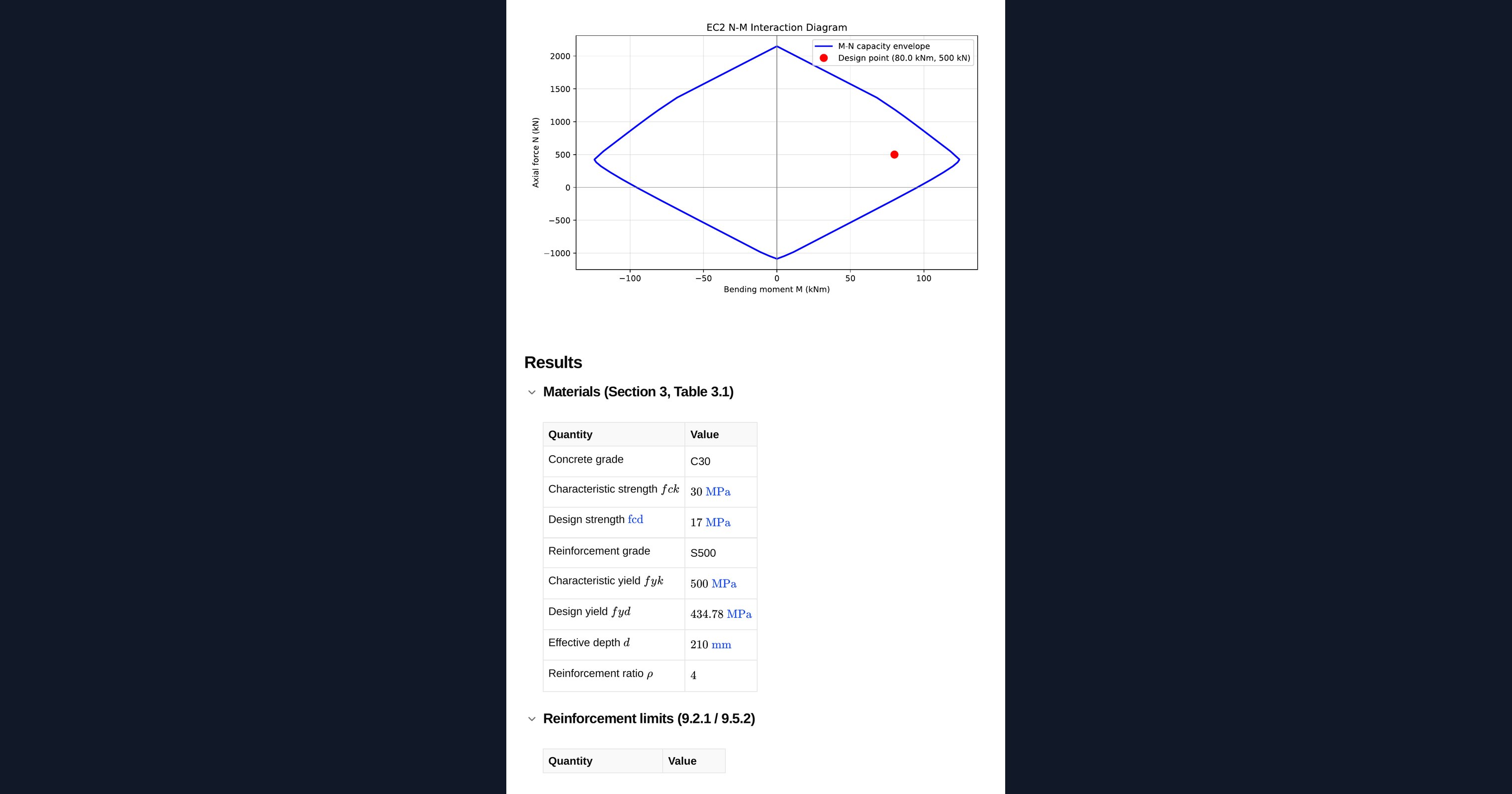
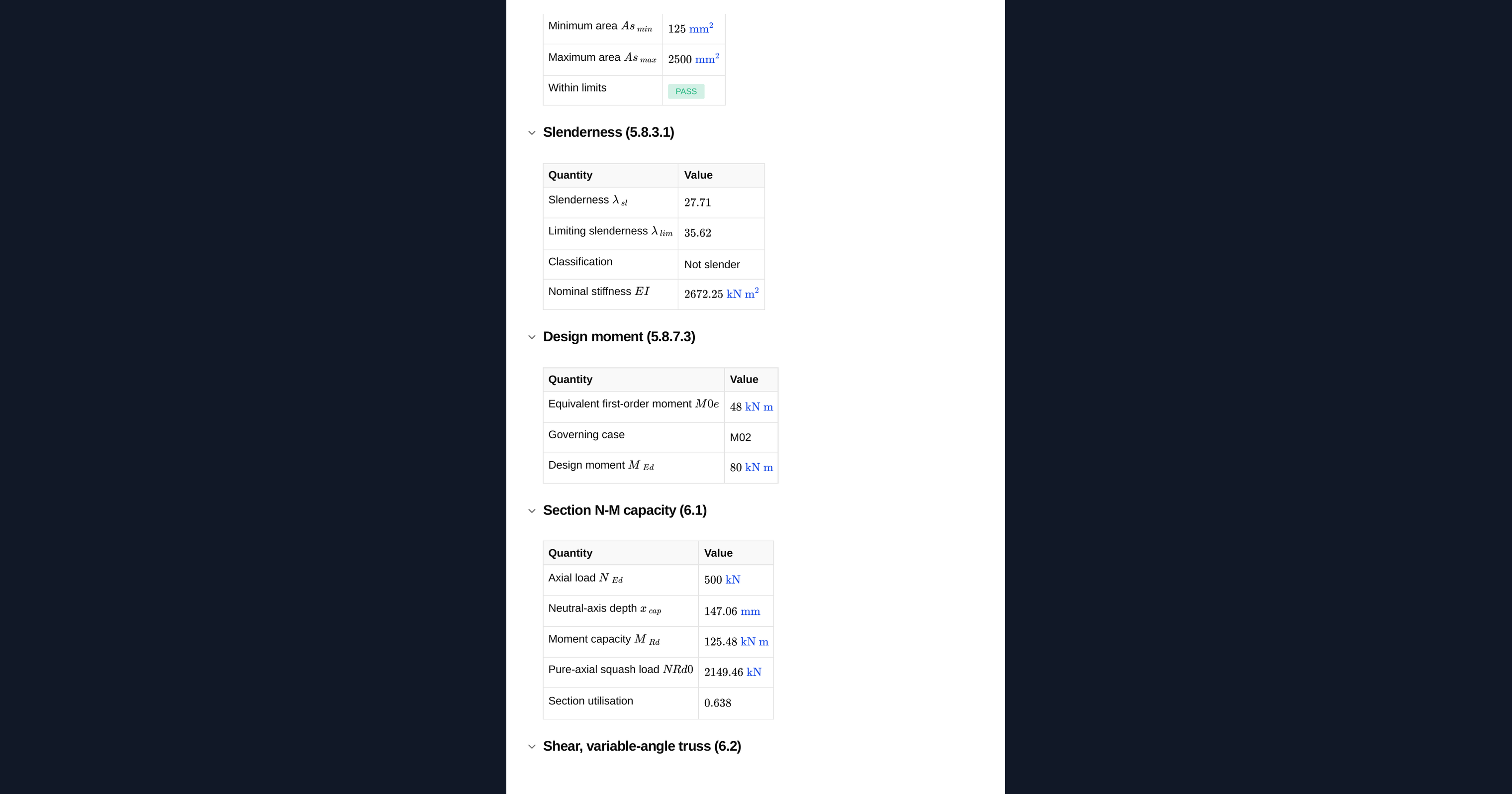
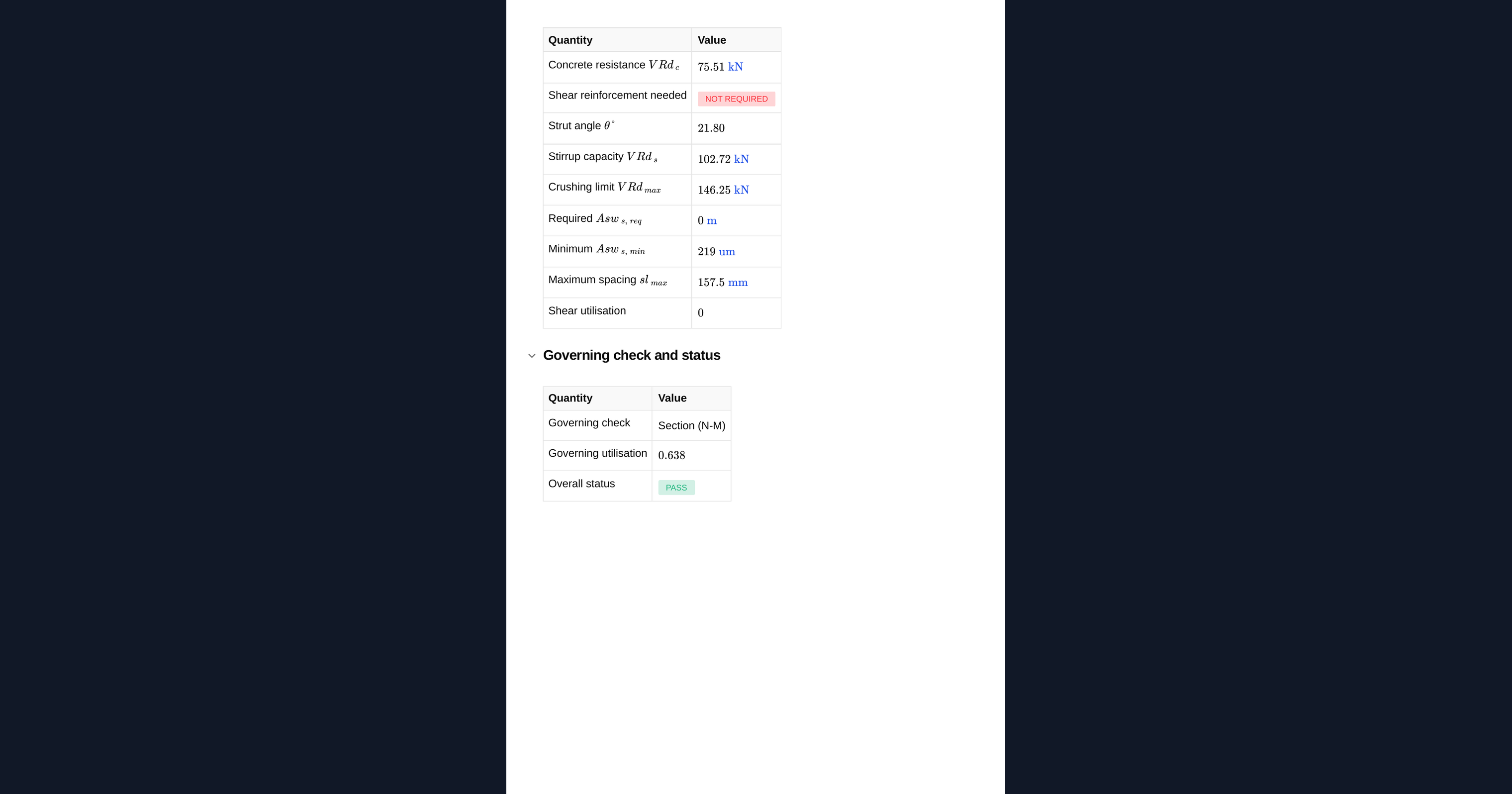
The calculation classifies slenderness against the limiting slenderness, magnifies the first-order moment for second-order effects where the member is slender, and gates the design moment by the minimum eccentricity. Capacity is assessed through the N-M interaction, ULS shear (concrete resistance and the variable-angle truss) and the minimum and maximum reinforcement limits.
Methods
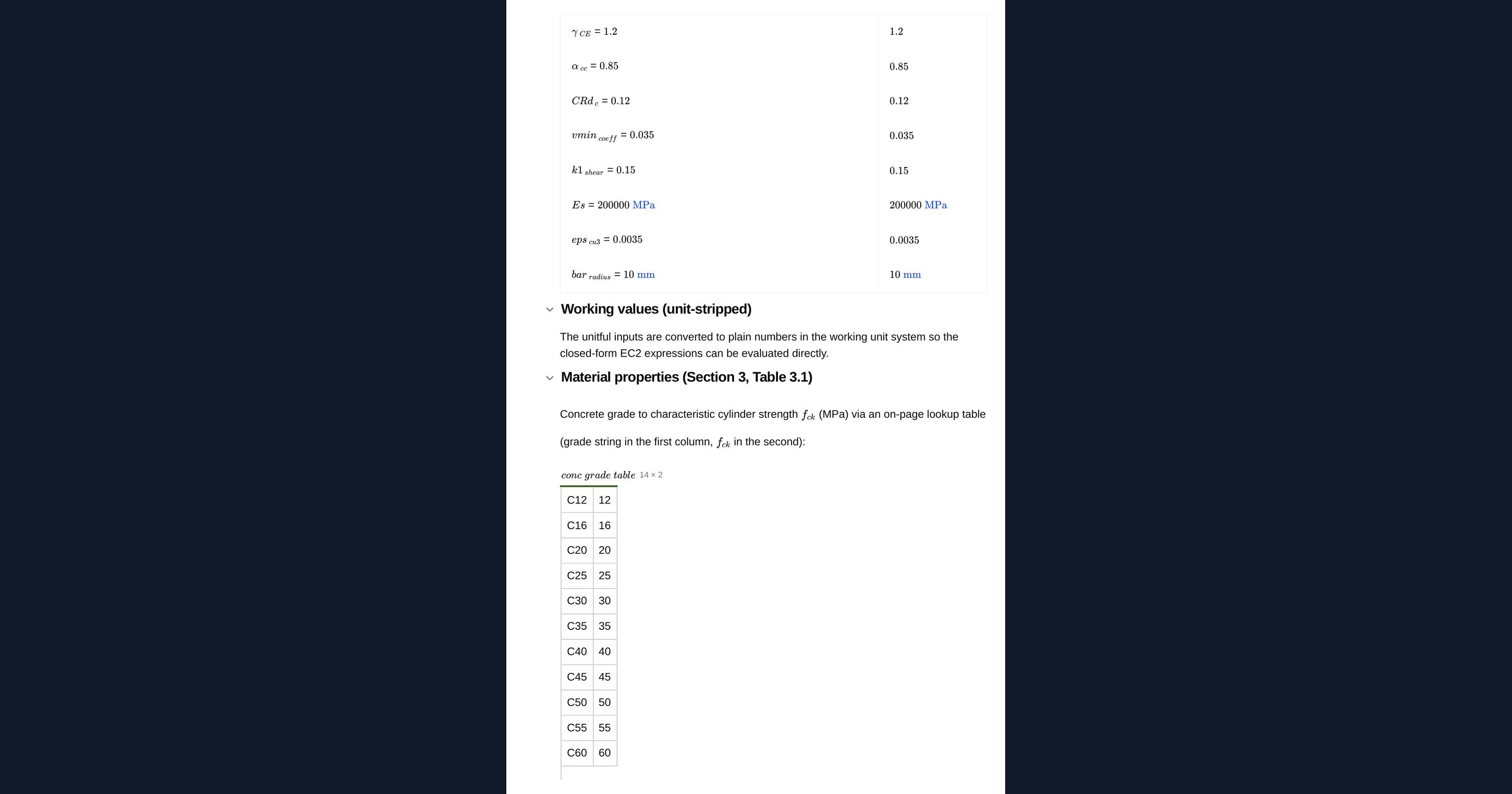
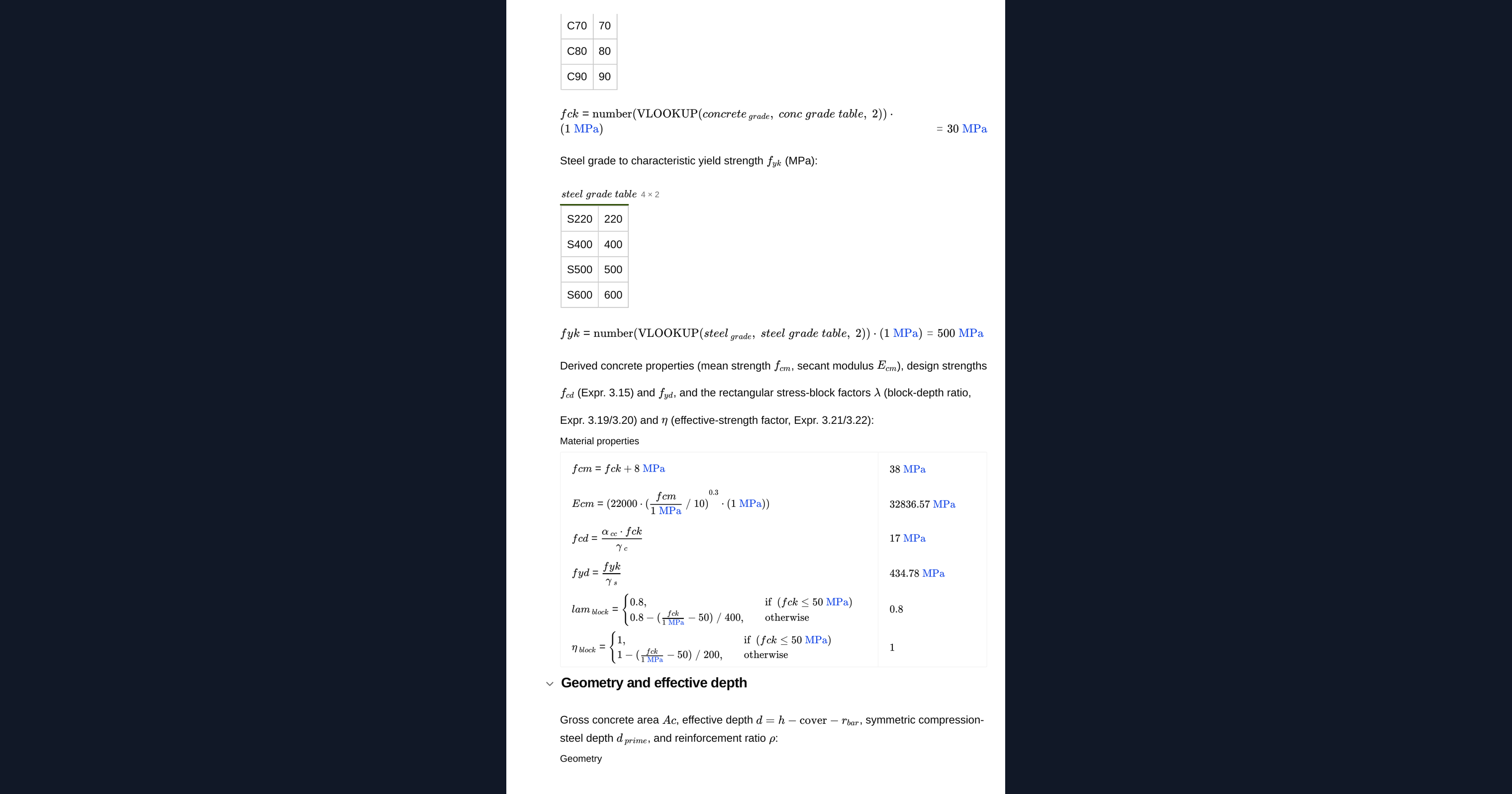
Section properties, design strengths and the rectangular stress block follow EN 1992-1-1. The nominal-stiffness method gives the second-order moment, and shear uses the variable strut angle with its crushing and stirrup limits. The maths is carried in MathJS, with a single chart for the N-M interaction diagram.
Common Calculation Errors to Avoid
- Slenderness misclassification treating a slender member as stocky skips the second-order moment magnification.
- Minimum eccentricity ignored it can govern the design moment for lightly loaded members.
- End-moment sign convention getting it wrong changes the end-moment ratio and the limiting slenderness.
- Reinforcement limits overlooked the minimum and maximum steel areas must be checked alongside the strength checks.
- Material strength mix-up keep characteristic and design strengths distinct.
Engineering templates
Common calculators
Design guides




FAQs
What is second-order magnification and when does it matter?
When a column is slender, the axial load acting on the deflected shape adds moment beyond the first-order analysis. Eurocode 2 captures this with the nominal-stiffness method: if the slenderness exceeds the limiting value the first-order moment is magnified, otherwise the member is treated as stocky.
How is the N-M interaction capacity checked?
The section is assessed for the combined axial force and bending using the rectangular stress block. The design point is compared against the interaction envelope, and the utilisation shows how close the section is to its capacity.
What reinforcement do I enter?
Enter the total longitudinal steel area and the shear reinforcement ratio, with the bar arrangement and cover. The calculation applies the minimum and maximum reinforcement limits from EN 1992-1-1 and flags where they govern.
Does this handle shear?
Yes. Shear uses the variable-angle truss: the concrete resistance, the stirrup capacity and the strut crushing limit are all evaluated, and the strut angle is chosen within the code limits.
Can I change the concrete and steel grades?
Yes. Grades are selected from standard tables and the characteristic and design strengths update through the whole calculation.
Learn about the benefits of using CalcTree on engineering projects!