
Select φ for ACI 318-19 deep foundation compression (Table 13.4.3.2). Instant results for all 6 pile types. Try the free CalcTree template now.

Tell us what you need, or sign up and build it yourself in minutes.
Leave your email and we'll tell you when a template for it is ready:
No items found.
No items found.
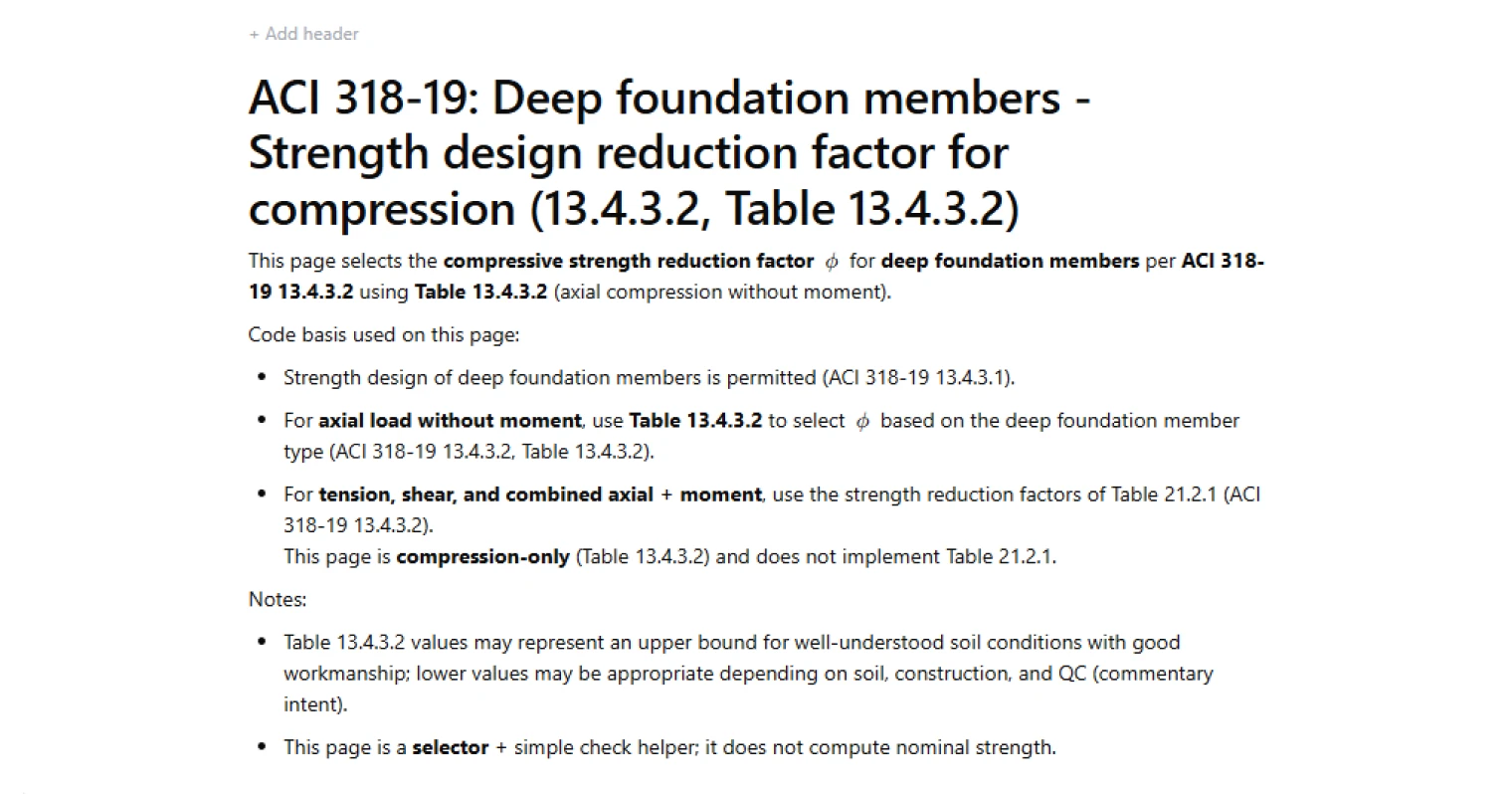
About this ACI 318-19: Deep Foundation Members — Strength Design Reduction Factor for Compression (13.4.3.2, Table 13.4.3.2) Calculator
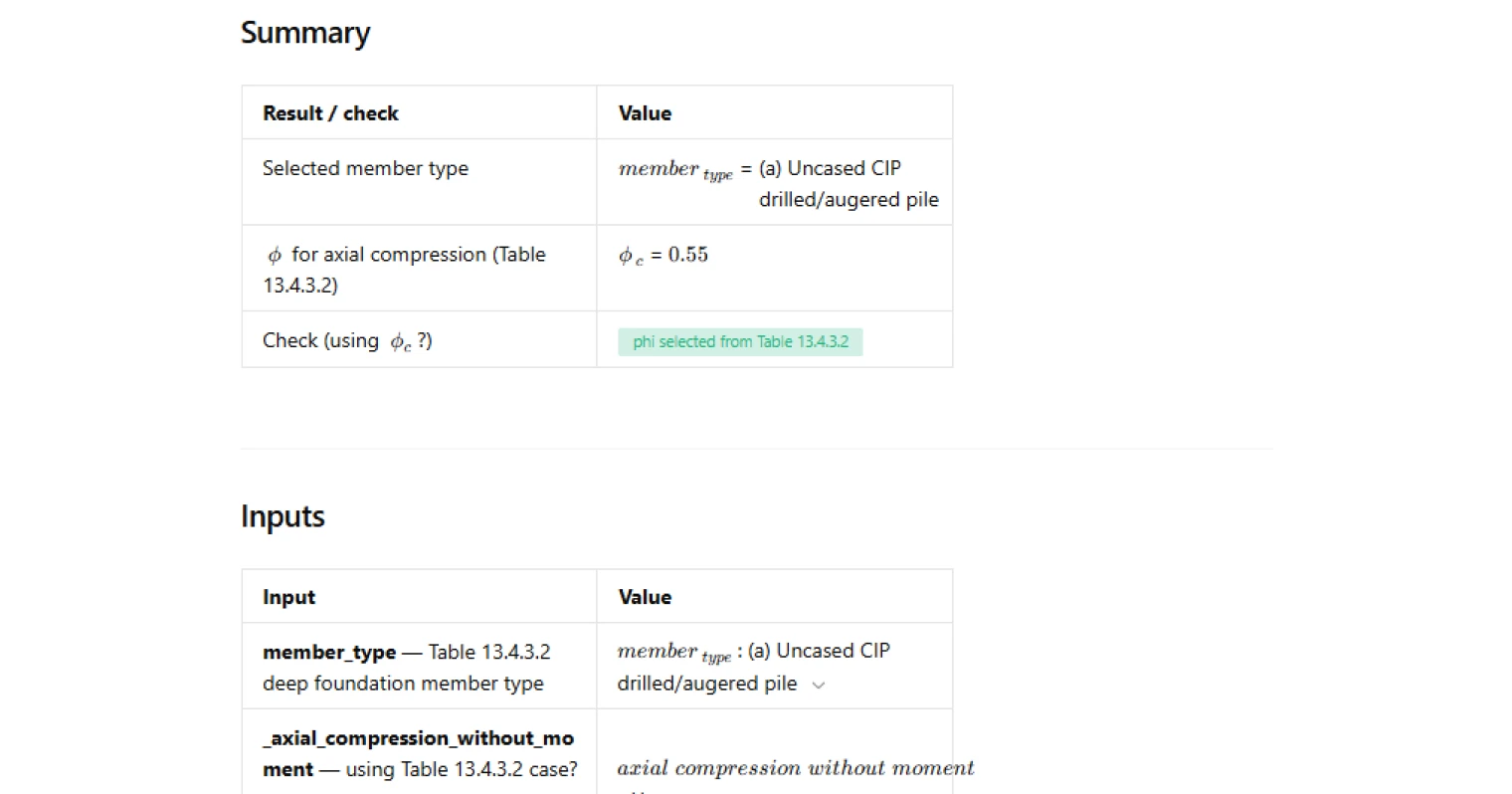
This calculator selects the compressive strength reduction factor φ for deep foundation members under axial compression without moment, following ACI 318-19 Section 13.4.3.2 and Table 13.4.3.2. The user selects the deep foundation member type from the six categories defined in the code, and the calculator returns the corresponding φ value. A built-in check confirms whether the Table 13.4.3.2 case applies or whether the engineer should instead reference Table 21.2.1 for tension, shear, or combined axial and moment loading.
- Geotechnical engineer — quickly identify the correct φ factor for the pile type being specified, without manually cross-referencing the code table on every project.
- Structural engineer — confirm the appropriate strength reduction factor before computing factored design capacity for piles and drilled shafts under axial compression.
- Foundation designer — use the applicability check to catch load cases that fall outside Table 13.4.3.2 and require a different approach per ACI 318-19.
This is an engineering-grade calculator built on CalcTree, where inputs, logic, and outputs are fully transparent and traceable to the code clause. Save it to a project workspace and pair it with other deep foundation design pages in your calculation set.
More Info on ACI 318-19: Deep Foundation Members — Strength Design Reduction Factor for Compression (13.4.3.2, Table 13.4.3.2)
Inputs
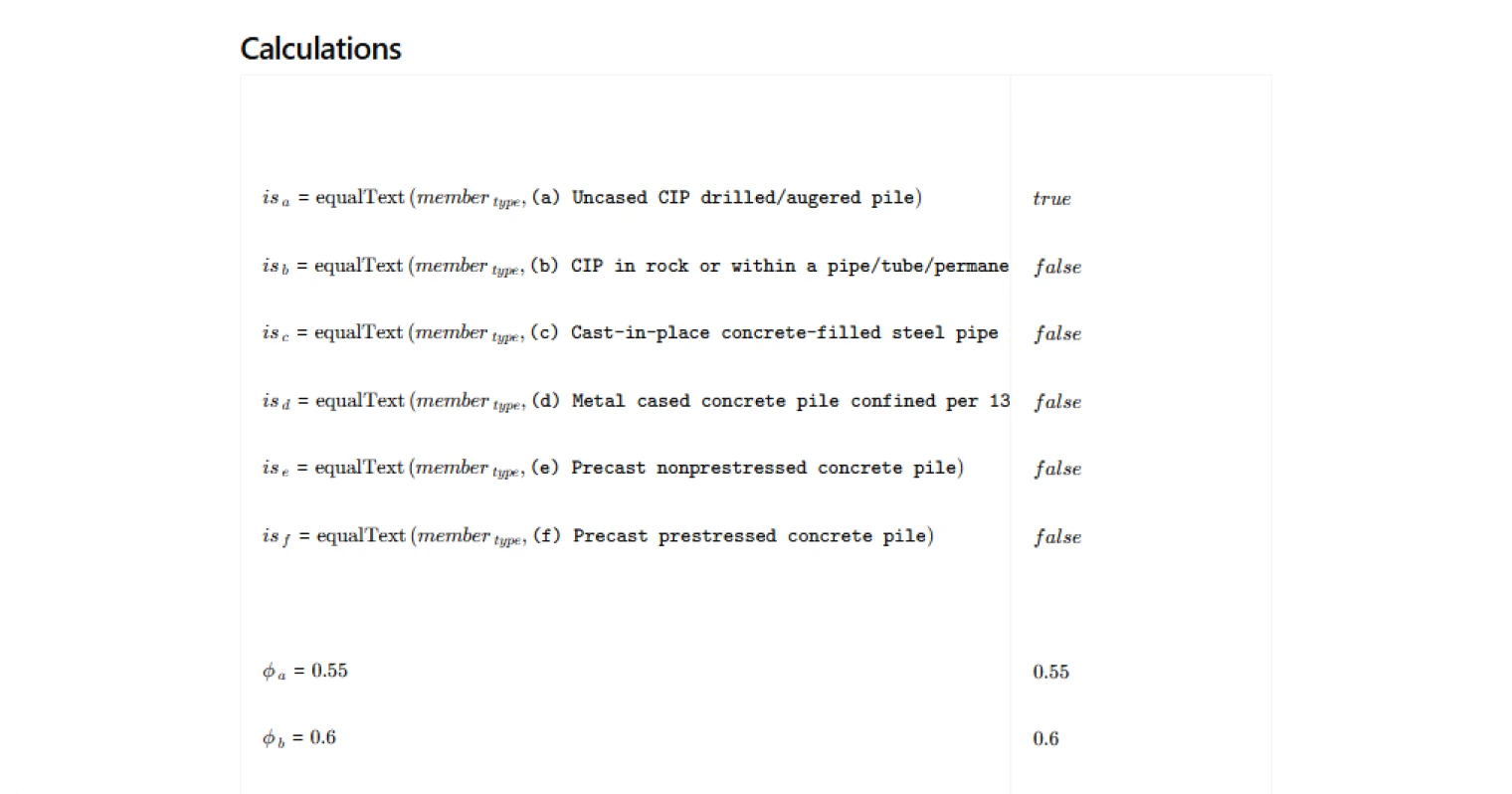
The calculator takes two inputs. The first is the deep foundation member type, selected from the six categories listed in ACI 318-19 Table 13.4.3.2: uncased cast-in-place drilled or augered piles; cast-in-place piles in rock or within a pipe, tube, or permanent casing not satisfying Section 13.4.2.3; cast-in-place concrete-filled steel pipe piles; metal cased concrete piles confined per Section 13.4.2.3; precast nonprestressed concrete piles; and precast prestressed concrete piles. The second input is a confirmation of whether the loading condition is axial compression without moment, which governs whether Table 13.4.3.2 applies at all.
Outputs
Based on the selected member type, the calculator returns the corresponding φ factor for axial compression as tabulated in ACI 318-19 Table 13.4.3.2. The output reflects the code-assigned value for each member category, which varies depending on construction method, casing, confinement, and whether the element is cast-in-place or precast. The selected member type and resulting φ value are both reported in the summary table for direct use in capacity calculations.
Design Checks
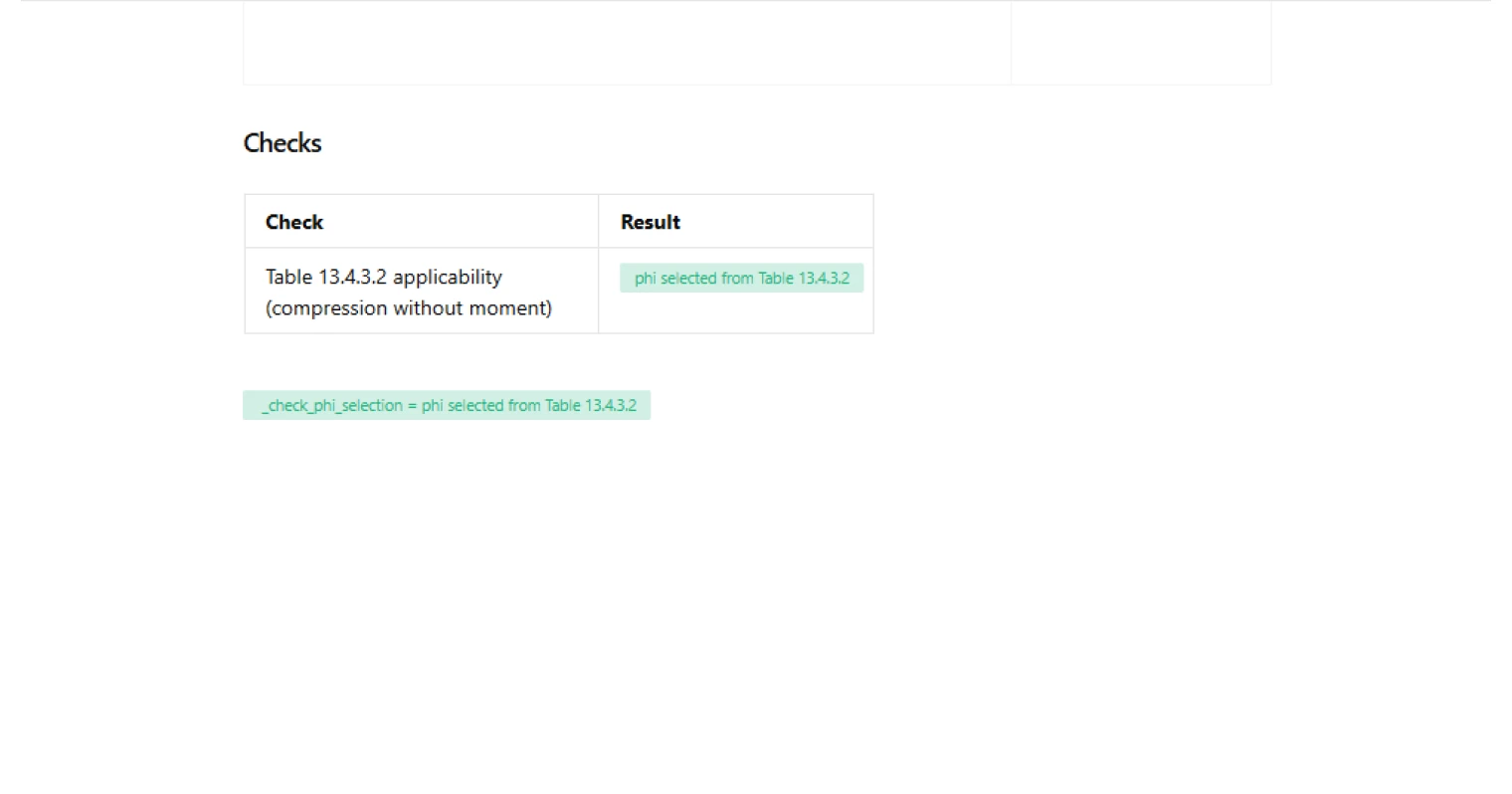
The calculator includes a single applicability check that evaluates whether the Table 13.4.3.2 case is valid for the loading condition described. If the axial compression without moment condition is confirmed, the check returns a pass and the selected φ value is appropriate for use. If the condition is not satisfied — for example, where moment, tension, or shear is present — the check flags that Table 21.2.1 applies instead, as required by ACI 318-19 Section 13.4.3.2. This prevents misapplication of the compression-only φ factors to load combinations outside their intended scope.
Code Basis and Method
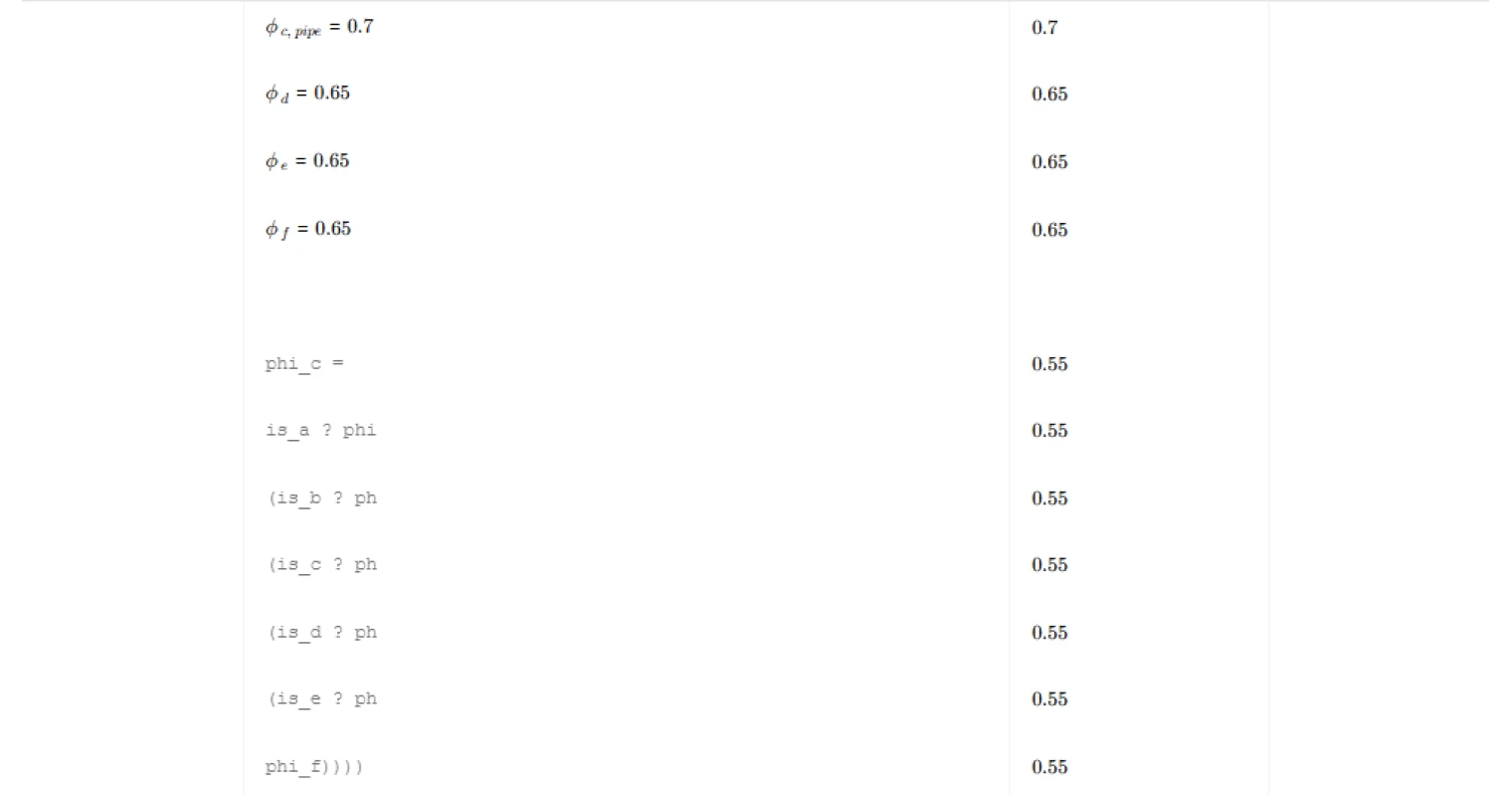
The calculation logic maps each of the six member types in Table 13.4.3.2 to its corresponding φ value using conditional logic, returning the correct factor based on the user's selection. The φ values in Table 13.4.3.2 reflect not just material behaviour but also construction uncertainty inherent to deep foundation installation, and as noted in the ACI commentary, they may represent upper bounds for well-controlled conditions. Lower φ values may be warranted depending on soil variability, construction method, and quality control practices. This calculator is a selector and check tool; it does not compute nominal axial strength.
Common Calculation Errors to Avoid
- Applying Table 13.4.3.2 to combined loading cases — this table is strictly for axial compression without moment. Where moment, tension, or shear is present, ACI 318-19 Section 13.4.3.2 directs the engineer to Table 21.2.1, and using the compression-only φ factors in those cases is unconservative.
- Misidentifying the member type — the six categories in Table 13.4.3.2 are specific to construction method and casing configuration, including whether a casing satisfies Section 13.4.2.3. Selecting the wrong category, such as confusing a permanently cased pile with a confined metal cased pile, results in an incorrect φ value.
- Assuming Table 13.4.3.2 values are always appropriate — the ACI commentary notes these values may reflect upper bounds under favourable conditions. Accepting them without considering site-specific soil conditions, installation methods, and quality control can lead to unconservative designs.
- Using this φ factor to back-calculate nominal strength — this calculator selects φ only. The nominal axial compressive strength must be determined separately using the applicable ACI 318-19 provisions before φ is applied.
- Confusing deep foundation φ values with above-grade column φ values — the compression φ factors in Table 13.4.3.2 differ from those in Table 21.2.1 used for conventional concrete members, and the two should not be interchanged in deep foundation calculations.
Engineering templates
Common calculators
Design guides




FAQs
What is the strength reduction factor φ for deep foundations under axial compression?
ACI 318-19 Table 13.4.3.2 assigns φ values ranging from 0.55 to 0.70 depending on pile type. Uncased cast-in-place drilled or augered piles get the lowest value of 0.55, reflecting greater variability in construction quality. Cast-in-place concrete-filled steel pipe piles get the highest at 0.70. Precast nonprestressed, precast prestressed, and metal cased piles confined per 13.4.2.3 all use 0.65.
Why are φ values for deep foundations lower than those for conventional concrete columns?
Deep foundation members are constructed in the ground where direct inspection is limited, soil conditions are variable, and workmanship is harder to verify. These factors introduce more uncertainty into the resulting nominal strength compared to above-grade concrete construction. ACI 318-19 reflects this by assigning lower φ values under Table 13.4.3.2 relative to the 0.75 used for tied columns under Table 21.2.1.
When does Table 13.4.3.2 apply, and when do I need Table 21.2.1 instead?
Table 13.4.3.2 applies only to axial compression without moment. If your deep foundation member is subject to tension, shear, or combined axial load and bending moment, ACI 318-19 Section 13.4.3.2 directs you to use the strength reduction factors from Table 21.2.1 instead. This calculator covers the Table 13.4.3.2 compression-only case and flags a warning if you indicate the loading condition is outside that scope.
Can I use a higher φ value if soil conditions are well understood and construction quality is tightly controlled?
The ACI 318-19 commentary notes that the Table 13.4.3.2 values may represent an upper bound for favorable conditions. If soil conditions are less predictable, construction control is limited, or QC programs are minimal, using a φ value below the tabulated figure is appropriate. The table does not provide a mechanism to exceed the listed values.
How do I select the correct member type in this calculator?
Select the option from the dropdown that matches your pile construction method as defined in ACI 318-19 Table 13.4.3.2. The six options correspond to the labeled rows (a) through (f) in that table. If your pile is a CIP pile within a permanent casing that does not satisfy the confinement requirements of Section 13.4.2.3, select option (b) rather than option (d), since the higher φ = 0.65 for option (d) requires confirmed compliance with those confinement provisions.
What does this calculator output and what does it not do?
The calculator selects and returns the appropriate φ value for axial compression based on your chosen member type, and checks whether Table 13.4.3.2 is the applicable table for your loading condition. It does not compute nominal axial strength Pn or factored resistance φPn. To complete the strength check, apply the returned φ value to your separately calculated nominal capacity.
Learn about the benefits of using CalcTree on engineering projects!